Last Updated on January 13, 2026 by Ch David
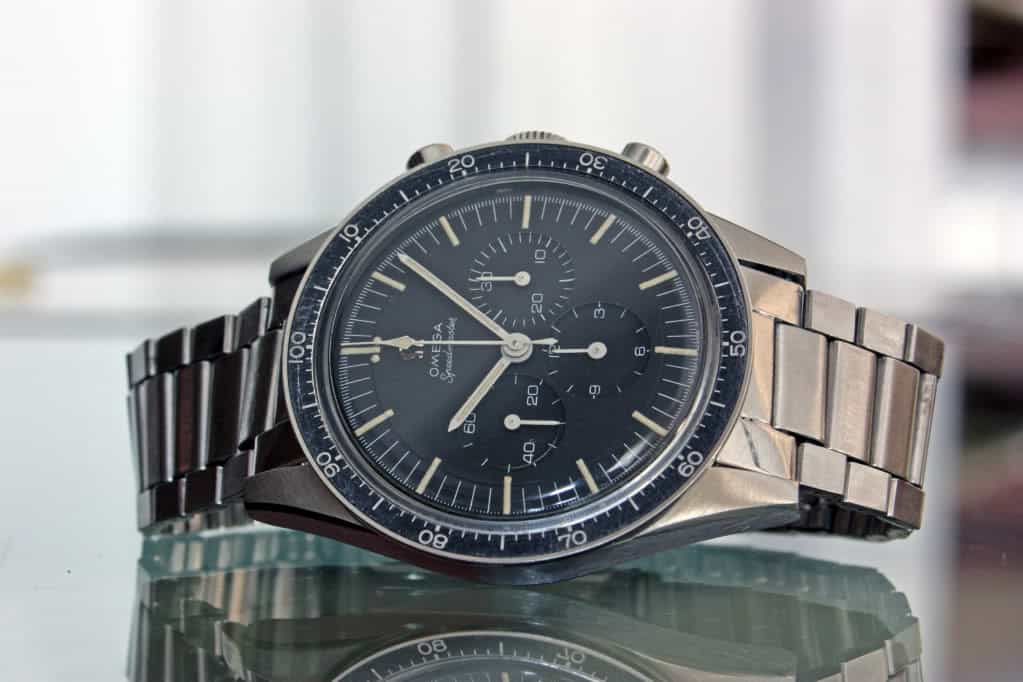
The authentication of the Omega Speedmaster Professional Moonwatch is something every buyer should take seriously.
The Speedmaster is more than just a chronograph, it’s the watch worn during Apollo 11, the first on the Moon, and a piece of history that collectors around the world chase.
That reputation and demand have made it one of the most counterfeited Omega models.
The trouble is that many fakes get the basics right. At first glance, the dial and case can look convincing, but the differences show up once you know where to look.
The movement, the spacing of the sub-dials, the caseback engravings, and the way the bracelet feels all reveal whether you’re holding the real Moonwatch or an imitation.
This guide walks you through those checks step by step, giving you the same approach experts and collectors use to confirm a genuine Speedmaster.
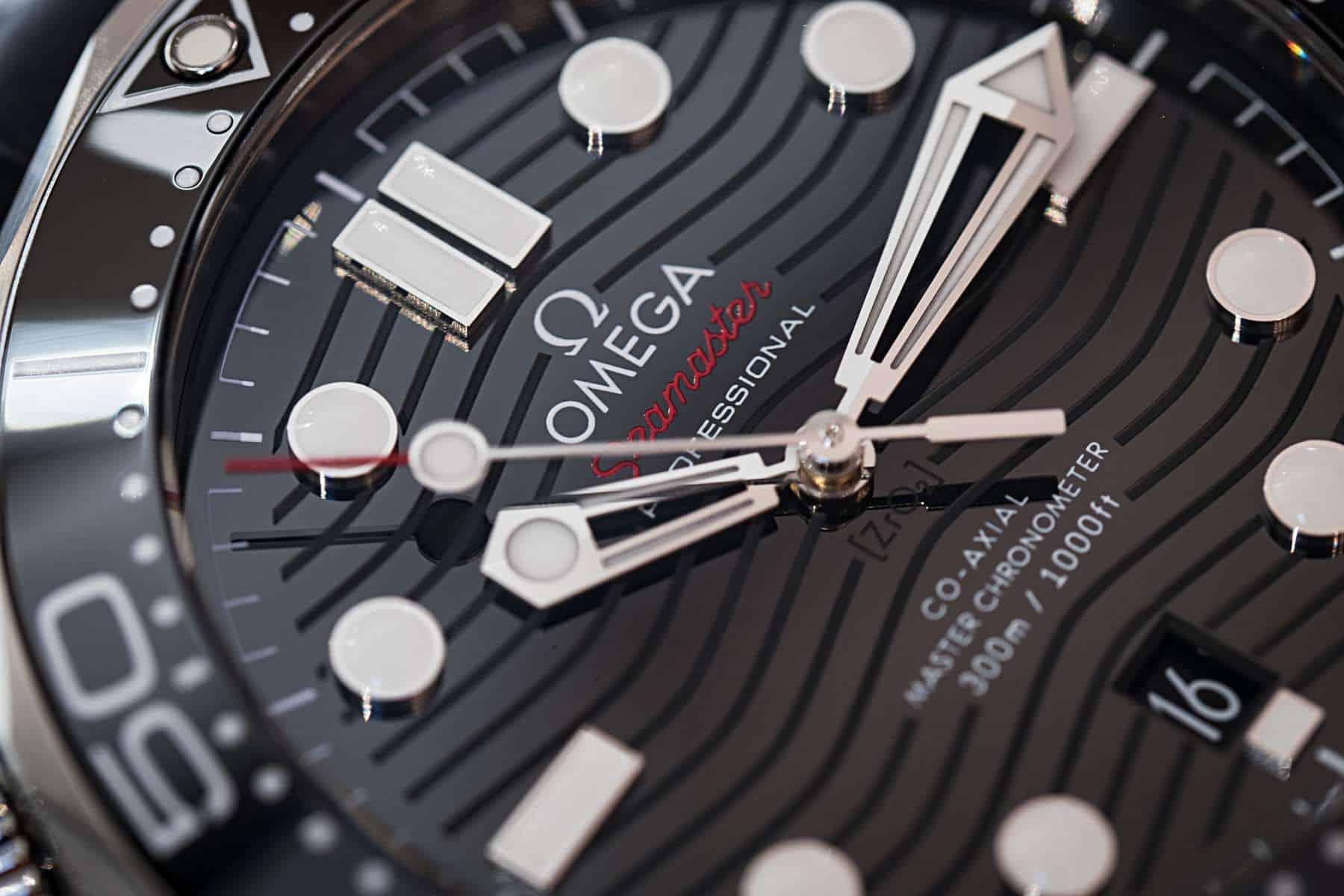
Related Guide: Omega Seamaster Diver.
Make history – not mistakes.
We verify the Moonwatch where it matters: manual-wind sweep, recessed sub-dials, TACHYMÈTRE accent, and clasp markings – so you own the story, not a good copy.
Discreet. Human-only review. Built to protect your budget and the legend on your wrist.
Answer: The quickest way to identify a fake Omega Speedmaster Professional is to look at the movement.
Genuine Moonwatches use a manual-wind mechanical chronograph, so the central chronograph hand should sweep smoothly.
Most counterfeits hide a quartz movement, which makes the hand tick once per second.
This is a decisive difference, since the movement is at the heart of the Speedmaster’s identity. Replicas may copy the case and dial, but they rarely match the function of the real watch.
That’s the fast check. For the complete set of authentication steps, continue with the detailed breakdown below.
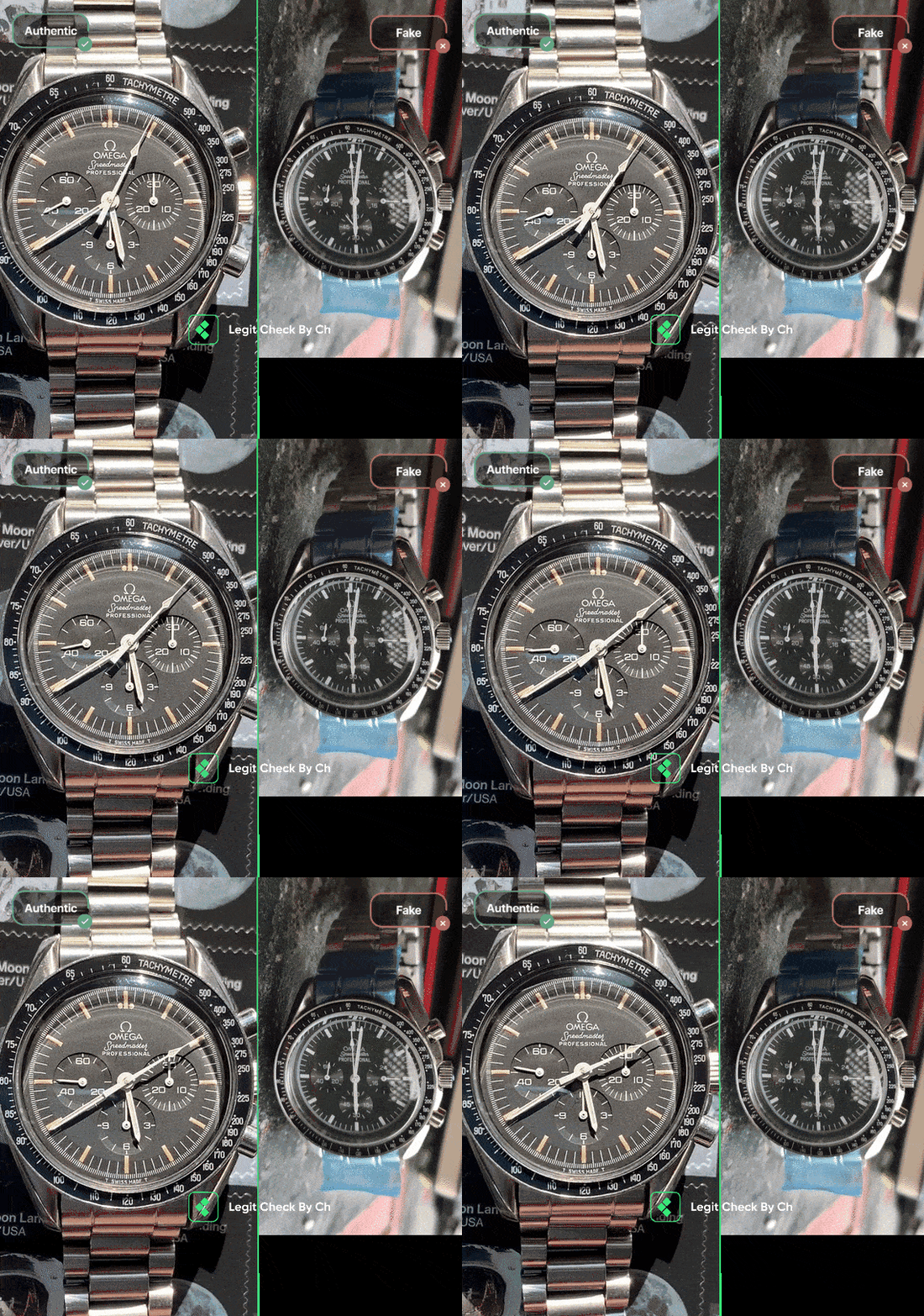
On a genuine Omega Speedmaster, the movement is one of its strongest indicators of authenticity.
The watch runs on a mechanical calibre that produces a continuous sweep rather than a jump. Collectors often describe this motion as fluid, with a refined cadence that quartz replicas simply cannot replicate.
By contrast, many counterfeits use cheaper quartz movements. The result is a jerky seconds hand that ticks in whole-second increments.
→ This mismatch is immediately noticeable to anyone familiar with mechanical chronographs.
Even without opening the caseback, the sound and sweep of the movement can expose a replica in seconds.
Want the expert's opinion? Let our Omega authenticators check your watch:
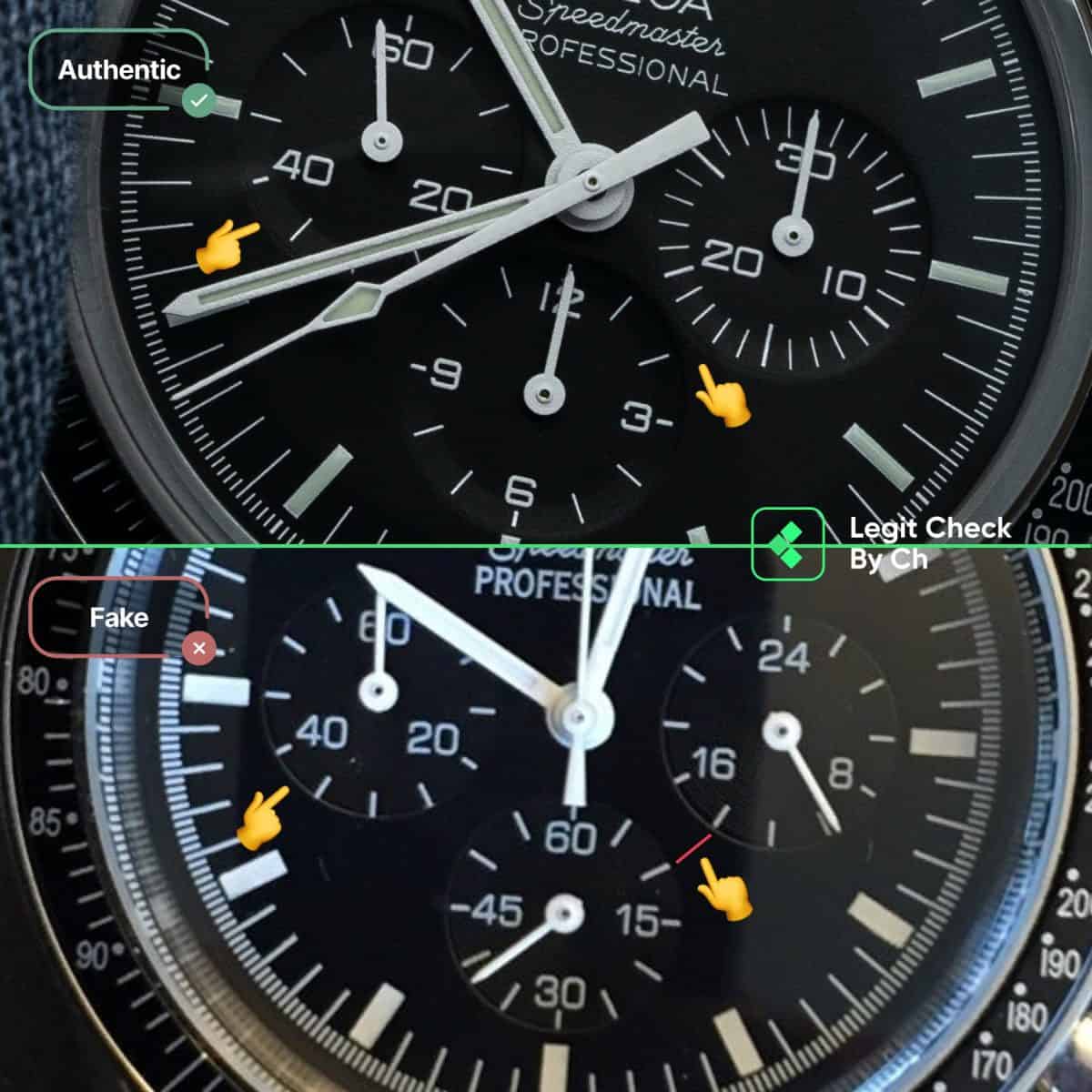
On the authentic Speedmaster, the three sub-dials have depth. You can clearly see the embossed edges catching the light.
Their positioning follows strict design tolerances, keeping symmetry across the dial. The level of finishing inside the registers is also much sharper, with hands that are well-polished and correctly sized.
Replicas frequently miss these details. Their sub-dials may appear “stuck on,” almost like printed circles, with no recess in the dial.
The spacing is often slightly off, giving the watch an unbalanced look. This is one of those details that counterfeiters rarely get right, and for experienced eyes, it’s a strong trust factor in authentication.
Here’s another comparison:
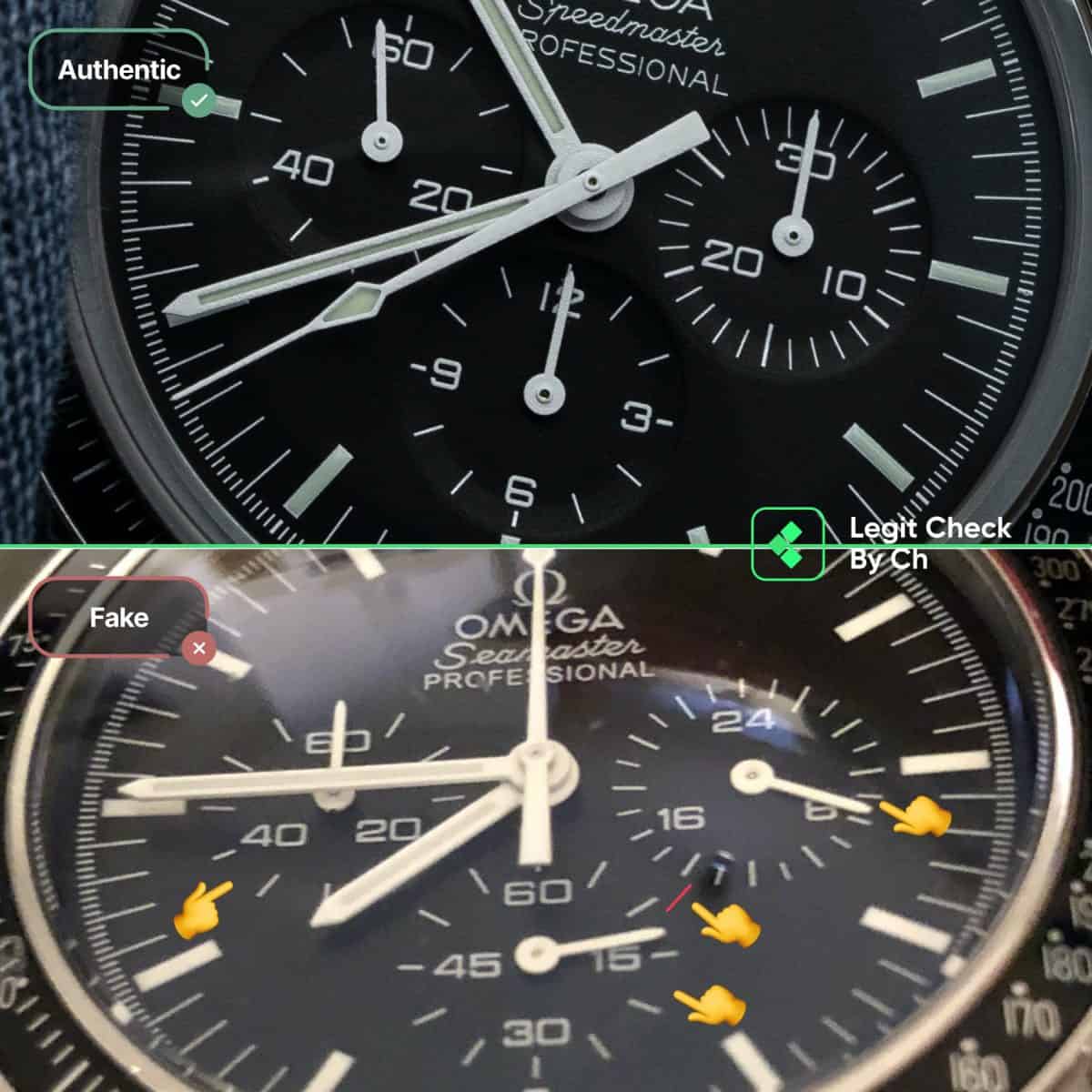
The fake watch does not have its sub-dial margins embossed on the main dial.
→ Keep in mind that this is one of these flaws that authentic watches will never present, as it is a really good trust factor of authenticity.
For another iconic chronograph, see our Rolex Daytona authentication guide.
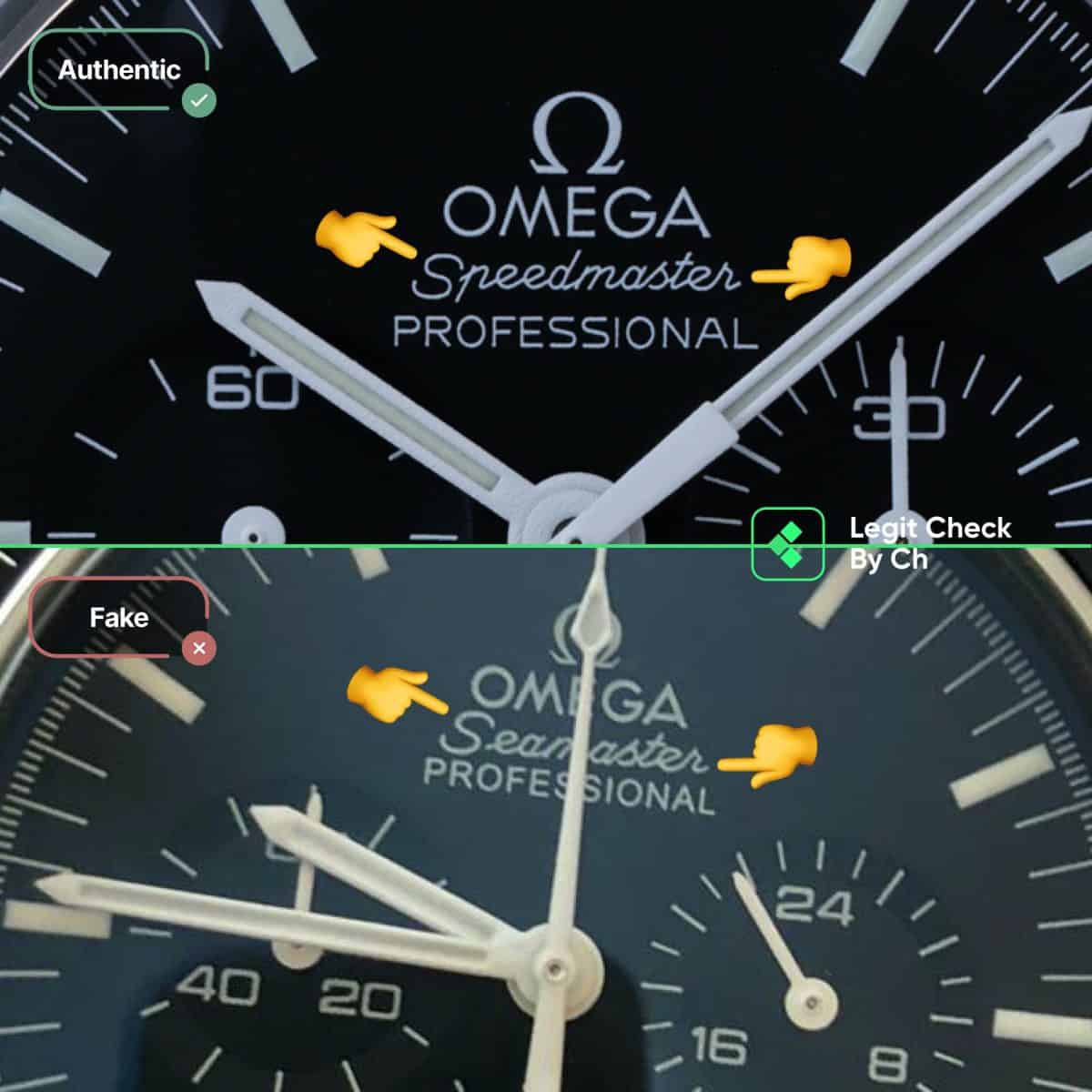
On a genuine Omega Speedmaster Professional Moonwatch, the dial text is one of the most reliable checks.
The inscriptions are finely printed, with sharp, balanced letters. For example, the word “PROFESSIONAL” at 12 o’clock has a very specific font weight and spacing that never varies on authentic pieces.
Fakes often expose themselves with sloppy inscriptions.
Some replicas bizarrely feature “Seamaster” instead of “Speedmaster,” a clear model mix-up.
Others get the font wrong: letters appear too bold, too thin, or misaligned compared to the genuine dial.
→ This is especially noticeable when comparing the “PROFESSIONAL” text, where replicas typically over-thicken the strokes.
With this being said, remember that you are authenticating the Omega Speedmaster Professional Moonwatch and not the Seamaster series.
Let’s look at another comparison:
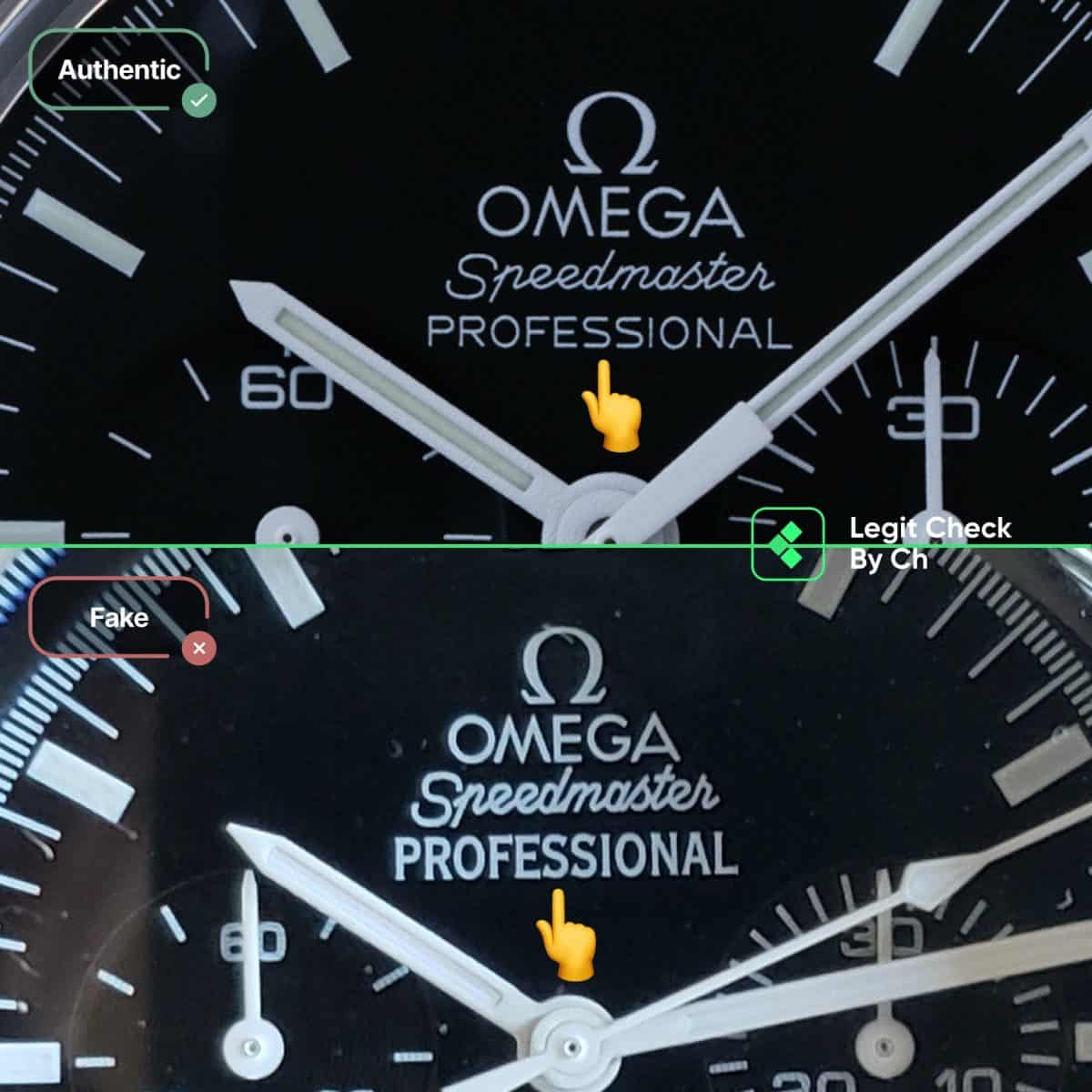
Looking closely at the 12 o’clock inscription provides another giveaway.
On an authentic Speedmaster, the font size and shape integrate seamlessly with the dial layout, while on fakes, the text often looks off – either too thick, too small, or simply the wrong style.
For collectors, this detail is one of the quickest ways to separate real from fake.
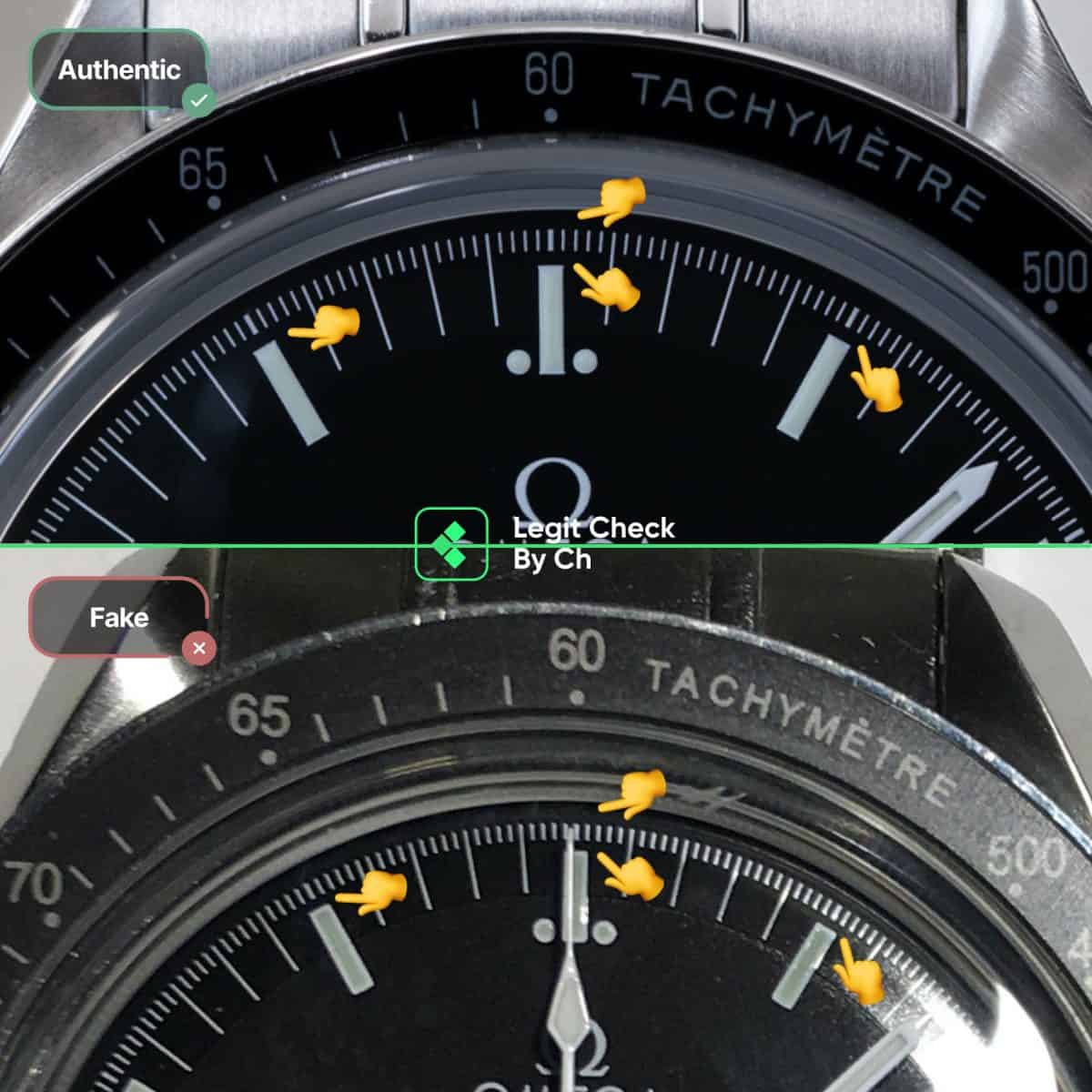
This flaw comes from counterfeit movements that don’t match Omega’s genuine dimensions.
As a result, manufacturers squeeze the dial layout, leaving the top markers uncomfortably close to the edge.
The authentic Speedmaster, in contrast, has a dial with breathing room – markers sit cleanly within the rehaut’s boundaries.
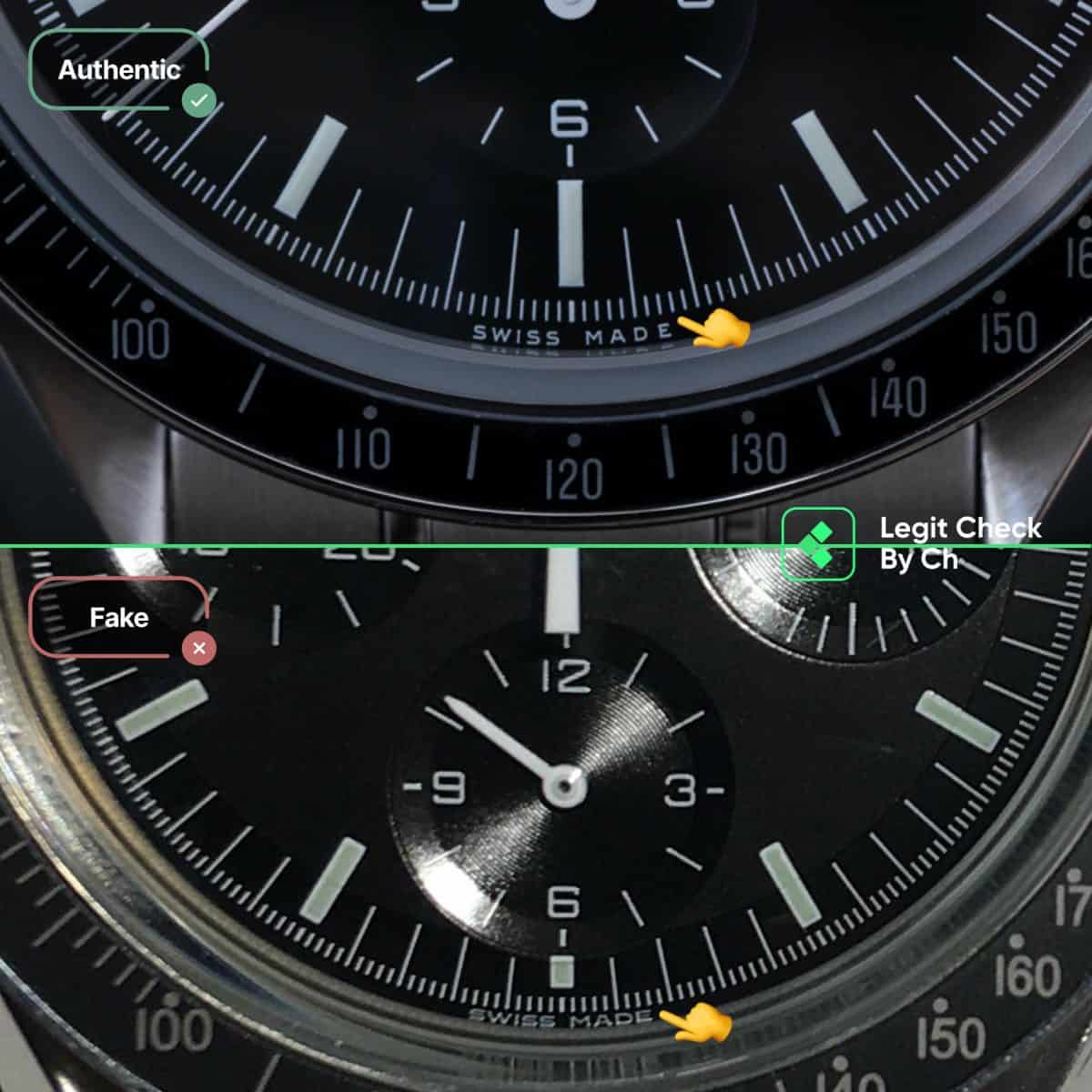
Looking at the 6 o’clock position, the genuine Omega leaves more empty space between the rehaut and the bottom markers, creating a neat, proportioned look.
The counterfeit compresses everything, producing a cluttered lower dial. Even small differences in spacing are easy to spot when compared side by side.
Proportion and finishing checks also feature in our Patek Philippe Nautilus guide.

A quick mention:
If in doubt, we recommend double-checking the steps we’ve explained above this line.
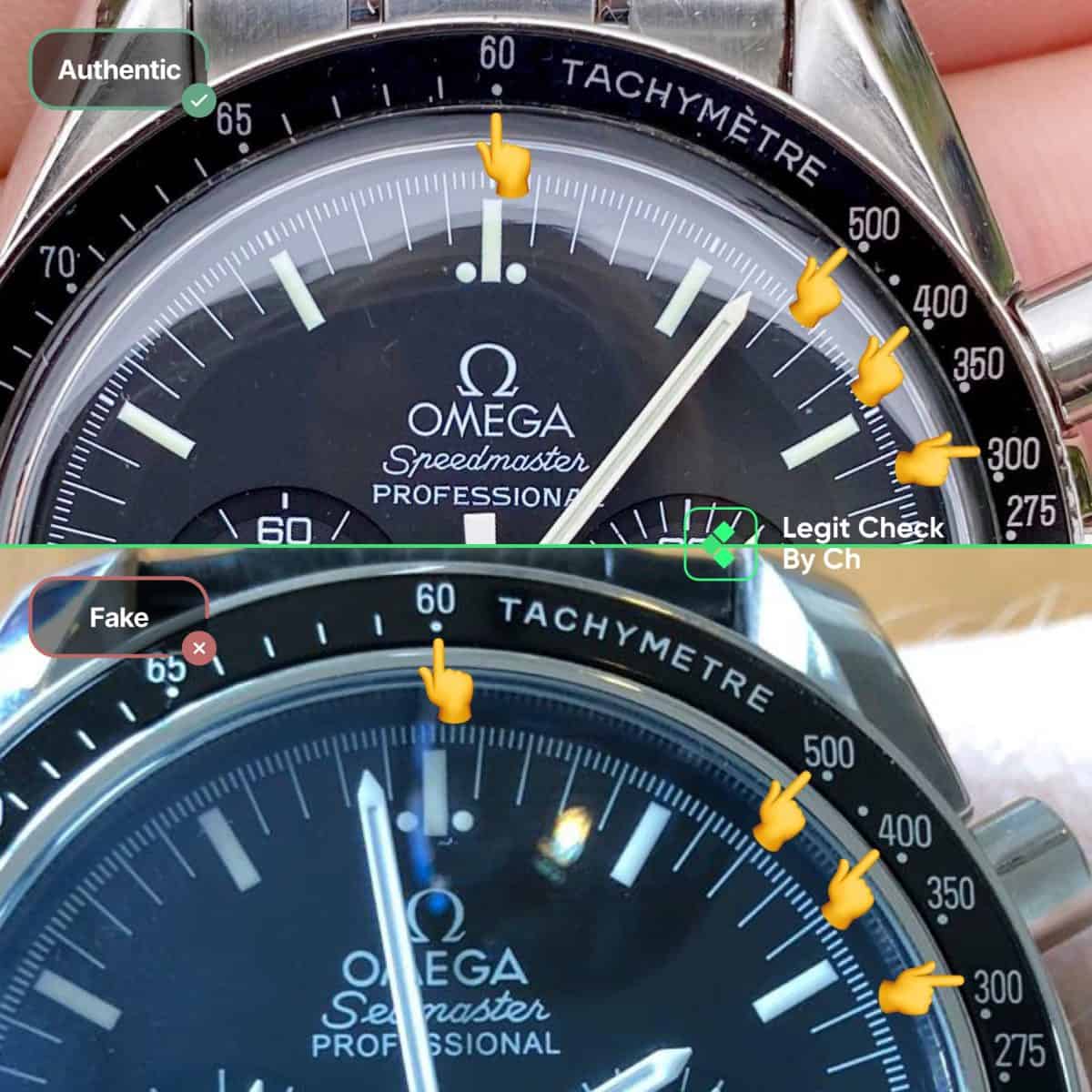
The bezel on an authentic Omega Speedmaster is produced with incredible precision.
Every numeral is evenly weighted, etched sharply, and perfectly centered. This balance across the tachymeter scale is part of what gives the Speedmaster its clean, professional look.
Replicas frequently fail here. Some bezels show numbers that vary in thickness, with the “60” at the top often too bold compared to the rest.
Others suffer from placement issues, like the “500” appearing too far left, making the numerals look cramped.
→ Even without magnification, these small flaws can betray a fake.
Bezel depth and pip framing are clear in the Omega Planet Ocean guide.
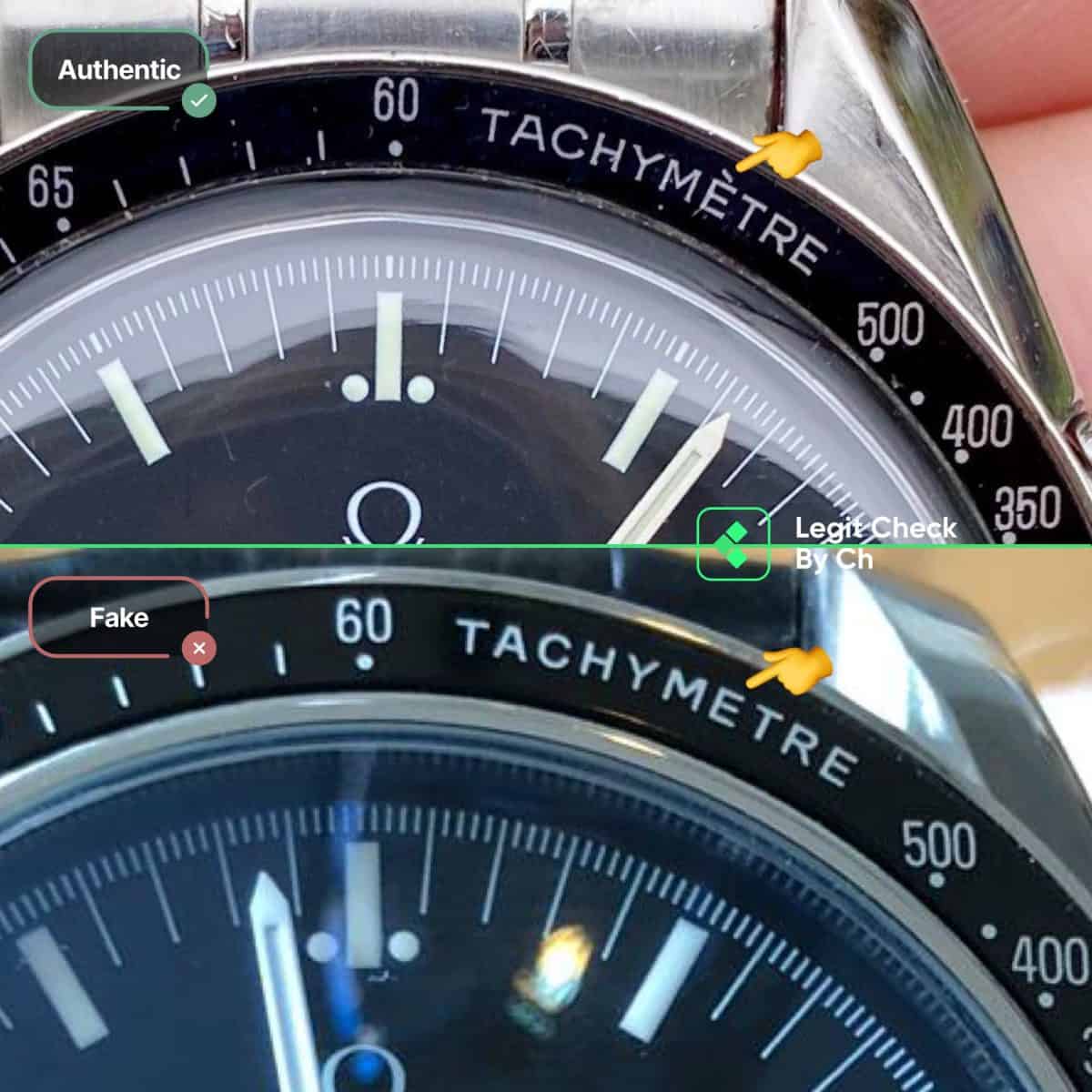
This is a simple yet telling sign. Genuine Omega bezels always feature the accented “È.” Counterfeits skip this detail more often than not, and it’s an instant red flag to anyone familiar with the model.
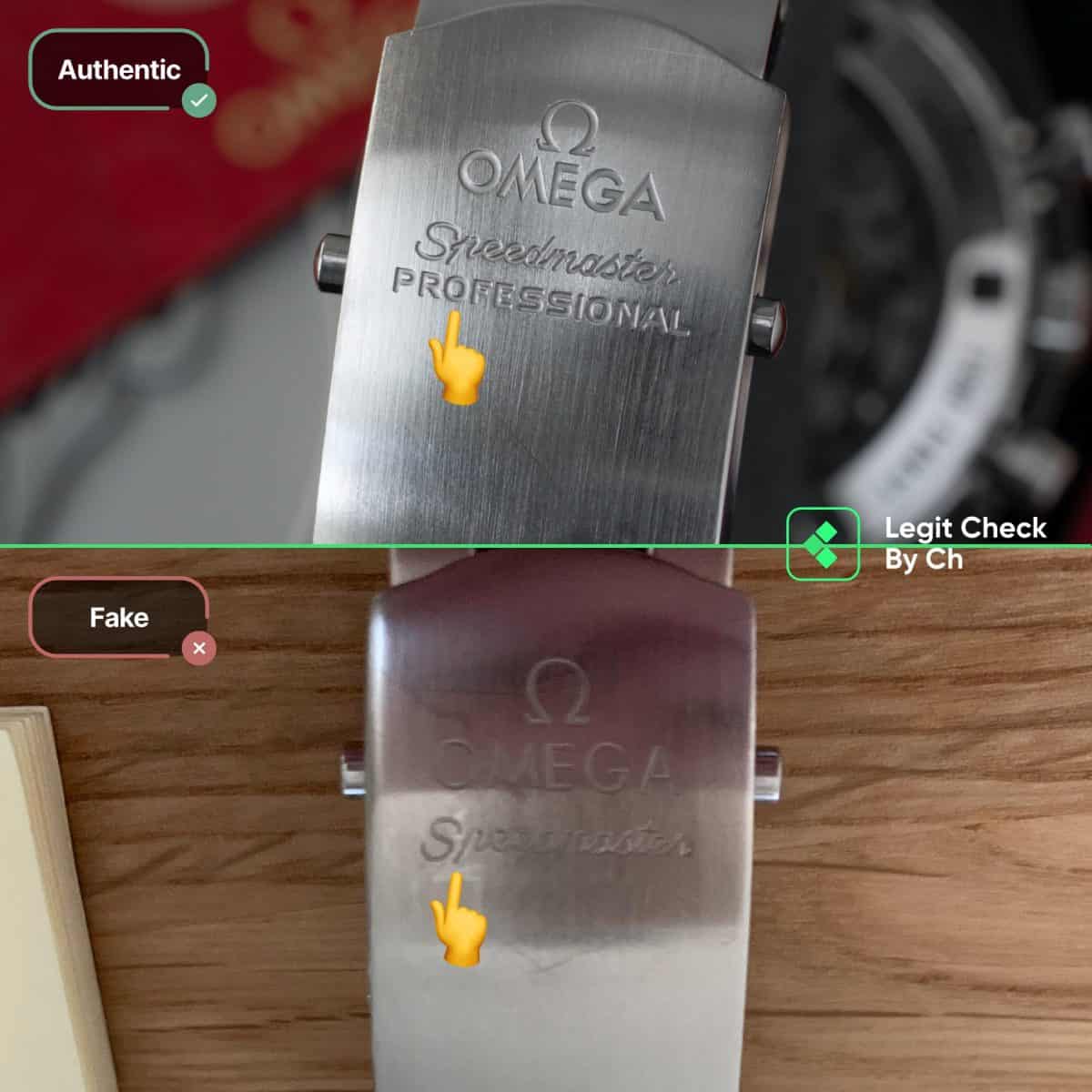
The clasp engraving is another area where Omega’s craftsmanship shines.
The “PROFESSIONAL” marking, alongside other inscriptions, is deeply and cleanly engraved, never shallow or off-center. This precision is consistent across authentic models.
On counterfeit clasps, these details often disappear. Some fakes leave the clasp completely blank, while others attempt engravings that look faint, shallow, or uneven.
Even high-tier replicas sometimes skip the “PROFESSIONAL” marking entirely, which is a giveaway that the clasp wasn’t produced to Omega’s standards.
Check out this example:
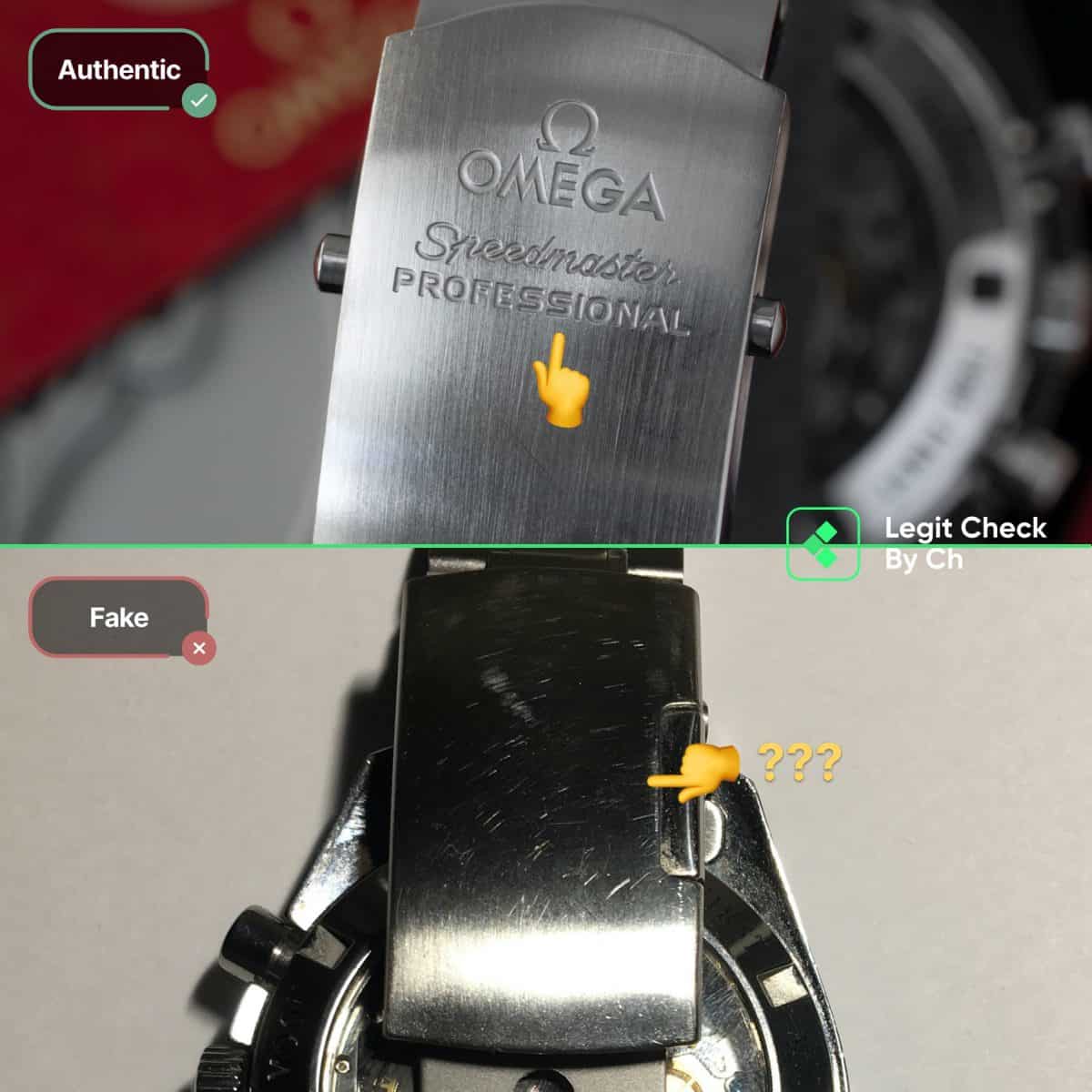
The fake watch does not have its inscriptions present on the clasp.
Even though this was a lower-quality replica, we’ve highlighted this model so as for you to remember that there are actually replicas like these floating on the market.
Bracelet articulation standards are shown in our Audemars Piguet Royal Oak guide.
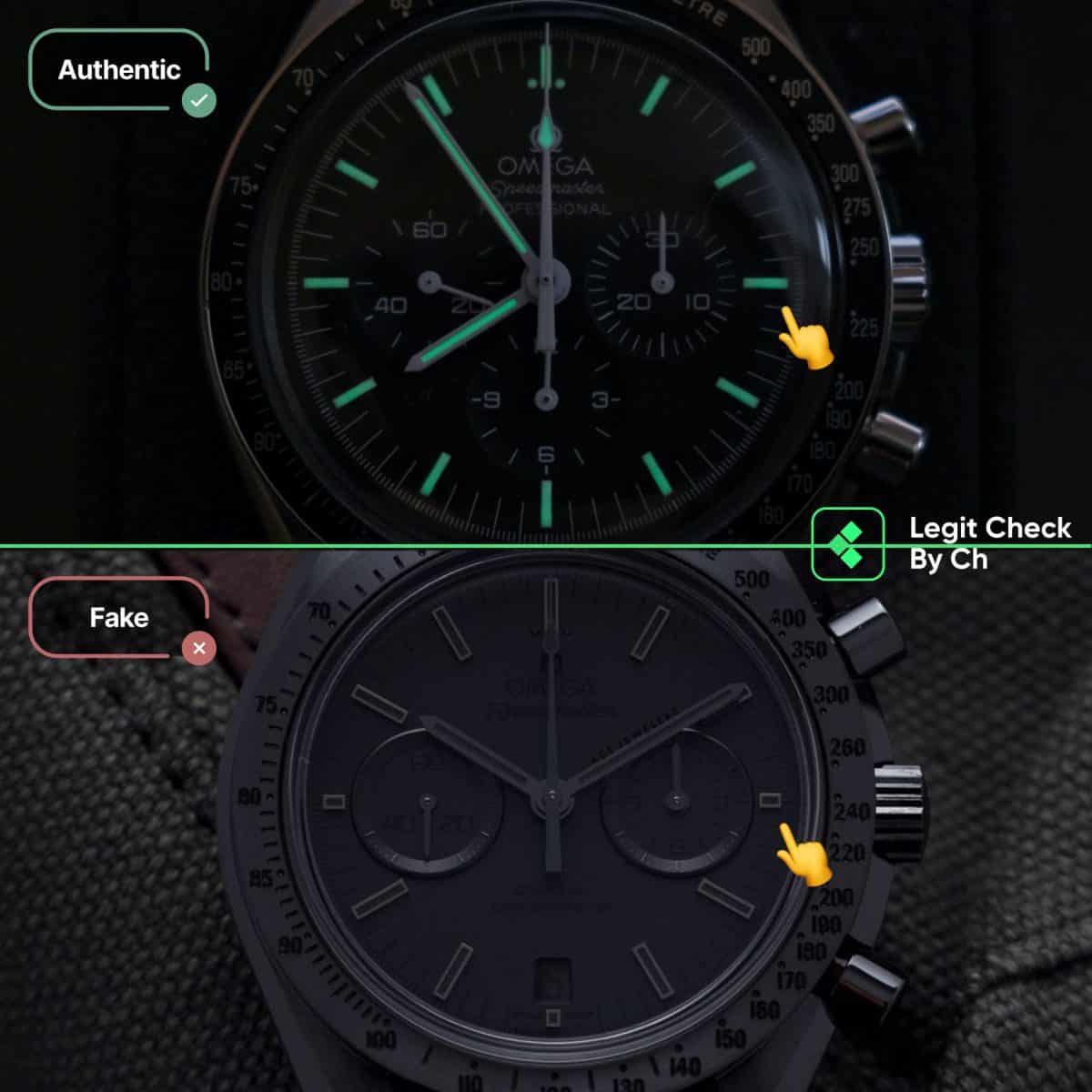
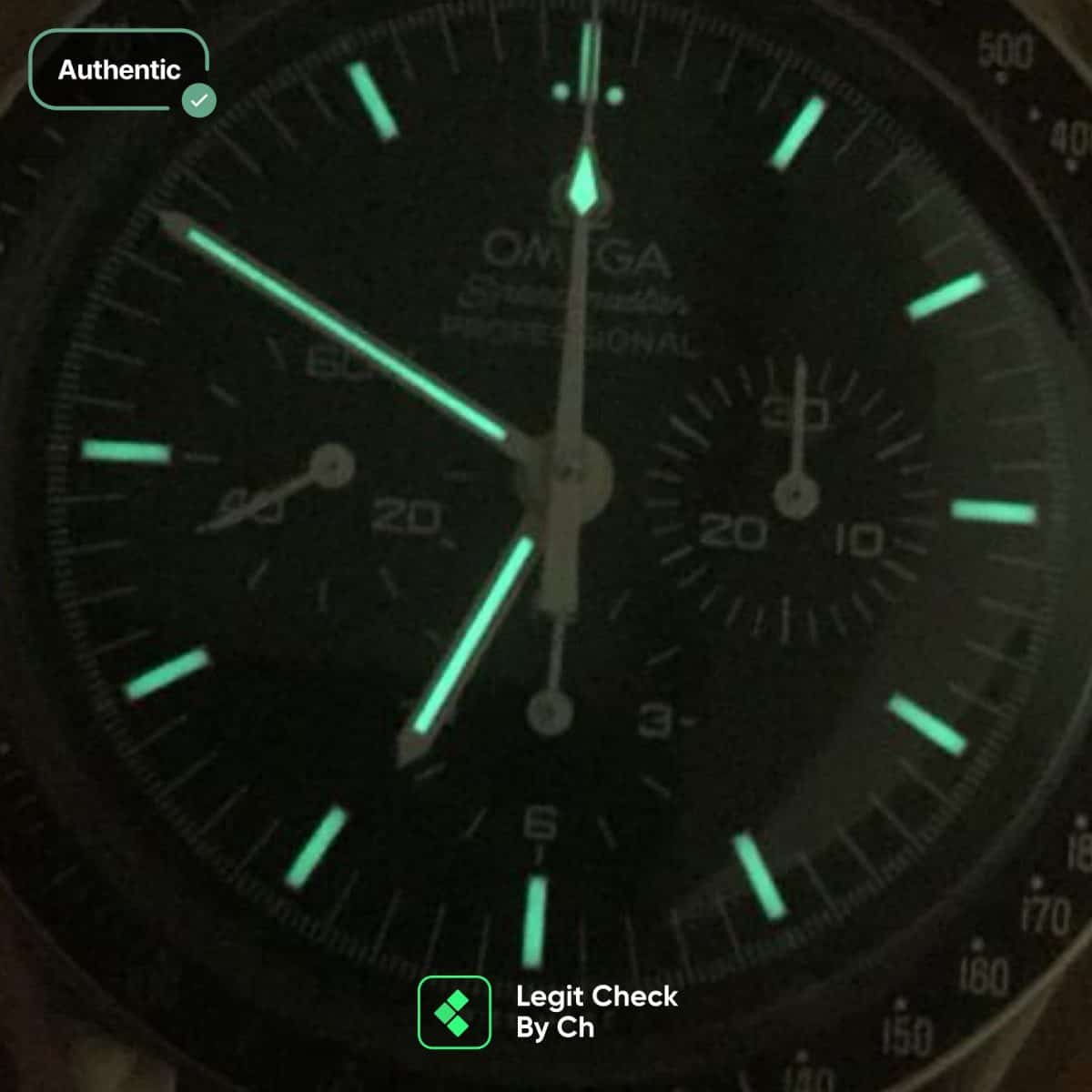
The luminous paint on a genuine Speedmaster is carefully applied and designed to hold a charge, providing strong visibility in the dark.
When charged under light, the glow is immediate, powerful, and evenly distributed. Collectors know this is a signature quality that Omega maintains consistently.
Counterfeits rarely match this standard. Many replicas skip lume entirely, leaving the watch useless in low light. Others apply it poorly, resulting in a weak, patchy glow that looks dull compared to the vibrant aqua-green of the real thing.
If you’re unsure, a quick lume test in the dark can expose a fake within seconds.
Looking at the authentic watch, you can notice how it glows in the dark in a really nice and powerful manner, highlighting a colourful aqua-green.
→ Some of the replicas have the lume effect, however, it is noticeably less powerful. Keep an eye on this tell, too!
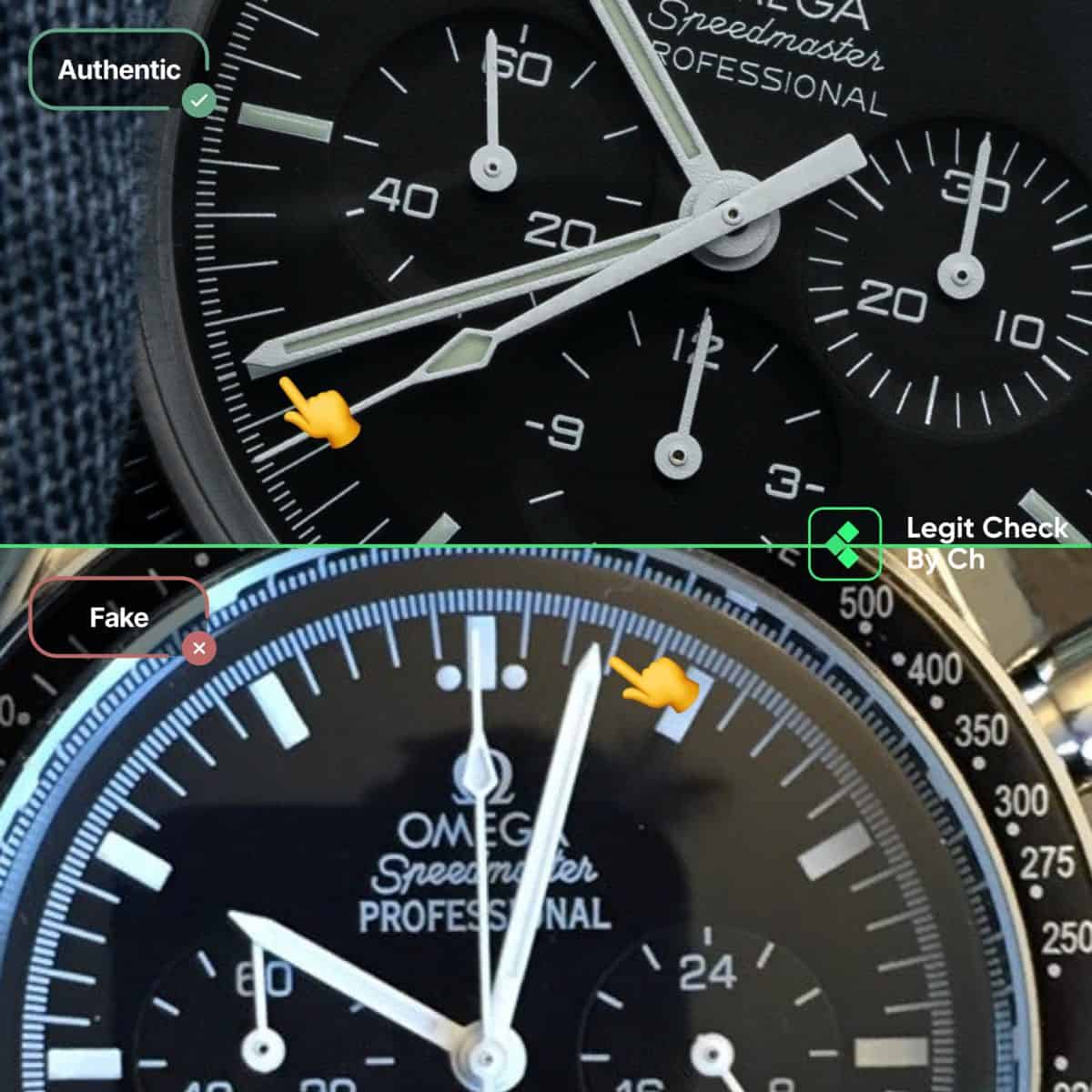
The authentic Speedmaster’s minute hand is carefully proportioned. It extends nearly to the outer track, ensuring accurate readability.
The arrow-shaped tip adds sharpness and precision, a hallmark of Omega’s finishing.
On counterfeit models, the minute hand is noticeably undersized. It falls short of the markers, creating an awkward gap that makes the dial look unbalanced.
The tip is often flat rather than pointed, which dulls the overall look of the watch.
→ Side-by-side, the difference in proportions and finishing becomes instantly obvious.
Pressed for time? Here are the key checks collectors use to confirm a genuine Speedmaster from a fake:
These nine checks catch the most common counterfeit flaws. For serious collecting, compare with trusted reference photos or have the movement inspected by a professional.
The Omega Speedmaster Professional is more than a chronograph – it is the Moonwatch, worn during Apollo 11 and etched into history.
With values ranging from several thousand to well over five figures depending on the reference, it has become one of the most counterfeited Omega models in circulation.
The challenge for collectors is that many replicas copy the case and dial well enough to fool the untrained eye.
Our Speedmaster authentication service gives you certainty. Every watch is inspected by human experts, never automated tools, and we cover all references, from vintage caliber 321 models to modern sapphire-sandwich editions.
Each evaluation is hands-on, focusing on the details counterfeiters rarely master.
When authenticating a Speedmaster, we look at:
We’ve authenticated thousands of watches and prevented collectors from losing millions to counterfeits. Our process is trusted by buyers and sellers who want reassurance before making significant transactions.
Every authentication includes a Certificate of Authenticity. This document is not just peace of mind, it is protection.
Whether you need leverage in a refund dispute, proof for insurance, or credibility at resale, the certificate can be the difference between securing your investment and losing it.
👉 Authenticate your Omega Speedmaster Professional with us today and own a piece of history with complete confidence.
The Moonwatch rewards close inspection.
In this guide, we walked through an authenticity-check that starts with function, then moves to layout and finishing.
A genuine Speedmaster Professional uses a manual-wind movement with a smooth chronograph sweep, embossed sub-dials with real depth, and precise typography that anchors the entire dial. Once you know where to look, the difference between authentic and counterfeit becomes clear.
Think in layers. First observe the sweep of the chronograph hand and the spacing of the registers. Then study the bezel script and the presence of the accented “TACHYMÈTRE.” Finish with the bracelet and clasp, lume behaviour, and hand proportions.
Authentic examples show harmony from the movement to the caseback. Fakes usually break that harmony in more than one place.
Key points to verify:
Not fully convinced?
If you are moving thousands on a Speedmaster, rely on a professional review.
Our authentication is 100% human, never AI, and each watch is examined by specialists who handle this reference daily.
You receive a clear verdict and a Certificate of Authenticity for peace of mind, resale, and insurance.
Before you finalize a purchase, let us perform a full authenticity-check. It is a simple step that protects both your budget and the history you want on your wrist.
Make history – not mistakes.
We verify the Moonwatch where it matters: manual-wind sweep, recessed sub-dials, TACHYMÈTRE accent, and clasp markings – so you own the story, not a good copy.
Discreet. Human-only review. Built to protect your budget and the legend on your wrist.
Did you enjoy this guide? Check out more here.
Every Omega Speedmaster has a unique serial number etched onto the case (commonly between the lugs) and on the movement. This number ties back to Omega’s production records and can be used to confirm the watch’s model, production year, and authenticity. On a genuine watch, the engraving is clean, precise, and consistent – never shallow, uneven, or sloppy. You can request an official Extract from the Archives from Omega, which matches the serial number to its original delivery details. Counterfeits often use random or repeated serials that don’t match Omega’s database.
Yes, but only with extreme caution. While papers add value and trust, they aren’t the sole proof of authenticity. Many vintage Speedmasters have lost their warranty cards over the decades. If you’re considering a watch without papers, focus on condition, movement verification, and seller reputation. Always compare serial numbers with reference guides and, if possible, have the movement inspected by a professional watchmaker. A watch without papers should be priced lower, but if it’s authentic and serviced, it can still be a great buy.
NASA tested multiple chronographs in the 1960s, including Rolex, Longines, and Omega. The Speedmaster survived extreme tests for temperature, pressure, vibration, and shock – conditions designed to simulate space travel. Other watches failed, but the Speedmaster passed, which is why it was officially flight-qualified in 1965. Rolex’s chronograph couldn’t withstand the same conditions, particularly temperature swings. This is a major reason the Speedmaster is forever linked with the Apollo missions and “the Moonwatch” name.
Omega recommends servicing a Speedmaster every 5–8 years, depending on usage. Manual-wind chronographs like the Moonwatch rely heavily on clean lubrication and properly adjusted gears. If the watch is exposed to water, shock, or magnetic fields, it may need service sooner. Signs it’s due include poor timekeeping, stiff winding, or chronograph hands that don’t reset correctly. Regular servicing not only preserves accuracy but also protects long-term value.
The hesalite crystal used on many Moonwatch models is more prone to scratches than sapphire but can be polished easily with products like Polywatch, restoring clarity in minutes. The stainless steel case and bracelet are well-finished but not immune to scuffs. Collectors often prefer hesalite because of its vintage look and easy maintenance. With sapphire crystal models, scratches are much rarer but chips can be harder to fix. Like any tool watch, wear will show over time, but careful maintenance preserves both aesthetics and value.
Need our opinion in regards to the authenticity of your watch? It’s a service we provide.
Alternatively, we have free authentication resources for watches: written guides and video tutorials.
Thank you for reading this,
Ch Alex
Other authenticity-check guides for you
The guides below follow the same detailed, step-by-step approach, each one covering a model that Speedmaster buyers often compare, cross-shop, or aspire to.