Last Updated on October 6, 2025 by Ch David
Fake vs real Bottega Veneta bag – how do you tell the difference?
With pieces like the Cassette, Jodie, and Pouch becoming icons, Bottega has also become one of the most copied luxury brands on the market. Some fakes are obvious. Others look legit until you zoom in on the right details.
This 2025 guide will walk you through exactly how to authenticate a Bottega Veneta bag, with clear comparisons and expert tips that apply to every model and colorway. And if you want a guaranteed answer, our team also offers professional Bottega Veneta authentication.
We’ve also put together a full Bottega Veneta Cassette legit check guide, so if you own that model, make sure to give it a look too.

The best way to spot a fake Bottega Veneta bag is to check the interior label. On authentic bags, the leather patch is high-quality, evenly stitched, and embossed with crisp “BOTTEGA VENETA – MADE IN ITALY” text.
Fakes often get this wrong with flimsy leather, messy stitching, or fonts that look off – too thick, too thin, or poorly aligned.
That’s the quick check. For the full breakdown across all details, keep reading through the step-by-step guide below.
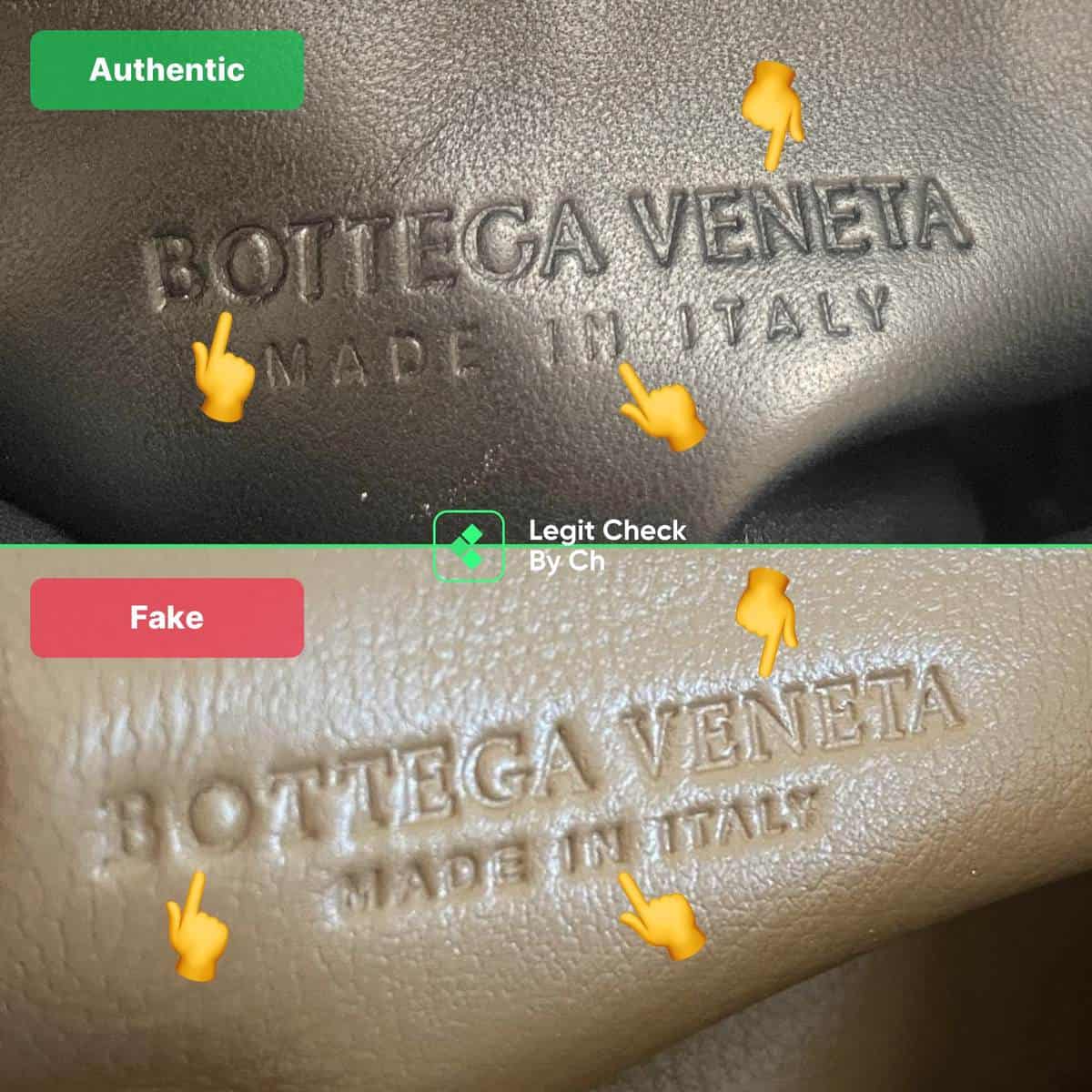
On a real Bottega Veneta, the interior label looks refined. The letters sit neatly on the leather without being too bold or heavy. Counterfeits often overdo it; their stamps look chunky and sunken in, almost like they’re trying too hard to leave a mark. This small detail is one of the easiest ways to call out a fake.
Is it too hard? Reach out to our expert Bottega Veneta authenticators:
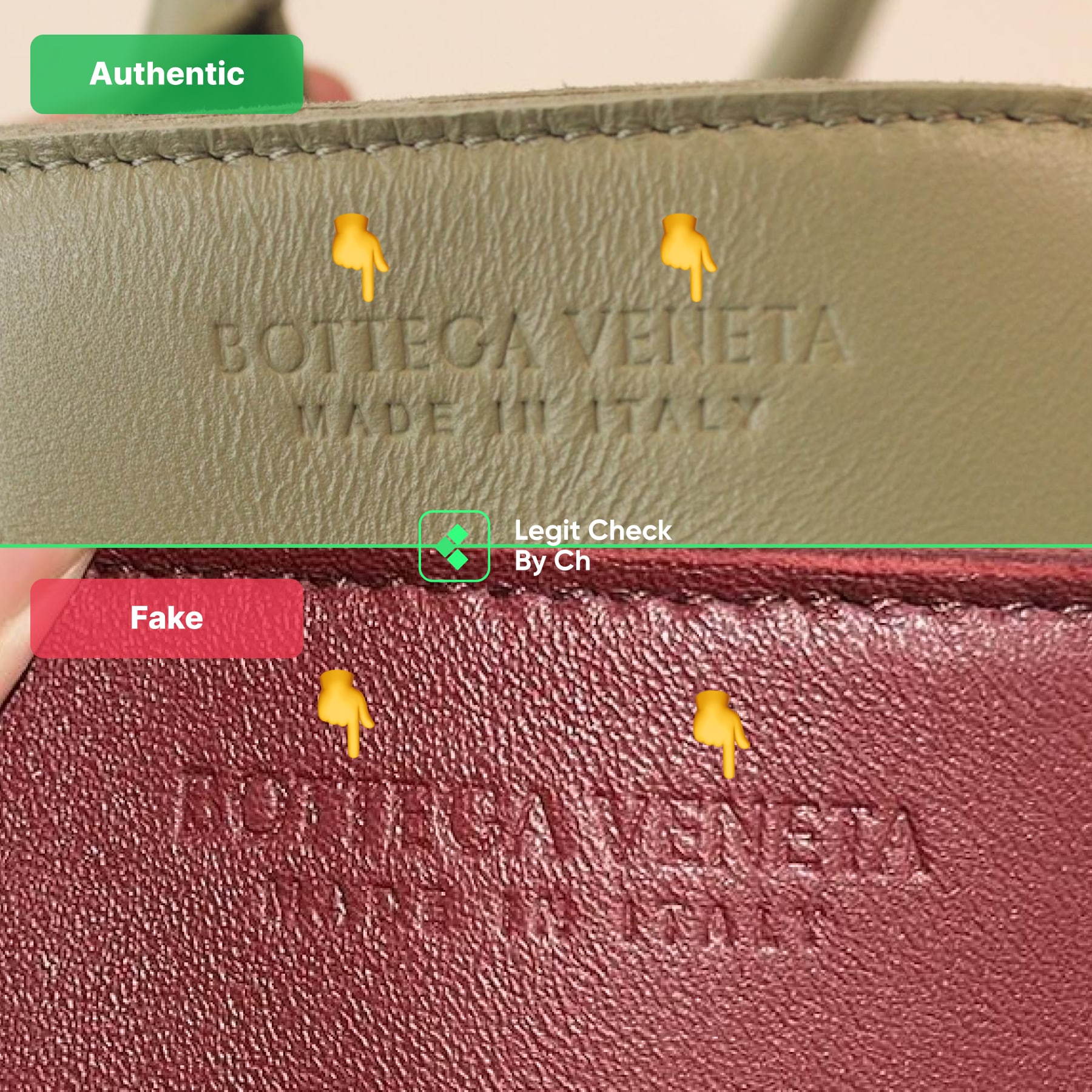
Some Bottega bags feature an exterior logo stamp, and this detail is a dead giveaway. On the authentic, the engraving is clean and deep enough to catch the light. Fake ones often miss the mark; their text is too thin, barely pressed into the leather, and ends up looking cheap. It’s a subtle flaw, but once you see it, you can’t unsee it.
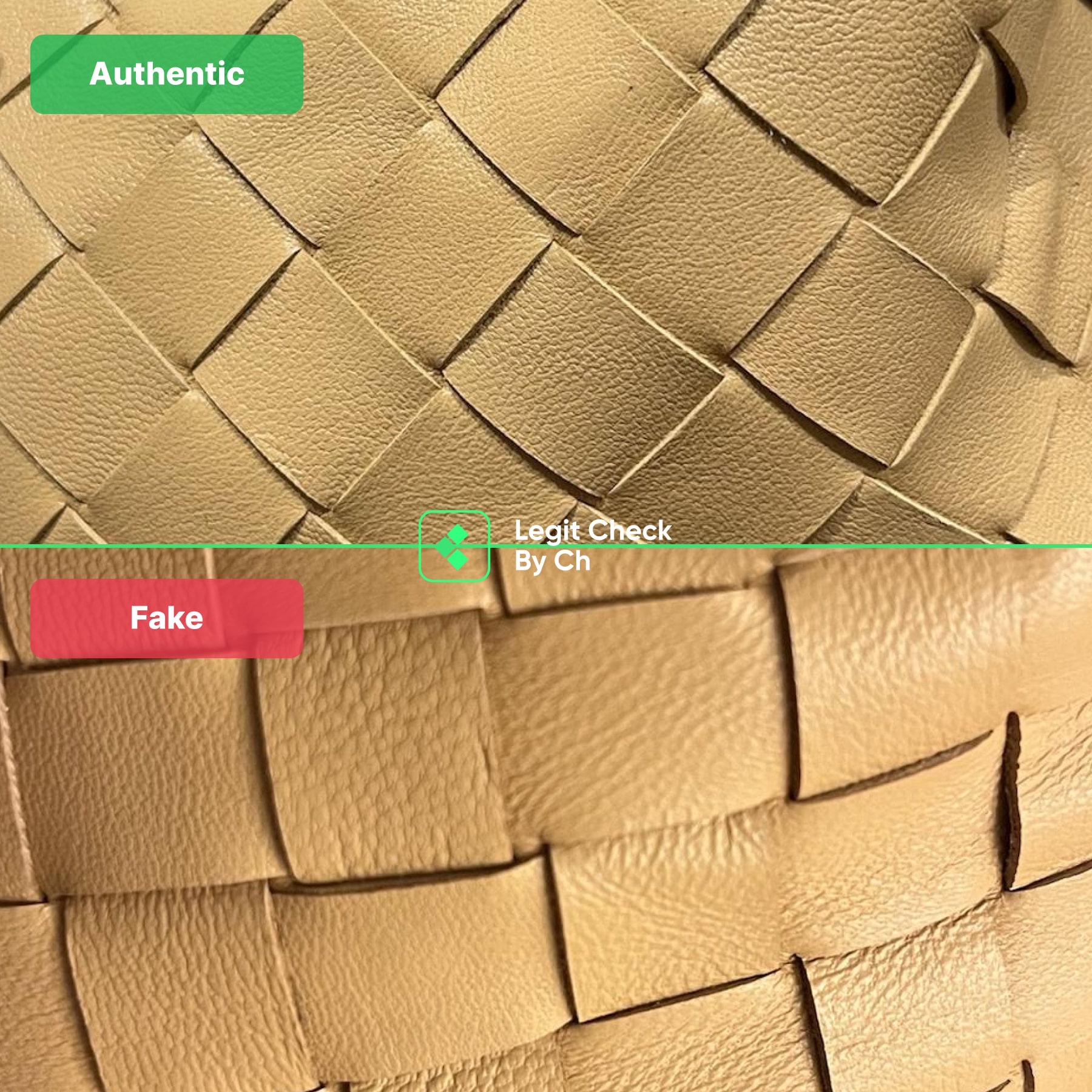
Bottega is known for its buttery leather. When you run your hand across it, it feels smooth and flexible without being flimsy. Replicas rarely get this right; their leather feels hard, overly rigid, or even plasticky.
If you have the bag in hand, this touch test is one of the fastest ways to spot authenticity.
If you’re into leather-focused designs, you might also want to check our Loewe Puzzle bag guide – Loewe’s craftsmanship has its own tells that fakes can’t copy.

A quick mention:
If in doubt, we recommend double-checking the steps we’ve explained above this line.
For some models, the side has a “gap” as portrayed below.
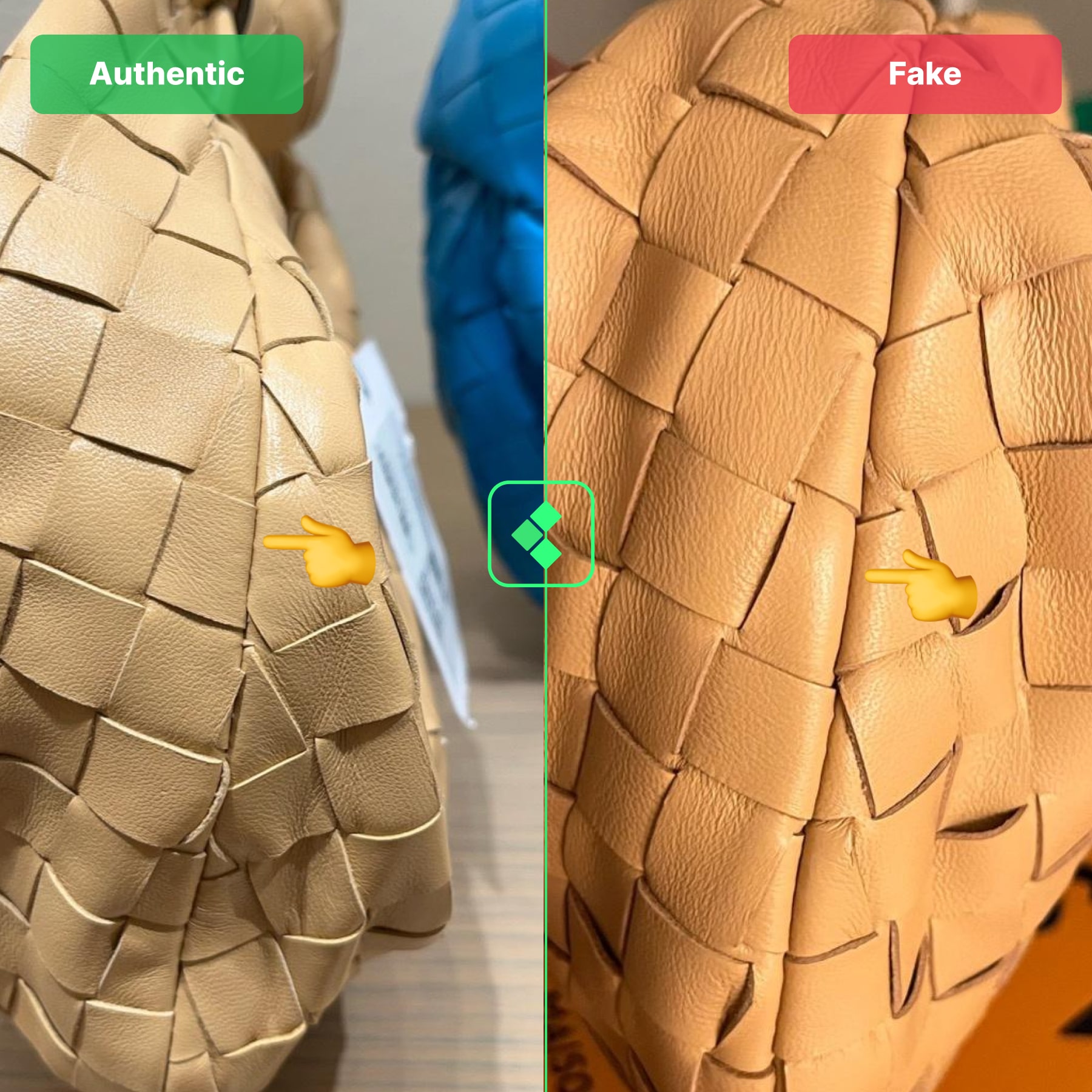
On genuine Bottega Veneta bags, this gap is small and almost hidden, keeping the bag’s silhouette sleek. On fake versions, the gap is way too wide, making the bag look chunkier. The reason? Poor construction and thicker leather that throws off the proportions.
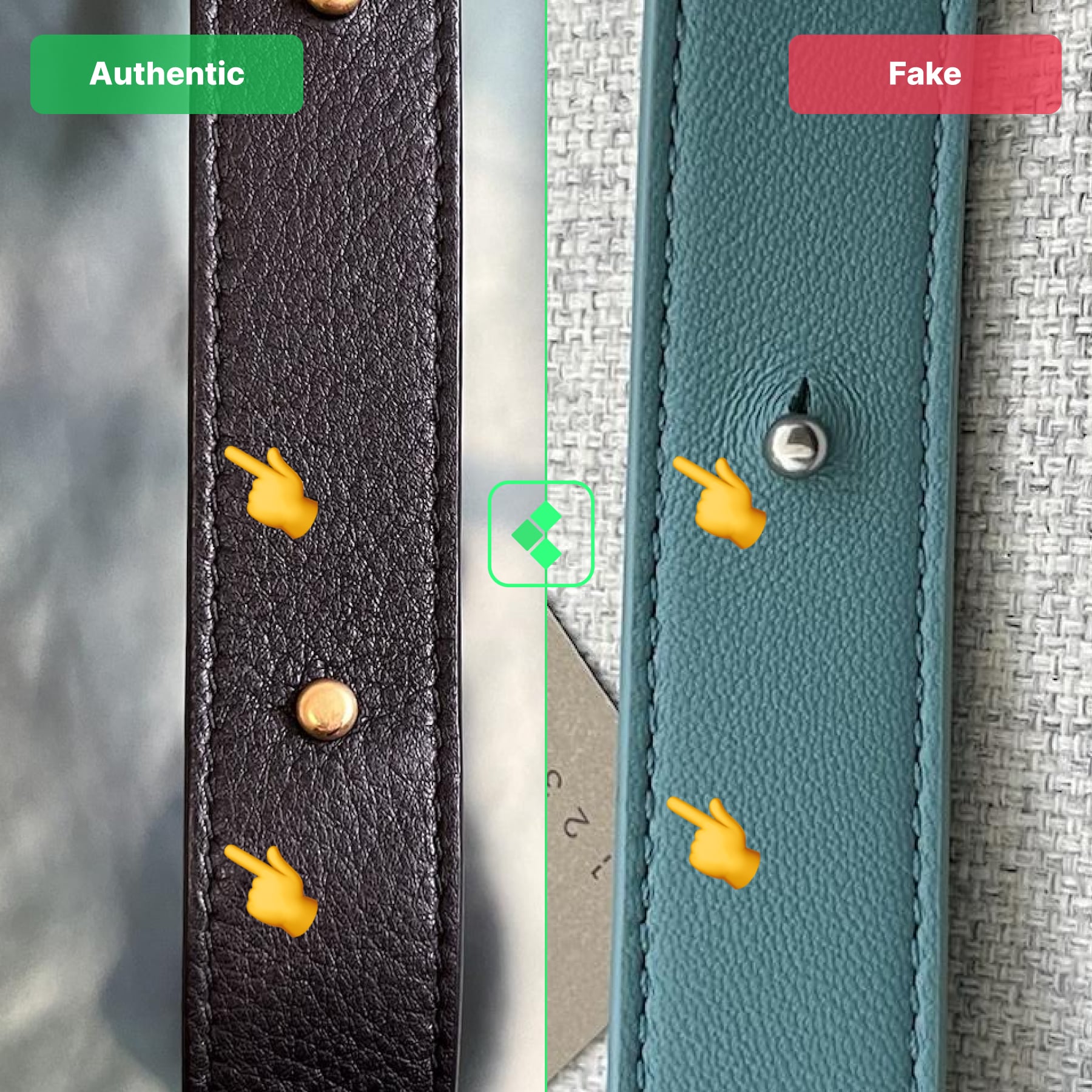
When you zoom in on the strap, the difference is obvious. Real Bottega Veneta bags keep the stitches long and slim, adding to the bag’s sleek look.
Fakes go the opposite way: their stitches are stubby and thick, which makes the strap look messy.
Plus, the overall stitching density is usually lower on replicas, so they never achieve that polished finish.
Stitching is such an easy giveaway across brands. Just like with the Dior Saddle bag, it’s one of the first things we recommend checking.
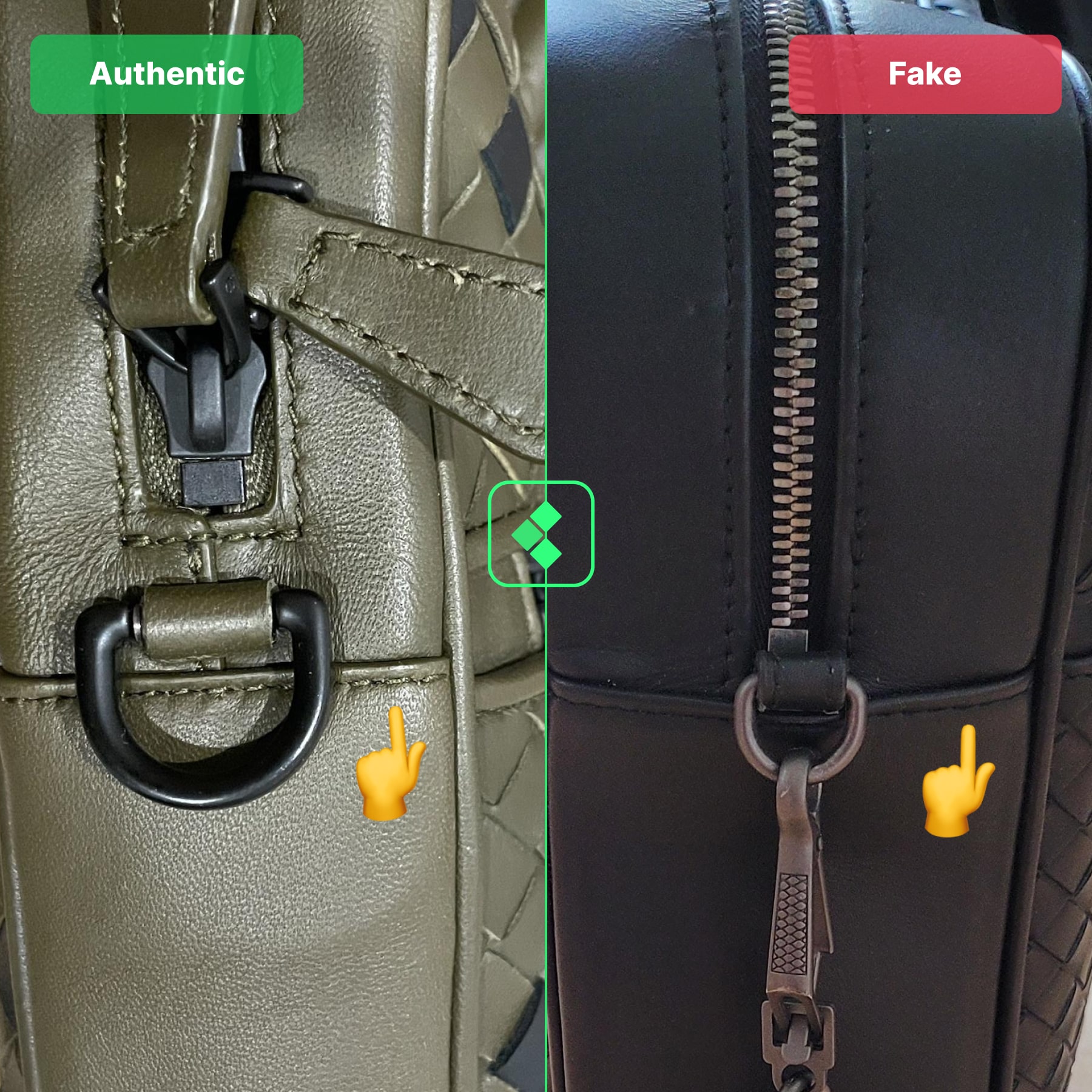
On the sides of the bag, genuine stitches stand out in a good way – they’re sharp, consistent, and aligned. Fake ones often botch this detail with threads that are too thin or shallow, making the bag look unfinished.
It’s a small touch, but it’s one of those details that separate high-end craftsmanship from shortcuts.
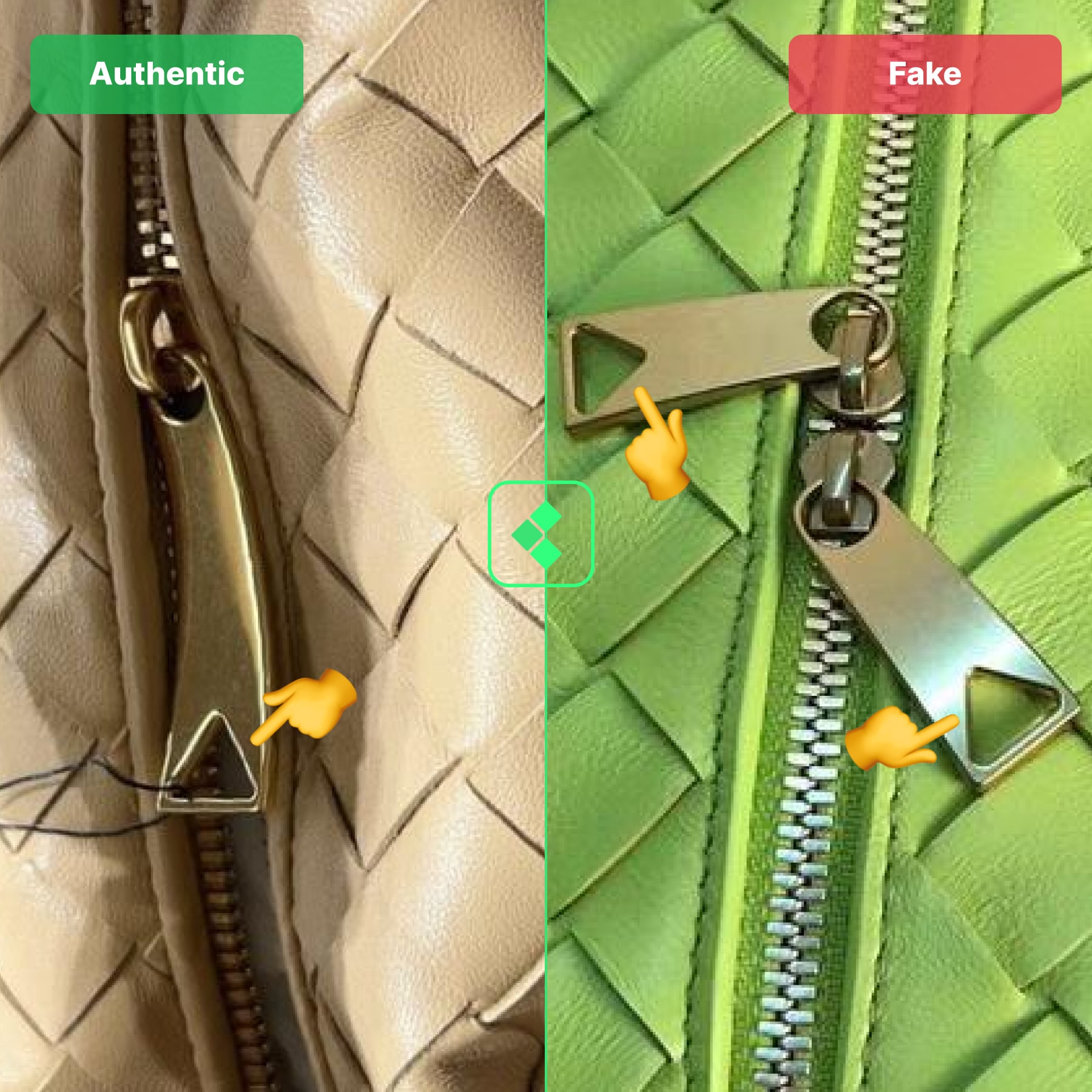
Look closely at the zipper pull. Authentic Bottega zippers form a neat, balanced triangle that feels sturdy. Counterfeits often mess this up, making the triangle wider and flatter. It might not jump out right away, but side by side, the fake zipper loses that geometric precision.
Hardware and zippers are also key details in other classics, like the Burberry bag: fakes almost always get the feel and proportions wrong.
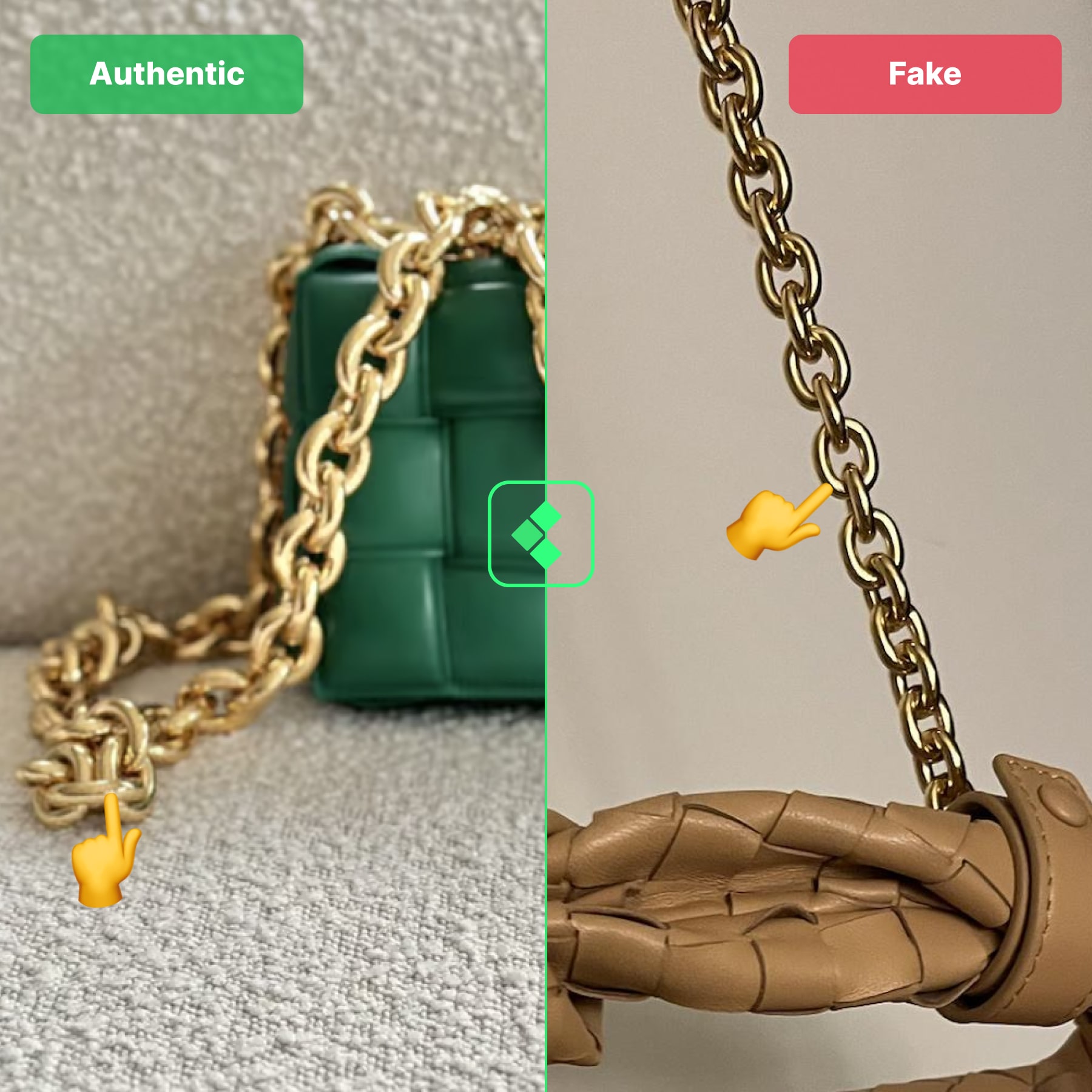
Bottega chains are famous for their glow. On the real thing, the gold tone catches the light beautifully and feels rich to the touch. Fake chains look off right away: they have a muted color, almost washed out, and they fail to reflect light properly. The shine (or lack of it) is one of the quickest ways to spot a replica.
Don’t have time for the full guide? Here’s the lightning-fast legit check. These are the key spots that instantly separate a real Bottega Veneta from a fake – no deep dive needed.
That’s your speed run.
If you tick off all these checks in under a minute, you’ll catch 99% of the fakes out there.
But if you’re ever unsure, zoom into the interior label, leather feel, and chain shine – those three alone call out most replicas right away.
Sometimes it’s easier to see the details in action. In this short video, we walk you through the main signs to check when authenticating a Bottega Veneta bag. Watch carefully and you’ll notice how replicas slip up on the label, stitching, and finish.
Here are some tips for authenticating Bottega Veneta bags yourself.
The most important thing to look at is the text – whether it’s on the inscriptions or the buckles.
On the inscriptions, replicas often look very different. The stamping is deeper into the leather and the font looks off.
On the buckles, you can notice the text size and the spacing between the letters being inconsistent.
When you focus on the text and know what to look for, it becomes much easier to detect inauthentic pieces.
Bottega Veneta has become one of the most copied luxury brands in the world, from the Cassette to the Jodie to the Pouch, replicas are everywhere. And while some fakes are obvious, others look almost perfect until you know exactly where to look.
That’s why people turn to us.
At Legit Check, we’ve authenticated thousands of Bottega bags, covering every model, size, and leather type. No AI scans, no shortcuts, only real human experts reviewing your exact piece in detail.
What we look at:
What you get:
We’ve helped clients avoid millions in counterfeit luxury losses, and your Bottega could be next on the list.
👉 Got doubts about your bag? Let us give you the truth.
We’ve broken down all the small but powerful details that set a real Bottega apart from replicas. From the thin, sharp interior label text to the buttery leather feel, the aligned stitching, and the shine of the chain, these are the checkpoints that fakes consistently fail to nail.
Here’s a quick recap before you make your call:
If you’ve gone through these checks and your bag passes, you can feel confident rocking your Bottega. But if even one detail looks off, that’s usually all it takes to call out a fake.
Still not sure? That’s exactly why our team exists. We’ll review your bag with trained eyes, break down every detail in a clear report, and if you need it, provide a Certificate of Authenticity to back you up on refunds or resale. Fast, friendly, and 100% human.
Bottega Veneta bags are expensive because of their Italian craftsmanship, premium leather, and limited production. Each piece is handmade using techniques like the intrecciato weave, which takes hours of skilled labor. The brand also avoids flashy logos, focusing instead on understated luxury – making the craftsmanship itself the main status symbol. Unlike fast-fashion brands, Bottega produces in small batches, which adds exclusivity and keeps resale value high.
Bottega Veneta is an Italian luxury fashion house, founded in Vicenza, Italy, in 1966. While the brand is currently owned by the French luxury group Kering, all authentic Bottega Veneta bags are still produced in Italy. If you see a tag or listing that says the bag was made in another country, that’s a red flag for a fake.
Yes. Authentic Bottega Veneta bags are made from high-quality lambskin, calfskin, or nappa leather. The signature feature is the buttery-soft feel – flexible, smooth, and never plasticky. Fake bags often fail this touch test, using stiff, synthetic materials that don’t age well. If your bag feels overly rigid or has a chemical smell, chances are it’s not real Bottega leather.
With proper care, a genuine Bottega Veneta bag can last decades. The brand’s handwoven leather is designed to be both durable and timeless. Owners often report that even after years of use, the bags maintain their shape and softness. Fakes, on the other hand, tend to crack, peel, or lose their stitching within months because they’re built with cheaper materials and rushed manufacturing.
Bottega Veneta is famous for its “stealth wealth” philosophy. Instead of loud logos, the brand emphasizes craftsmanship and design details like the intrecciato weave. This no-logo approach makes Bottega stand out in the luxury world – the bag itself is the identifier. Counterfeits often miss this point, slapping on obvious logos or clumsy embossing that the real brand would never use.
Thanks for making it all the way here – if you stuck through this Bottega Veneta guide, congrats. You’re already ahead of most buyers when it comes to spotting fakes.
Need our opinion on your item’s authenticity? It’s a service we provide.
Get a fully-detailed report for why you have a real or fake item. Takes less than 48 hours!
Alternatively, use our free resources: written guides and video tutorials.
Thank you for reading this,
Ch Daniel and Ch David
You might want to check these out
If this guide helped sharpen your eye, you’ll definitely find value in our other step-by-step checks. From luxury bags to iconic jewelry, we’ve broken down the exact details you need to know so you never second-guess a purchase.