Last Updated on January 12, 2026 by Ch David
How to legit check a Louis Vuitton belt in 2025? This guide walks you through the exact steps, from buckle details to stamping, so you can spot a fake fast.
The LV belt is an all-time classic, and fake manufacturers know it.
Some are easy to call out. Others look legit until you zoom in.
From classic Monogram to Damier Graphite and seasonal drops, we’ll cover every detail you need to check.
Let’s make sure that buckle matches the price you paid.

Answer: The easiest way to catch a fake Louis Vuitton belt is by flipping it over and checking the stamp inside. That little bit of text says a lot — fakes usually have chunky letters, uneven spacing, or stamps that look too deep or too light. On authentic belts, the font is always sharp, clean, and perfectly centered.
It’s a quick way to catch a fake — but it’s not the only clue.
We’ll walk you through all the key details next, so you can legit check your Louis Vuitton belt with confidence.
Our free video on how to spot fake LV belts:
We’ve also got a full legit check guide for Off-White belts if you need it.
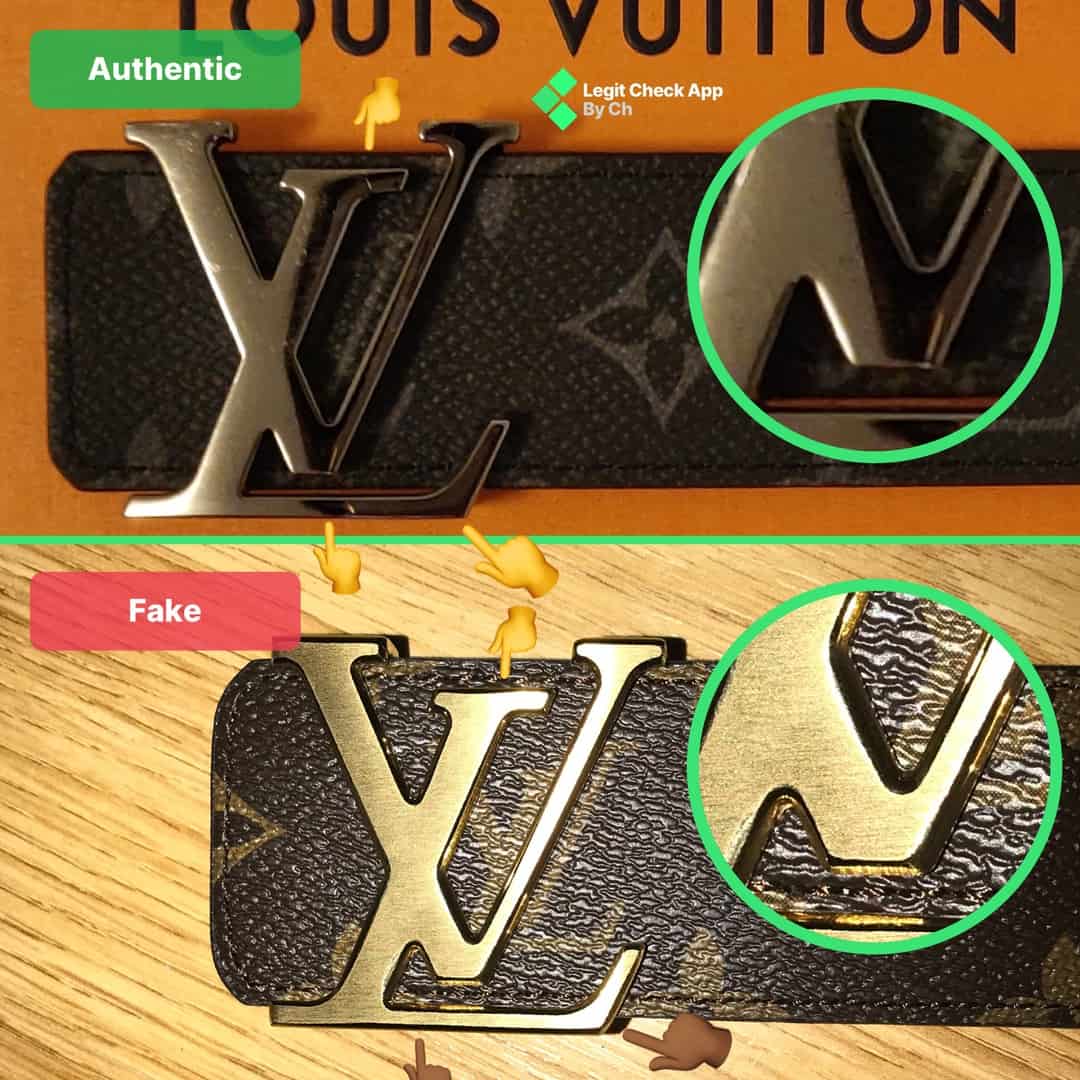
When it comes to the Monogram version, one of the most obvious flaws on replicas is the bottom of the “V”. On real belts, the corners are razor sharp, while fakes often go for rounded edges that make the logo feel off.
Look closely at the inner curve of the “V” as well — even if it seems minor, that curve is often one of the quickest ways to tell if you’re dealing with a replica. Authentic belts never get this wrong.

For the Damier version, the buckle’s letterforms are where the differences hit hard. A real “L” has a well-shaped serif that looks crisp and consistent. Fakes? You’ll often notice a weirdly thick or blunt serif, or a tip that just feels off.
Also, check how the letters are spaced. Replicas tend to squeeze the “L” and “V” too close, while authentic belts keep a noticeable and clean gap.
Last detail: focus on the vertical and slanted strokes inside the “V”. If one is bulkier than the other, or both are overly thick, that’s not an LV buckle — that’s a shortcut from a fake factory.
Finding it too hard? Reach out to our LV experts:
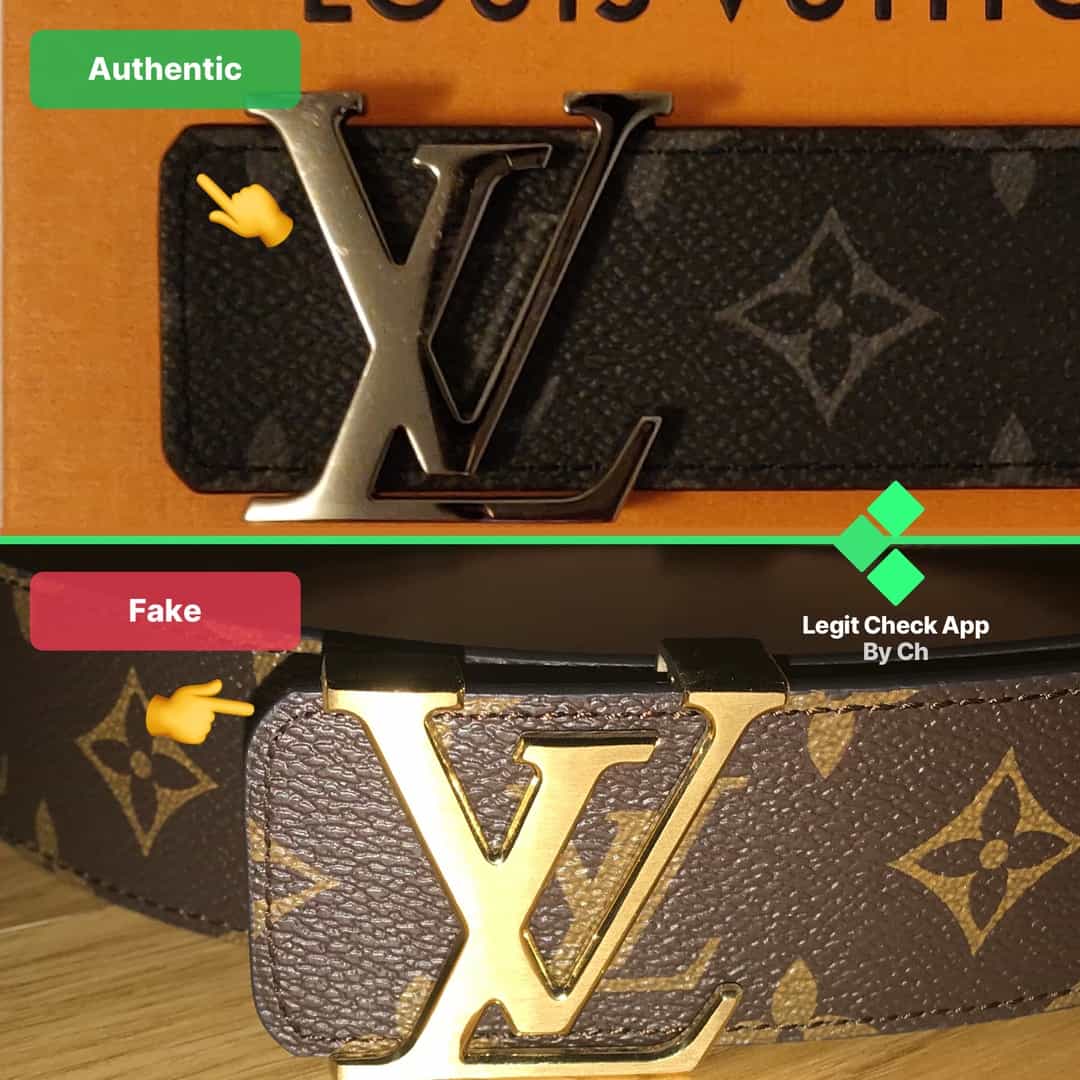
One of the biggest giveaways on fake Louis Vuitton belts is how the corner near the buckle is shaped. Authentic belts have a controlled, subtle curve — more like a soft angle than a rounded arch. Fakes usually exaggerate this curve, ending up with a too-rounded, bubble-like shape.
The stitching adds to the story: on real belts, it’s placed with care — not too close to the edge, always leaving a clean margin. Fakes mess this up by placing the stitch line almost flush against the buckle, which screams poor craftsmanship.
Even high-end replicas often miss this. They might fix one flaw, but then mess up this subtle corner curve. That’s why it’s such a reliable checkpoint.
And it’s not just belts. Even Virgil’s collabs — like the Louis Vuitton trainers — have been copied badly, and most replicas miss the precision LV is known for.
The fake belt’s corner is too rounded. The authentic belt arches less sooner compared to the fake example.
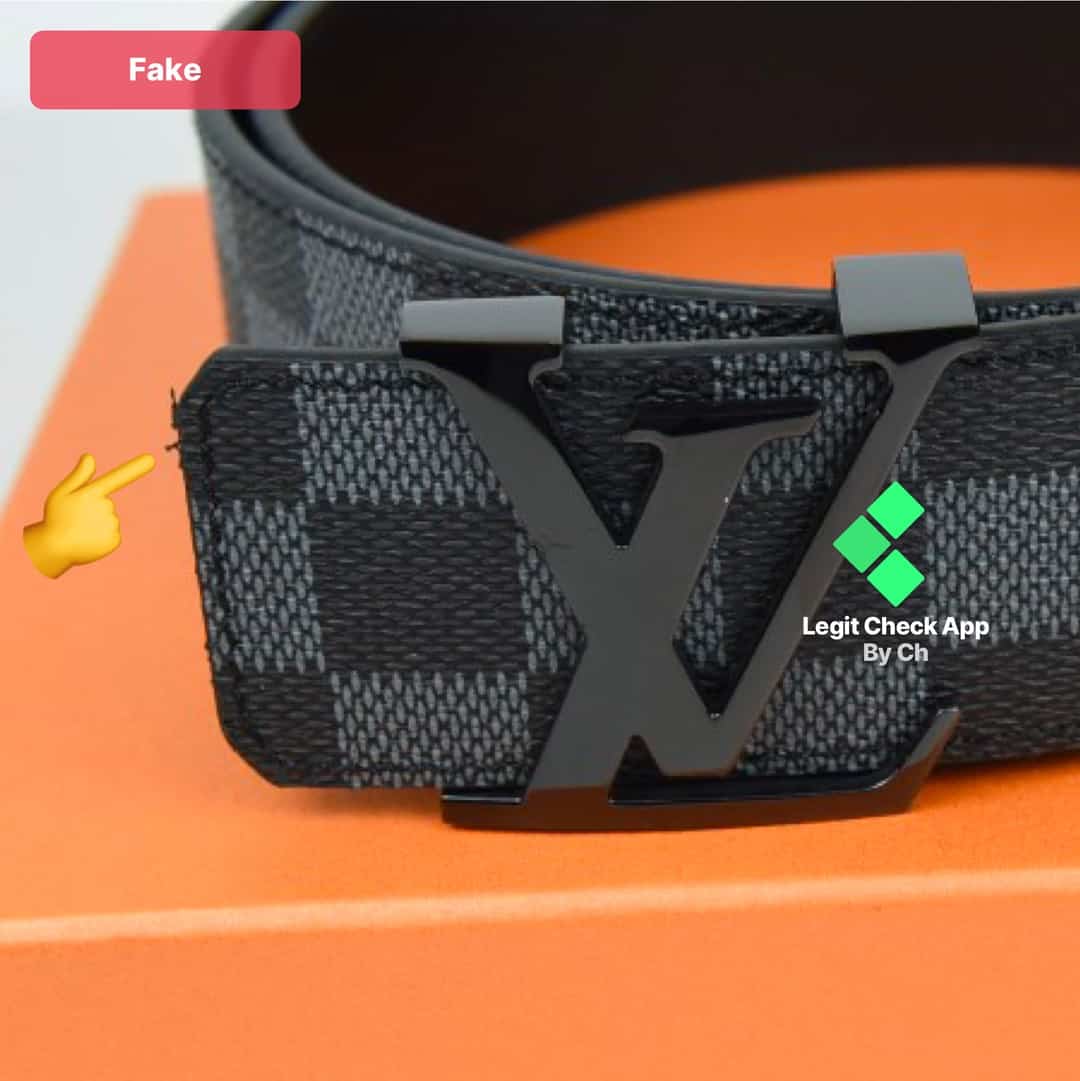

The Damier print makes buckle alignment really easy to check. On real Louis Vuitton belts, the “L” in the LV buckle should line up with half of the first full checkerboard square. The pattern feels balanced and intentional.
Fake belts usually mess this up. Either the squares are off-center, or the first set is completely cropped out. The “LV” might still look okay at a glance — but zoom in, and you’ll see that the whole design feels off.
That clean font spacing is also what gives away fakes on other LV pieces — like wallets, where one glance at the interior stamp is all it takes to spot a fake.
Also watch out for the “L” in the LV logo — in fakes, it often appears slightly crooked or thicker than the real deal.
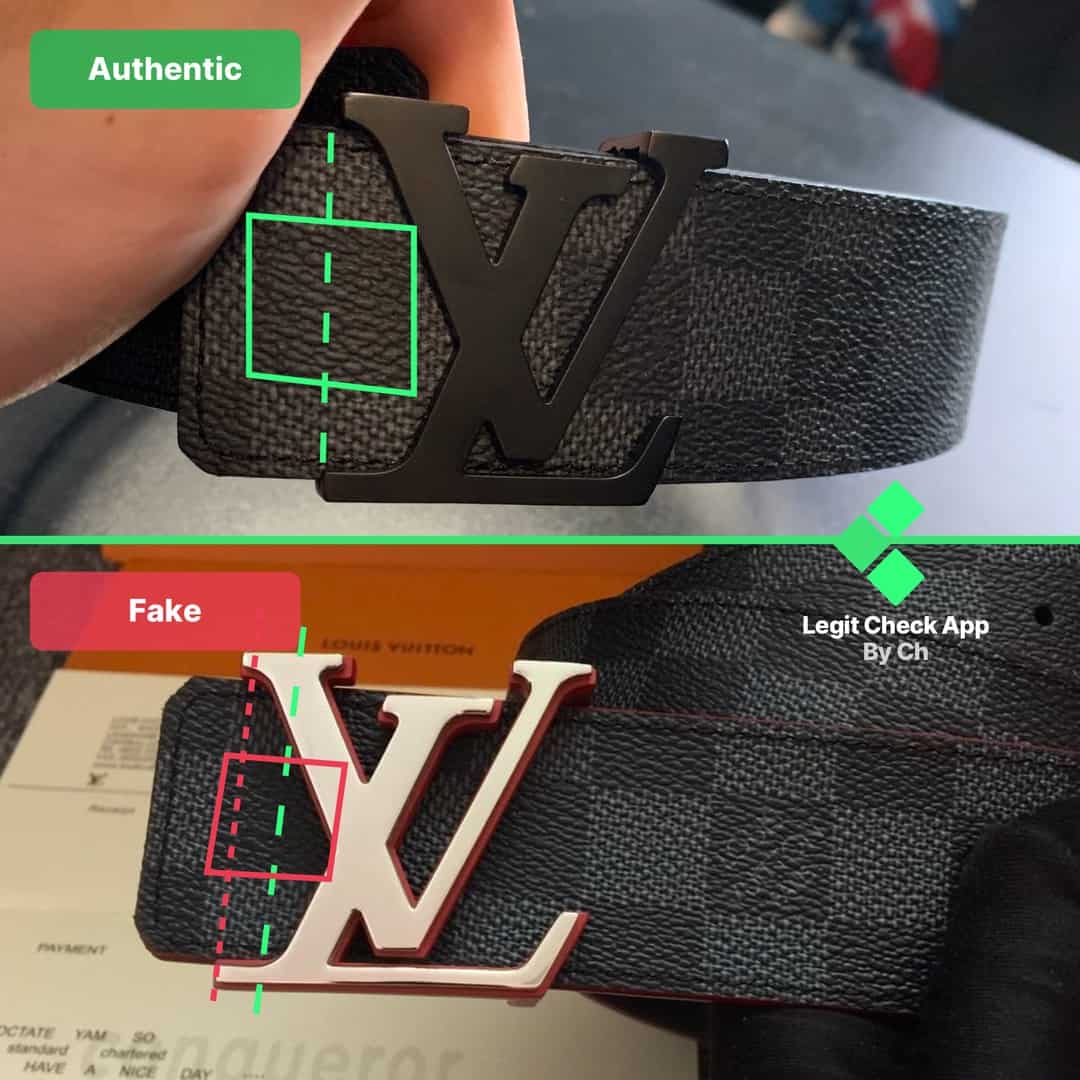
The squares are not as visible as the real ones — see the previous paragraphs for further guidance. On top of that, the fake buckle’s “L” character is crooked and misaligned and how the retail one is flawless.
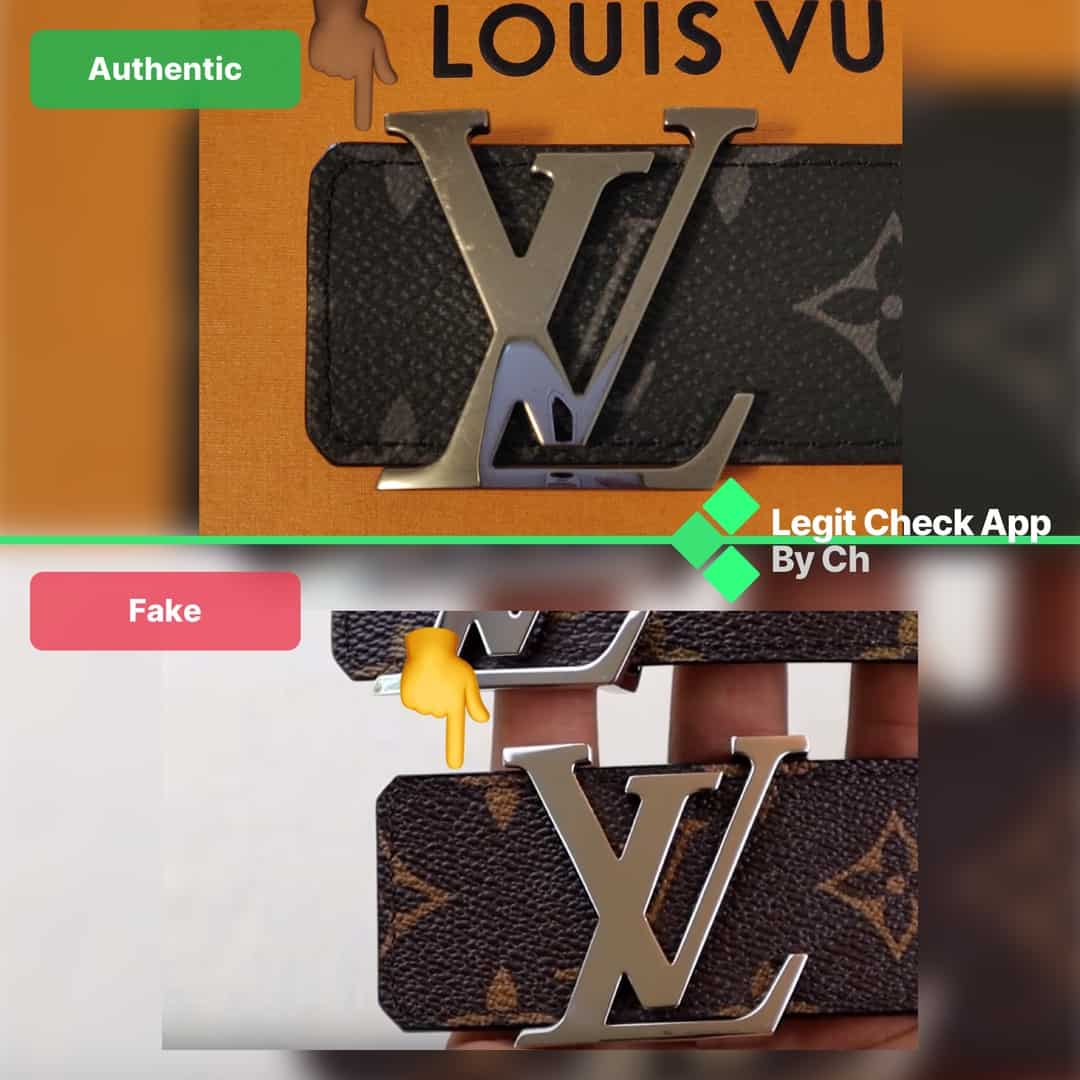
On the monogram belt, there’s less pattern to go off of — but you can still judge alignment based on spacing. Real LV belts always leave a balanced gap between the left edge of the buckle and the edge of the leather.
Fakes often push the buckle too far to the right, which throws the whole silhouette off. It’s subtle, but when you compare side by side, it’s obvious.

Start with the outside. On a real Louis Vuitton belt, the stitching is set slightly inward — giving the belt a more refined, balanced look. That gap between the stitching and the edge of the leather? It’s not random. It’s on purpose.
Fake belts usually miss this. Their stitching runs too close to the edge, and that clean visual separation disappears. Even if the thread looks neat at first glance, the placement is a dead giveaway.
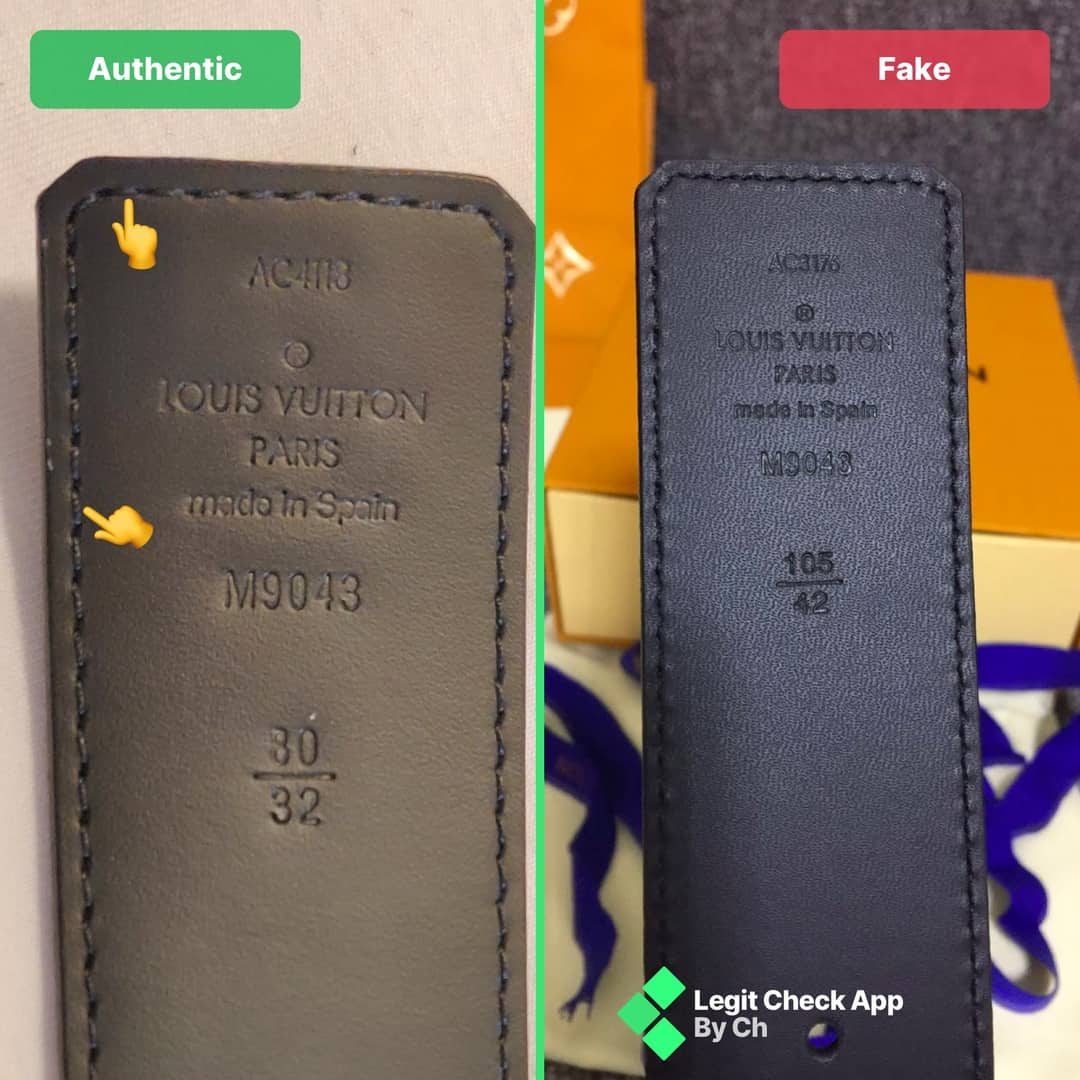
Flip the belt over and you’ll often spot a difference in craftsmanship right away. Real LV belts have tight, rich stitching on the inside — it’s part of what makes them feel premium.
Fakes tend to use fewer stitches, spaced out more widely. It’s a small shortcut that saves money during production, but it makes the whole interior feel off. Less thread, less detail, and way less convincing.
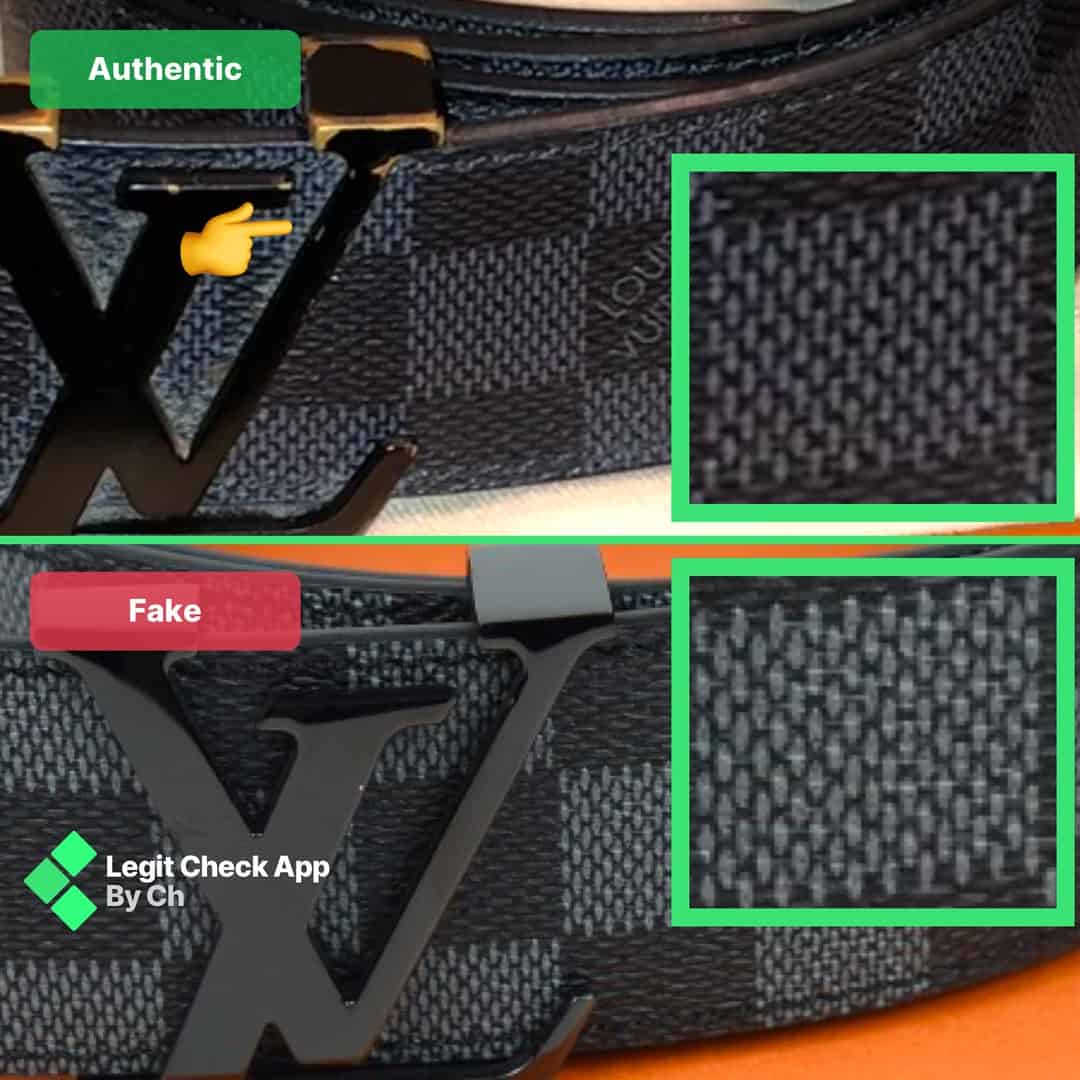
Zoom into the Damier squares — this is where fakes slip. Authentic Louis Vuitton belts have thin, clean vertical lines running through each grey square. It’s subtle, but once you see it, you’ll never miss it again.
Fakes often exaggerate these lines. They’re too thick, muddying the pattern and making it look off. Even high-tier replicas struggle here. And honestly, spotting this in person can be tricky — which is why we built our app to give you quick access to high-res comparisons when you need them.
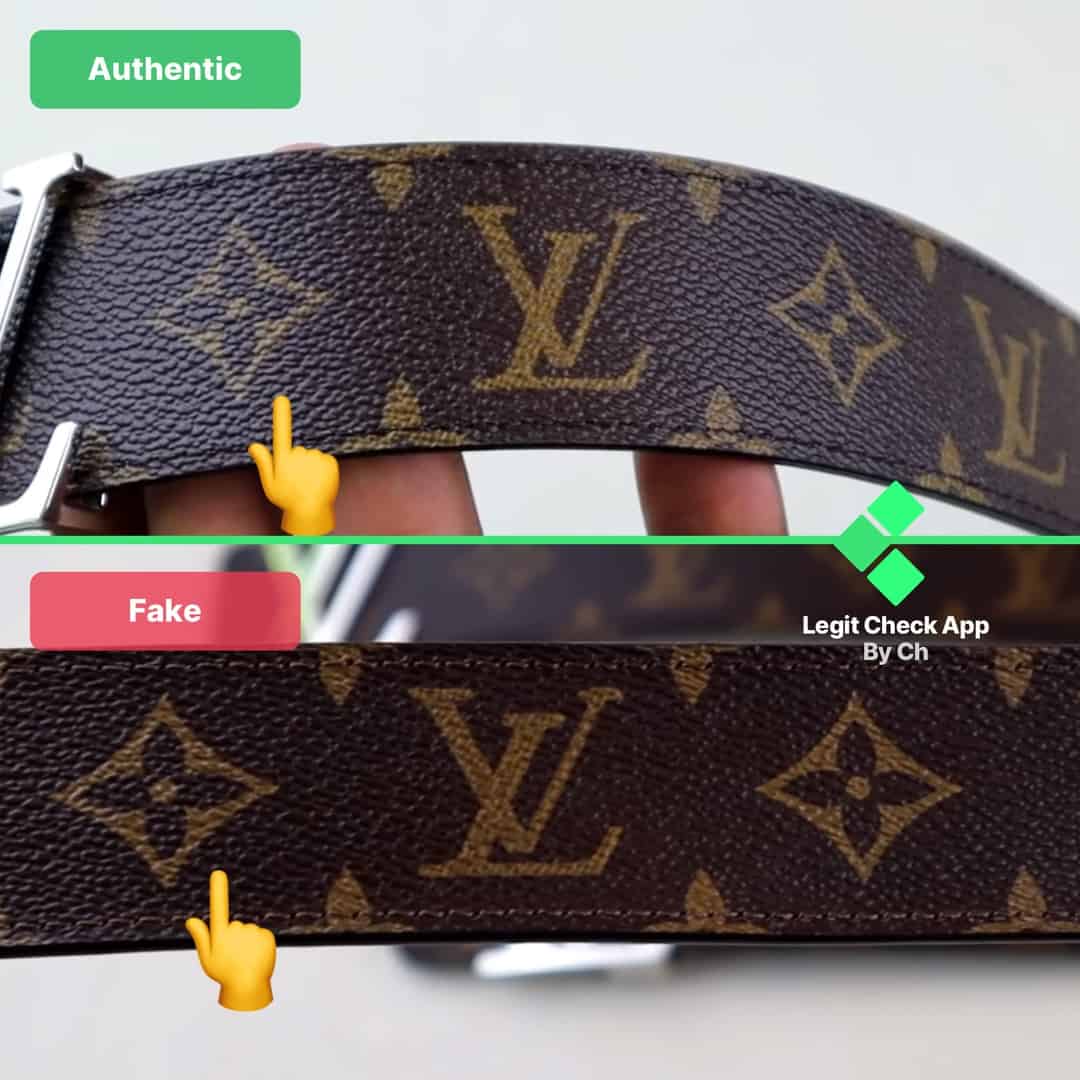
Now check the Monogram pattern. The easiest flaw to spot? The flowers are too big on fake belts. Authentic Louis Vuitton belts keep their monogram elements compact and evenly spaced.
Fake ones tend to stretch or scale the pattern just a bit too much. It doesn’t look wildly different — but when you compare it side-by-side, the oversized prints instantly feel wrong. That subtle imbalance can be all you need to call it out.
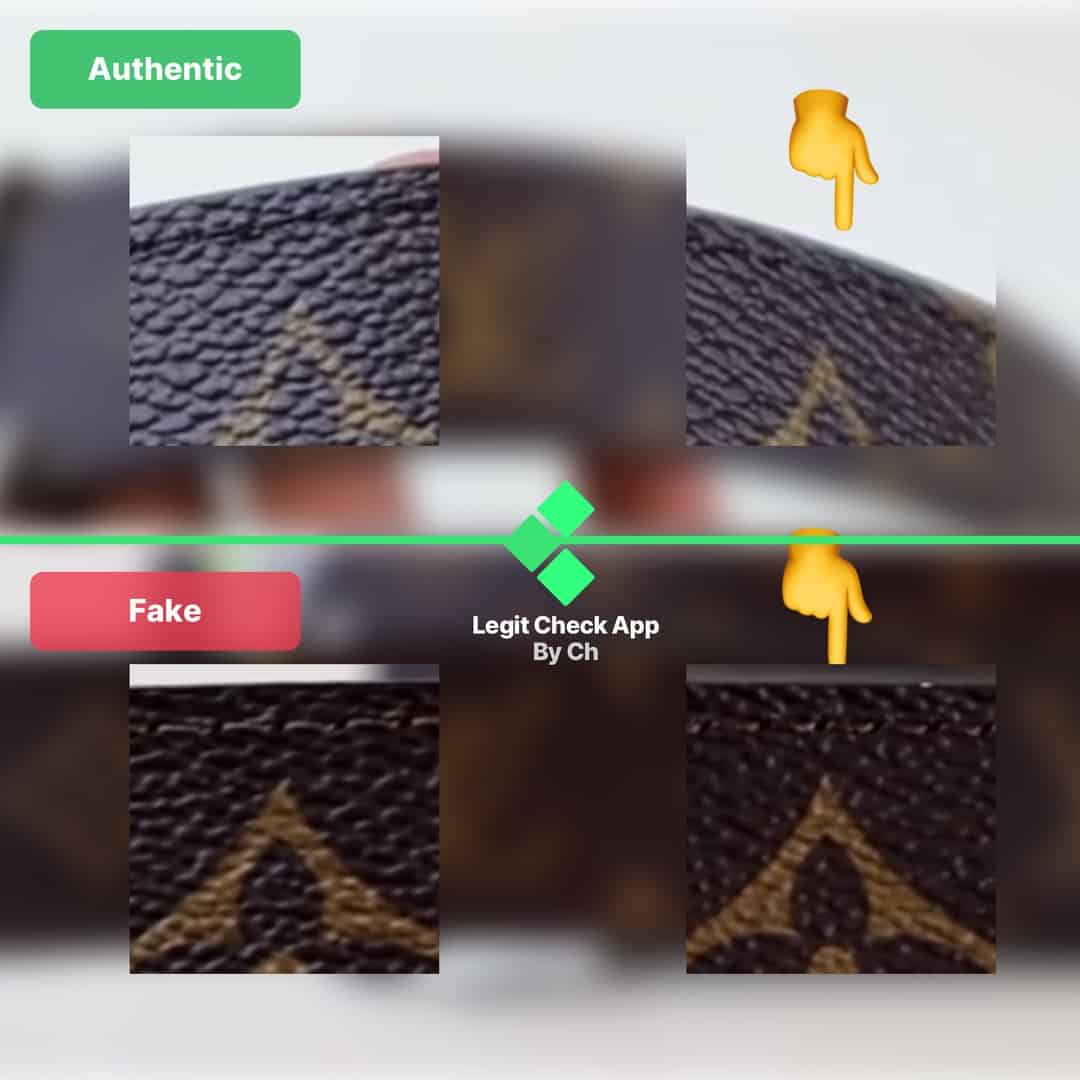
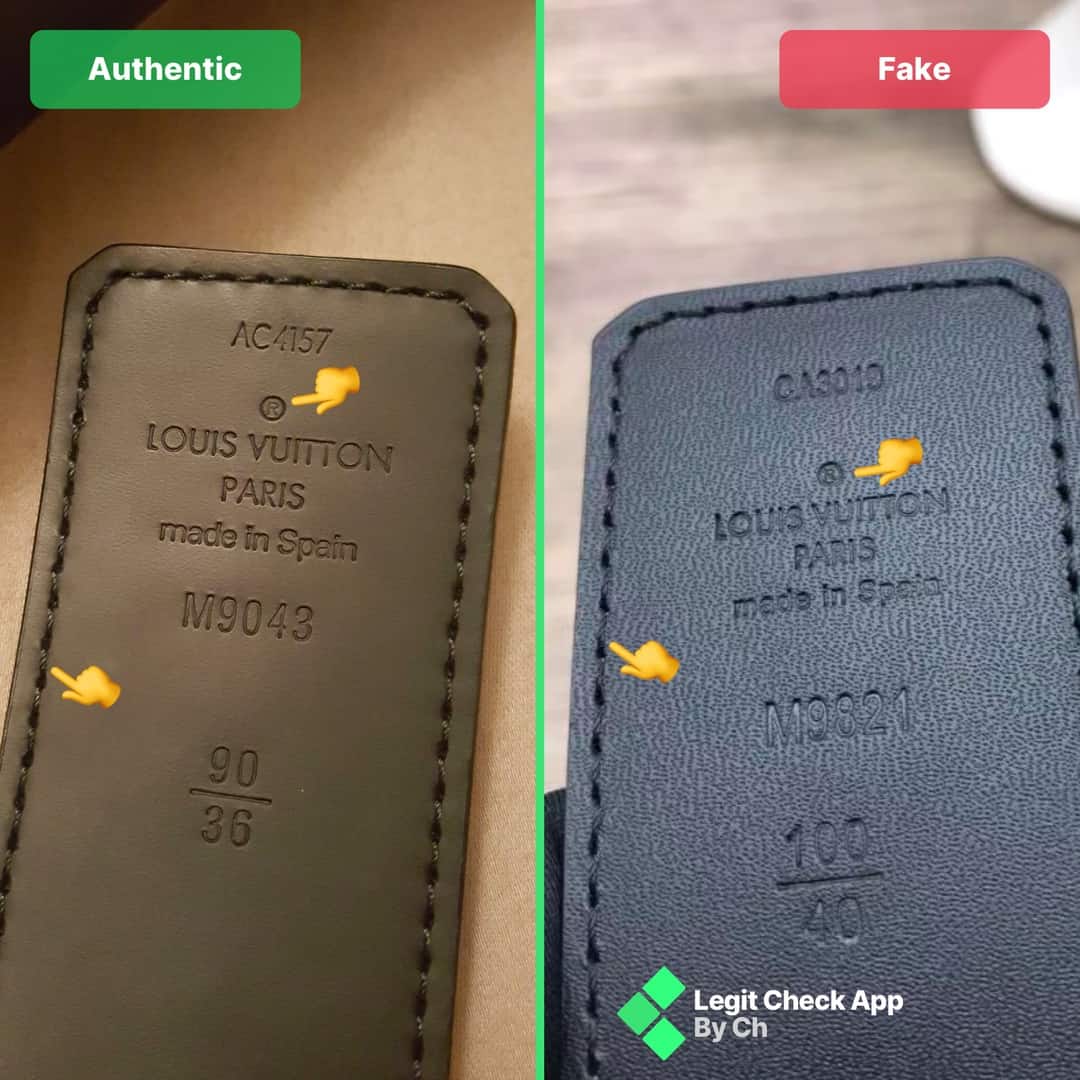
Flip the belt over and check the heat stamp — this is the printed logo and info on the interior side. On real Louis Vuitton belts, the text is precise, slim, and perfectly aligned. Even the ® symbol is sharp and properly sized.
Fakes mess this up all the time. The font is usually too bold, the letters might be slightly uneven, and the ® symbol? It’s often either too small or barely visible.
Now take a look at the stitching next to the stamp. Authentic belts have dense, neat stitching. But on fakes, you’ll often see looser threads, fewer stitches, or inconsistencies — especially near the left rear side. That alone can give the whole belt a “something’s off” feel.
This kind of print flaw shows up across more than just belts — we’ve seen similar font issues on Chrome Hearts jeans where the tags look good at first but fail on spacing and weight.
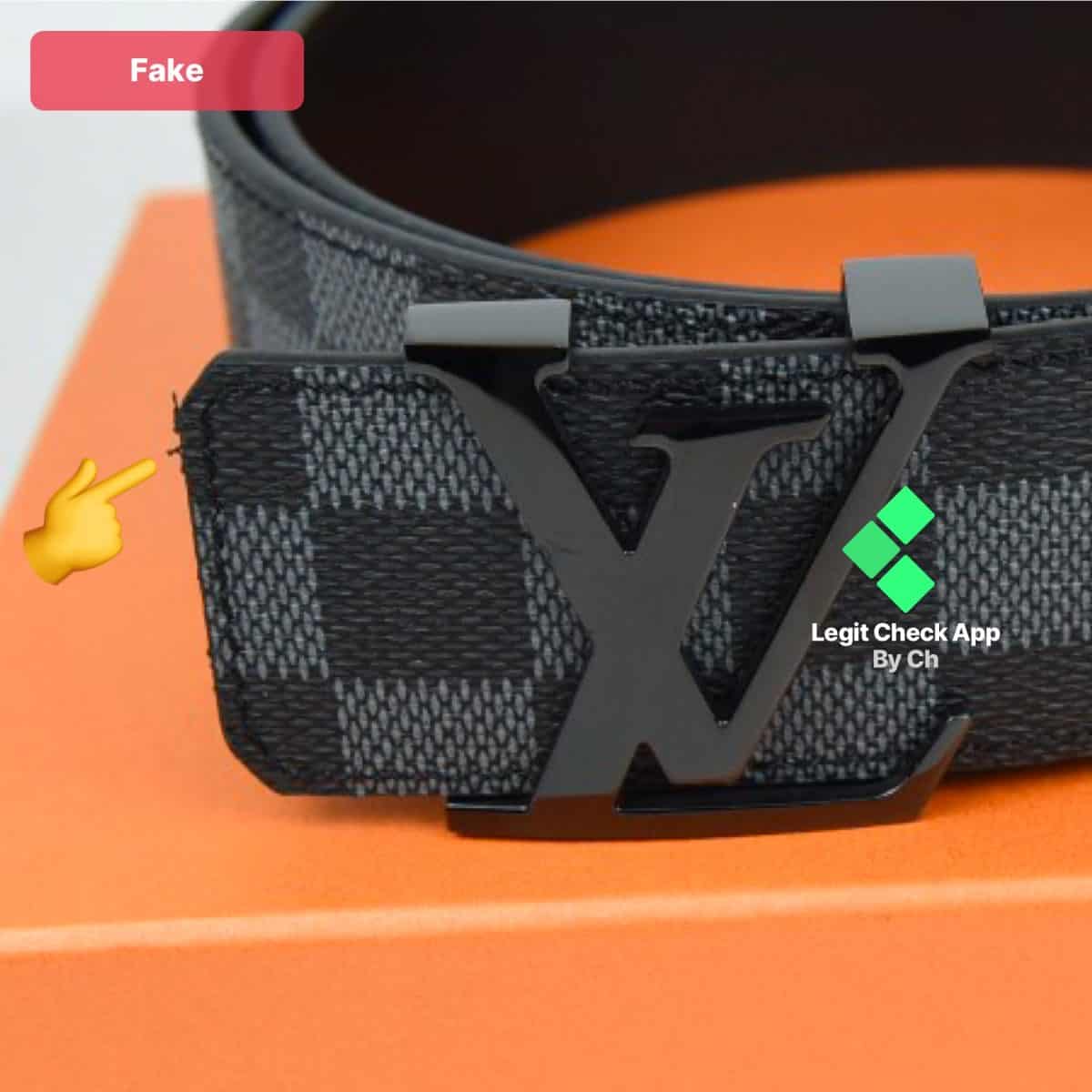
A real Louis Vuitton belt will never leave the factory with loose threads. Every stitch is clean, tight, and pressed into the leather — no frays, no pop-outs.
On fakes, you’ll often see extra threads sticking out, especially near the buckle or edges. It’s a small detail, but it’s a dead giveaway.
Think about it — for a luxury item that sells for hundreds, there’s always a human quality control check. There’s no way LV would allow this kind of sloppiness to hit stores.
If your belt has threads hanging like in the photo above, it’s not just a “small factory flaw” — it’s a red flag.
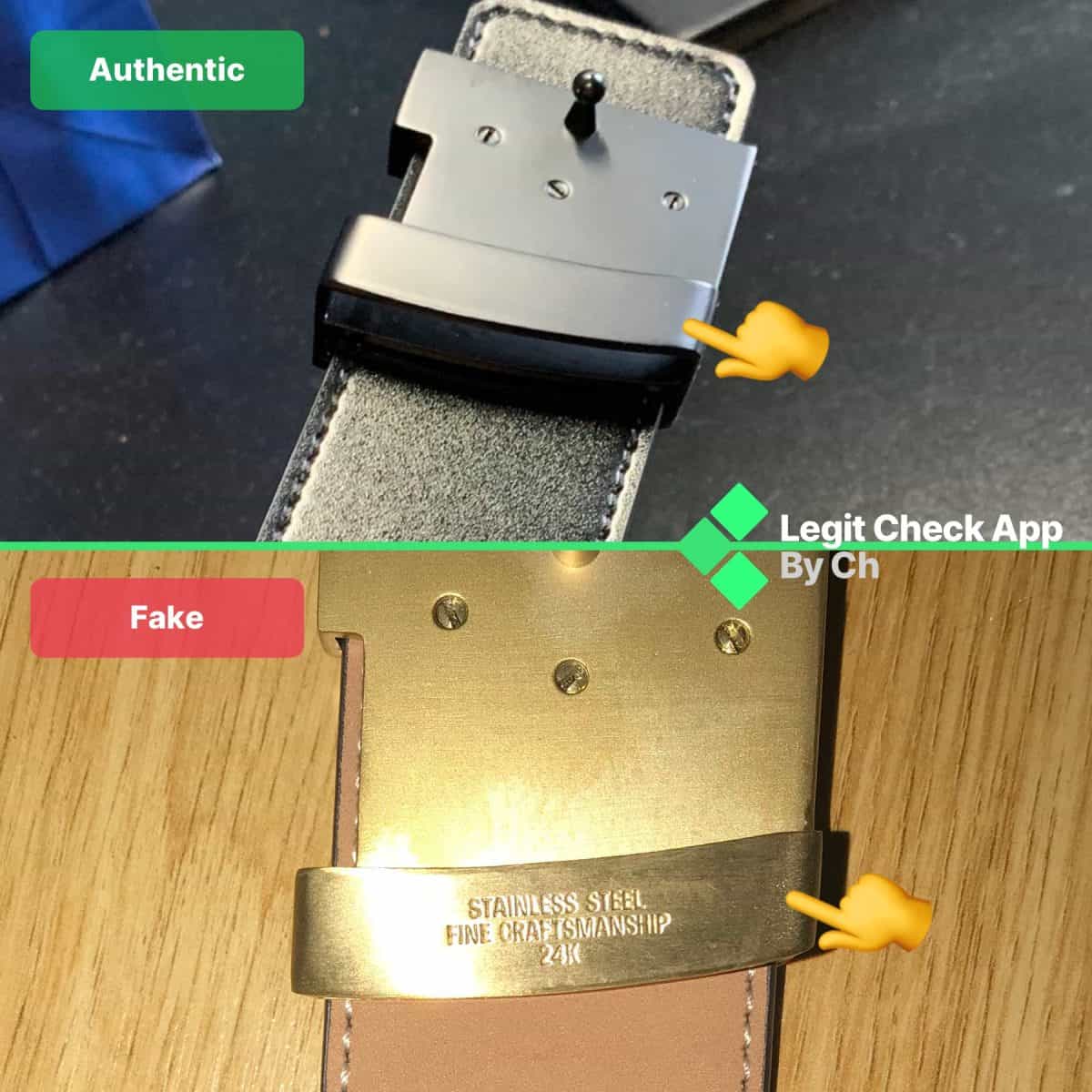
This one’s simple: if there’s any kind of printed text on the inside of your LV belt buckle, it’s a fake. No authentic Louis Vuitton belt has that.
Fake factories love to overdo it — they add inscriptions, logos, or numbers to make it look “premium.” But it backfires. Real LV keeps it clean and minimal, especially inside the buckle.
If your belt has something printed there, that’s a red flag right away. Doesn’t matter how good the rest looks — that alone is enough to fail the legit check.
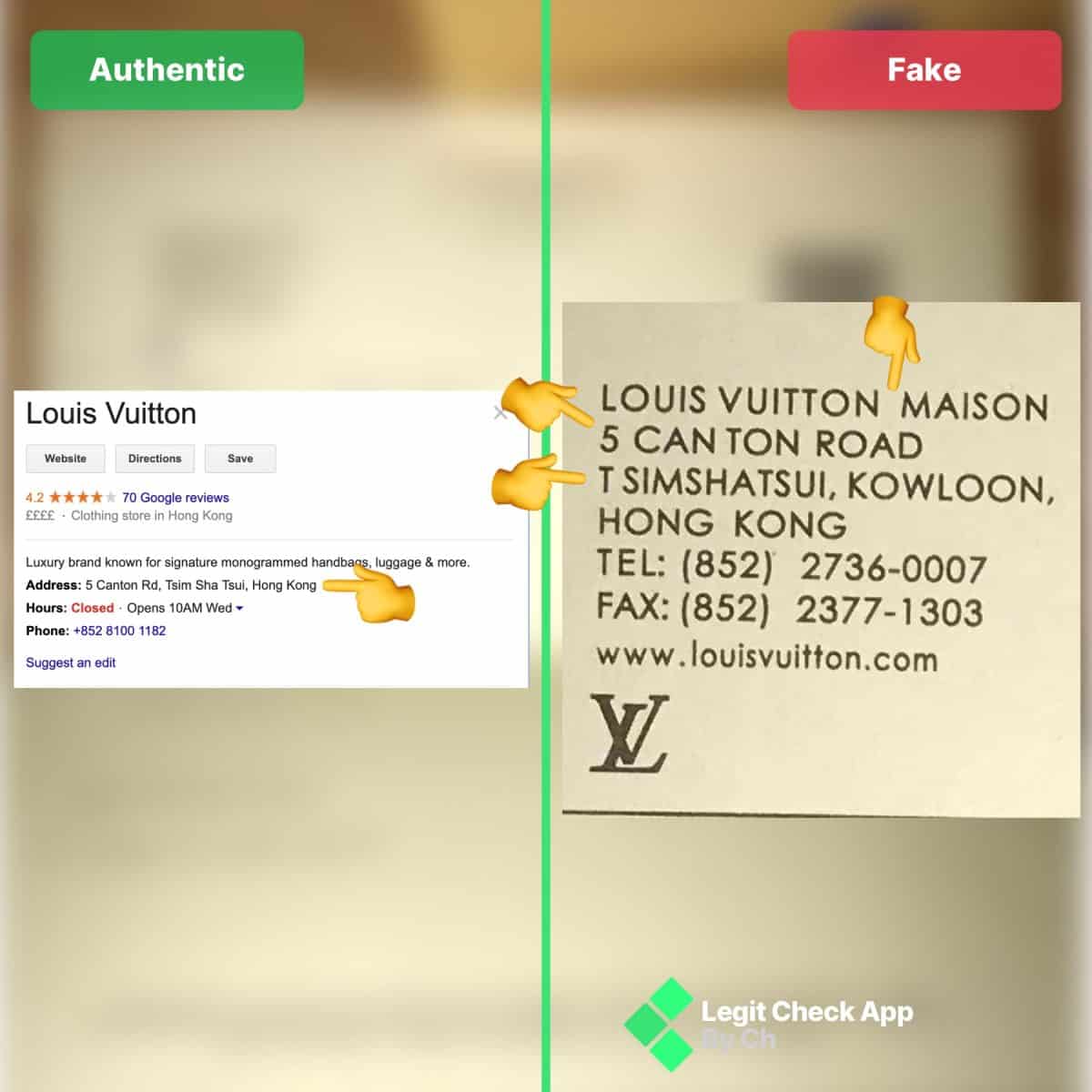
Receipts are often overlooked, but they can expose a fake in seconds. On the replica we checked, the store location was misspelled — a quick Google search showed the real Hong Kong LV store has a different format.
Also, pay attention to the spacing. The fake had “Louis VuittonMaison” with almost no gap, while the authentic receipt would never have that kind of formatting error.
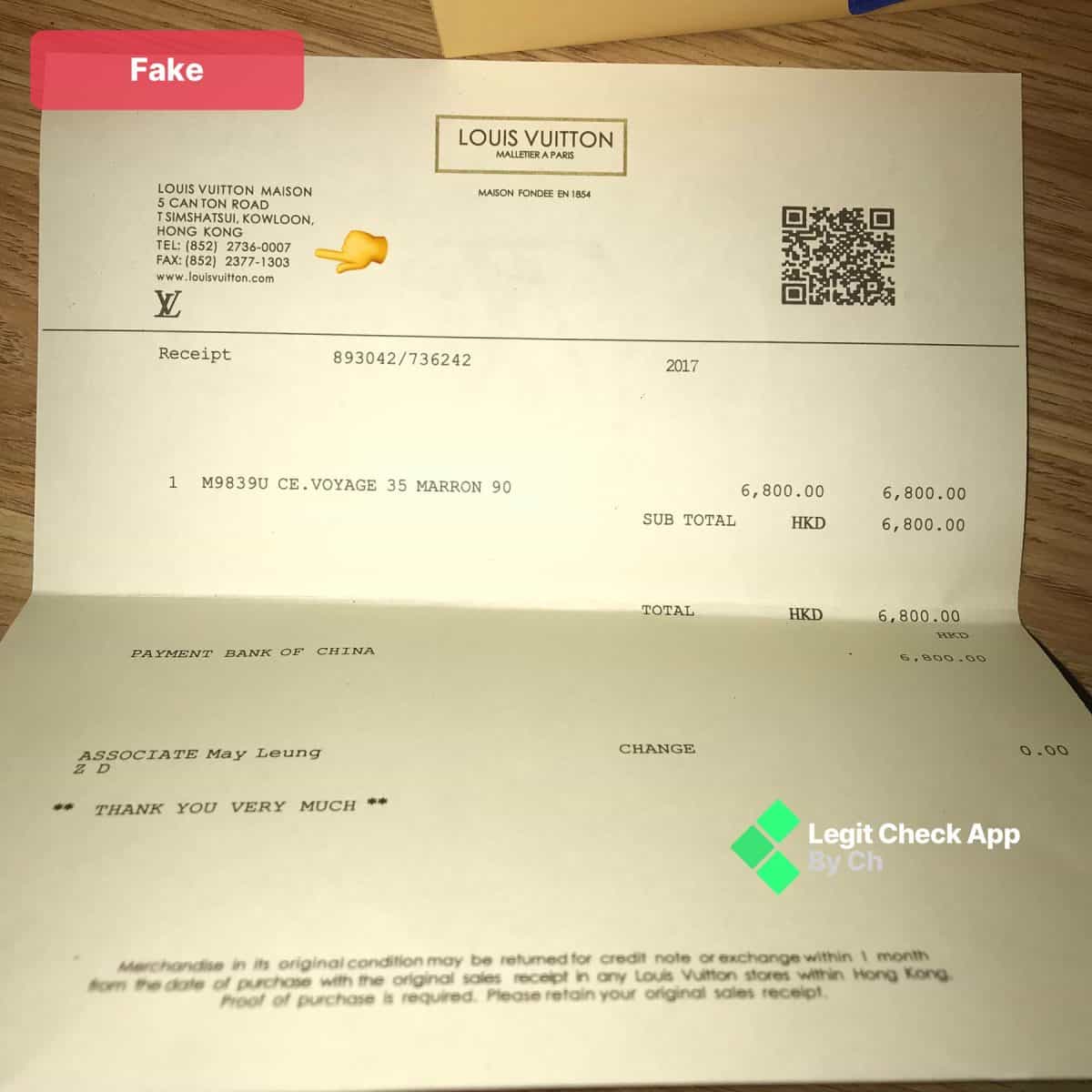
Quick Tip: Real receipts from Louis Vuitton have perfect alignment and typography. If anything looks off, even slightly, it’s probably a fake. Always cross-check it with other known real receipts online.
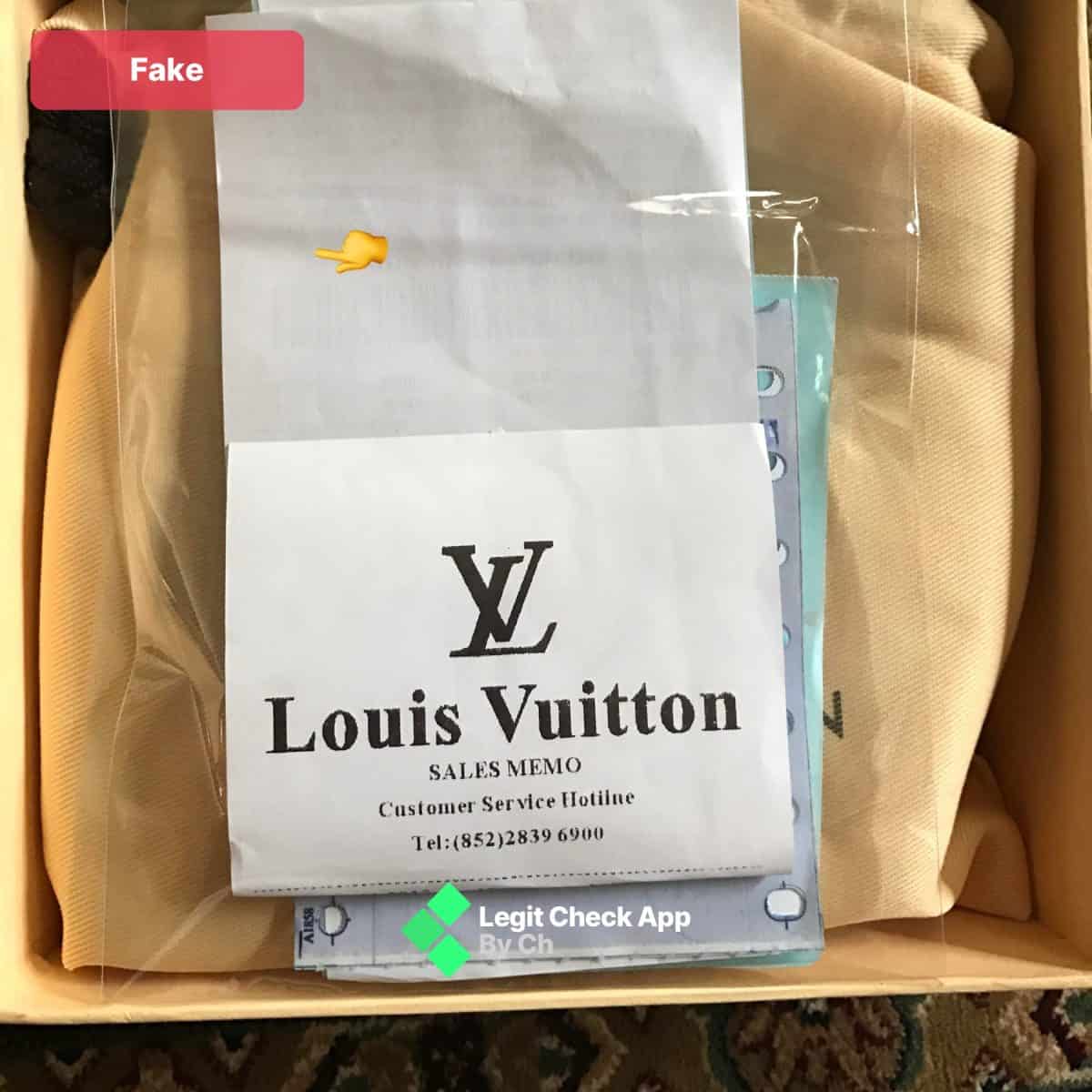
Even before touching the belt, the box itself can give away the truth.
Real Louis Vuitton belt boxes feel solid, premium, and the logo print is sharp and perfectly aligned. The font weight is consistent, and there’s zero smudging or blur.
Fakes often mess this up. The box might feel light or cheap, and the logo is usually printed with poor resolution. Sometimes the “Louis Vuitton” print is off-center, or the font looks stretched or compressed.
Watch out for unusual colors too — LV packaging has strict consistency. Anything outside the norm is a red flag.
Some of the worst packaging fails we’ve seen? Definitely on accessories like LV Millionaire sunglasses — same story: cheap feel, bad fonts, and logos that just don’t line up.
In a rush? Here’s the fast-track legit check — 10 quick signs that help you spot fake LV belts in under a minute. Whether it’s Monogram or Damier, these are the details that fakes still get wrong.
If two or more of these scream “off,” trust your gut — or better yet, let us call it. We’ll break it down and send you proof that shuts down any doubt.
This video walks you through the fastest legit check for LV belts — whether it’s Monogram or Damier. If you’ve got 4 minutes to spare, this’ll save you from wasting hundreds.
👇 Watch it here:
This isn’t a generic overview — it uses real examples to show you what fake belts actually look like today, so you know exactly what to spot.
Intro
Ever wondered if your Louis Vuitton belt is real or fake? Stick with me and I’ll show you how to spot the difference in just a few steps.
1. LV Buckle
On the Monogram belt, examine the buckle closely.
Authentic Louis Vuitton Monogram belts have sharp corners — especially on the “V.”
Fakes often have rounded corners, and the bottom of the “V” may lack sharpness.
On the Damier belt, look at the bottom of the LV logo.
Authentic belts feature sharp corners and consistent serif thickness.
The shaping between characters is distinct.
Fakes tend to have varying thicknesses — especially at the tip of the “L” — and characters that might be too close together.
2. Corner Shape
Check the corner stitching of the belt.
Authentic belts maintain a stitching that keeps quality distance from the buckle and exhibits a trapeze-like shape.
Fakes often have stitching that’s too close to the buckle and lack the correct angle, making the corners appear too rounded.
3. Buckle Placement
Pay attention to the buckle alignment.
On Damier belts, authentic belts have the first set of squares in the checkerboard pattern clearly visible.
Fakes may have the first set of squares barely visible or misaligned.
For Monogram belts, ensure the buckle is not placed too far to the right side.
4. Stitching
On the exterior side, authentic belts have stitching placed further away from the edge with a noticeable gap.
Fakes have stitching too close to the edge, with almost no gap.
On the interior side, authentic belts showcase richer, denser stitching — symbolizing meticulous craftsmanship.
Fake belts have fewer stitches and lack density, which indicates cost-cutting.
5. Print Quality
On the Damier print, check the vertical lines in the checkerboard squares.
Authentic prints are consistent, while fakes have significantly thicker lines.
Using a magnifying tool or app for comparisons can help.
For Monogram prints, look at the size of the monogram flowers.
Authentic belts have smaller, precise elements.
Fakes feature oversized flowers — close-up comparisons help spot the differences.
6. Interior Text
Inspect the heat stamp on the rear side of the belt.
Authentic text is finer and consistent.
Fakes have thicker fonts and incorrect “®” symbols — a clear sign of lower quality.
7. Hanging Threads
Authentic belts will have all threads neatly stitched into the leather.
Fakes might have extra threads hanging out — something a luxury brand would never allow.
8. Interior Buckle
Check for text on the rear side of the buckle.
Authentic Louis Vuitton belts never have any text printed there.
If you see any, it’s a clear sign of a fake.
9. LV Store Receipt
Fake receipts often show inconsistent spacing or incorrect spellings.
One example is the Hong Kong store location — it may be spelled incorrectly on fakes.
10. Packaging
Inspect the packaging quality.
Authentic Louis Vuitton belt packaging has high-quality materials and sharp printing.
Fakes usually have low-quality printing and cheap materials.
Conclusion
And there you have it — your comprehensive guide to spot a fake Louis Vuitton belt.
From buckle details to stitching and packaging, these steps can save you from counterfeit products.
Expert LV Belt Authentication
If you’re ever in doubt, our Louis Vuitton experts are ready to assist you.
They’ve scrutinized thousands of belts to ensure authenticity.
Trust your instincts — but verify with the very best.
Check out the link in our bio and comments for our expert authentication service.
Stay stylish, and always accessorize with the real deal.
Bought a Louis Vuitton belt and something feels off? We’ll help you find out if it’s real — or just a really good fake.
At Legit Check, we’ve authenticated every major LV belt style — from Monogram and Damier Graphite to seasonal collabs and special editions. Whether it’s a classic piece or a resale pickup, we’ve seen it before.
And no — we don’t use AI.
Every item is reviewed by human experts, trained to catch the exact flaws that fakes keep getting wrong.
What we look at:
What you get:
We’ve helped people avoid millions in fake designer losses — and we’re ready to help you too.
👉 Not 100% sure about your LV belt? Let’s get it legit checked.
By now, you’ve seen just how many places fakes slip up — from sloppy stitching to weird buckle corners and those sneaky oversized monogram prints. Whether it’s Monogram, Damier, or a seasonal flex, the real thing is all about precision. Fakes might fool the eye, but they always fall short under close inspection.
Quick recap:
If even two of those are off? Trust your gut — or better yet, trust us.
At Legit Check, we’ve authenticated thousands of Louis Vuitton belts — from hype collabs to everyday staples. We’ll break it down for you, send proof, and if it’s real, give you something that speaks louder than screenshots: a legit Certificate of Authenticity.
Don’t leave it to chance.
Not exactly. Louis Vuitton belts use date codes, not serial numbers. You’ll usually find this code stamped on the inner side of the belt, close to the buckle or under the belt loop.
Here’s what to look for:
Watch out: Fakes often copy these codes — but they usually mess up the font, spacing, or placement. Use this code as supporting proof, not your only checkpoint.
Real LV belts are made in France, Spain, Italy, and the United States. If your belt says it’s made in China, that’s an instant red flag.
Also check the “Made in” stamp carefully:
Yes — depending on the model, LV belts are made with:
Here’s how to spot fake materials:
💡 Flip the belt and check the inner side — real leather has a subtle grain, not a glossy coat.
Mostly, yes. But sizing depends on how you wear the belt (waist vs hips).
Quick guide:
| Your Jeans Size | Recommended LV Belt |
|---|---|
| 30″ | 85 cm |
| 32″ | 90 cm |
| 34″ | 95 cm |
| 36″ | 100 cm |
Tips:
Care depends on the belt material:
Fakes use cheaper materials that can crack, stain, or peel — even from basic cleaning. If you’re unsure, test on a small hidden area first.
Made it to the end? That already puts you ahead of most people out there getting finessed.
Need our opinion on your item’s authenticity? It’s a service we provide.
Get a fully-detailed report for why you have a real or fake item. Takes less than 48 hours!
Alternatively, use our free resources: written guides and video tutorials.
Thank you for reading this,
Ch Daniel and Ch David
You might want to check these out
If this Louis Vuitton belt legit check helped clear things up, you’ll probably find our other guides just as useful. Same vibe — clear signs, side-by-side pics, and no guesswork. Perfect if you’re double-checking other pieces or just learning the game.