Last Updated on January 13, 2026 by Ch David
Fake vs real Louis Vuitton Neverfull, how do you tell the difference in 2025?
The Neverfull is LV’s go-to tote, seen everywhere from airports to coffee runs. But its popularity also made it a favorite target for counterfeiters. Some fakes are so convincing they pass at first glance, which is why knowing the subtle details is key.
In this guide, we’ll break down 11 specific checks that work across all sizes and colorways of the Neverfull, so you’ll know exactly what’s real and what’s not.

If you’re cross-shopping LV classics, our breakdown of the LV Speedy highlights many of the same canvas and hardware tells you’ll use on a Neverfull.
The best way to spot a fake Louis Vuitton Neverfull is to look at the interior label. Authentic labels feature thin, sharp text that’s evenly pressed into the leather.
Replicas usually give themselves away with chunky or uneven lettering, shallow embossing, or spacing that looks slightly off compared to the original.
That’s the quick answer. For the full breakdown of all 11 steps, keep reading below.
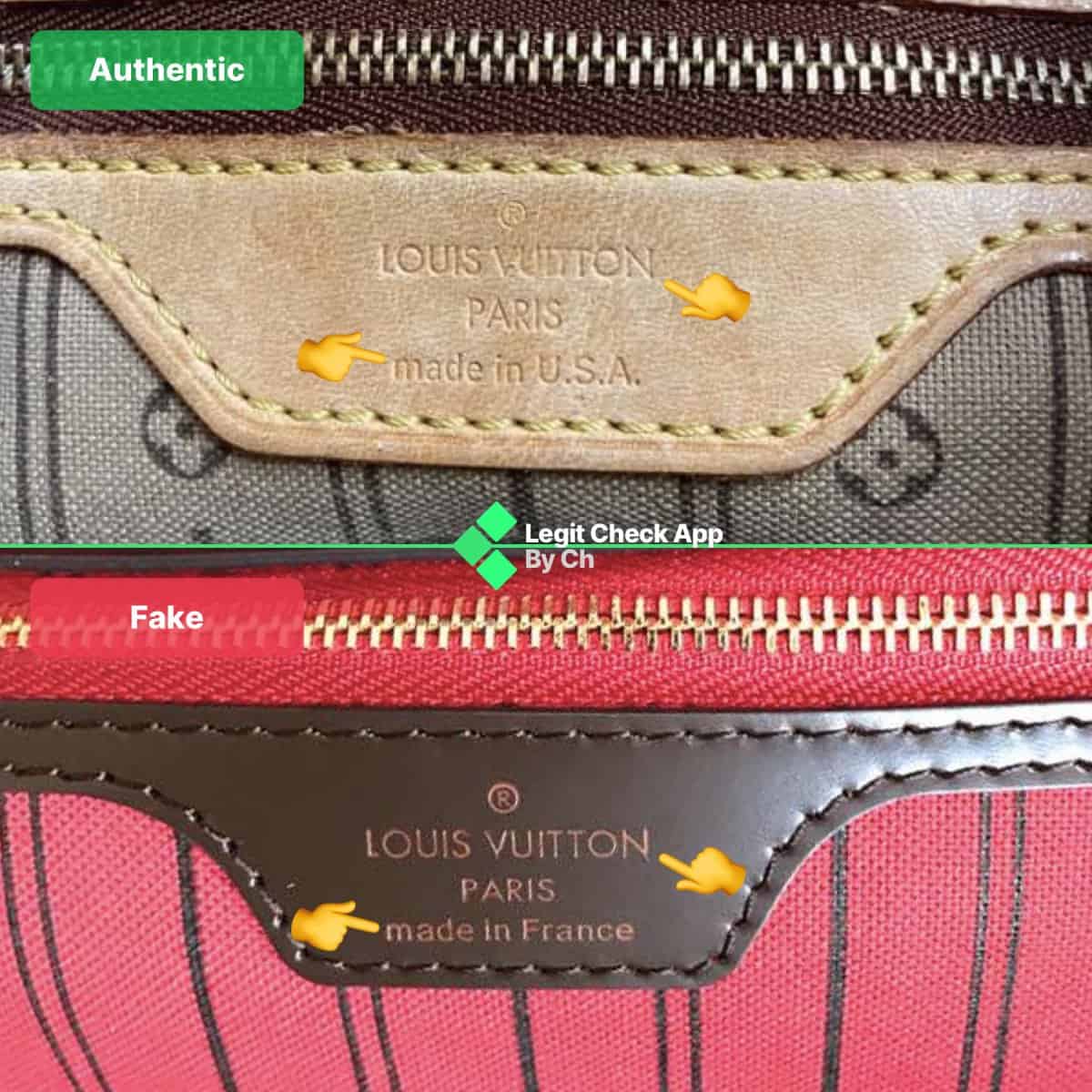
The interior label is one of the quickest tells when authenticating a Neverfull.
On the real bag, the LOUIS VUITTON / PARIS / made in France stamp has a sharp, balanced look, with each letter spaced evenly and pressed cleanly into the leather.
The stitching surrounding it is also consistent and slightly thicker, giving the label a polished, high-end finish.
Counterfeits usually fail here. Fonts are inconsistent: letters can look stretched, crooked, or out of alignment. The “P” often sits awkwardly apart from the rest of the word, and the “S” in VUITTON is a dead giveaway when it looks bulky. Add to that thinner stitching, and the whole label ends up looking sloppy compared to the real deal. Always inspect this area closely – it’s one of the easiest ways to spot a fake.
Is it too hard? Reach out to our expert LV bag authenticators:
You’ll find this right below the previously-analysed label.
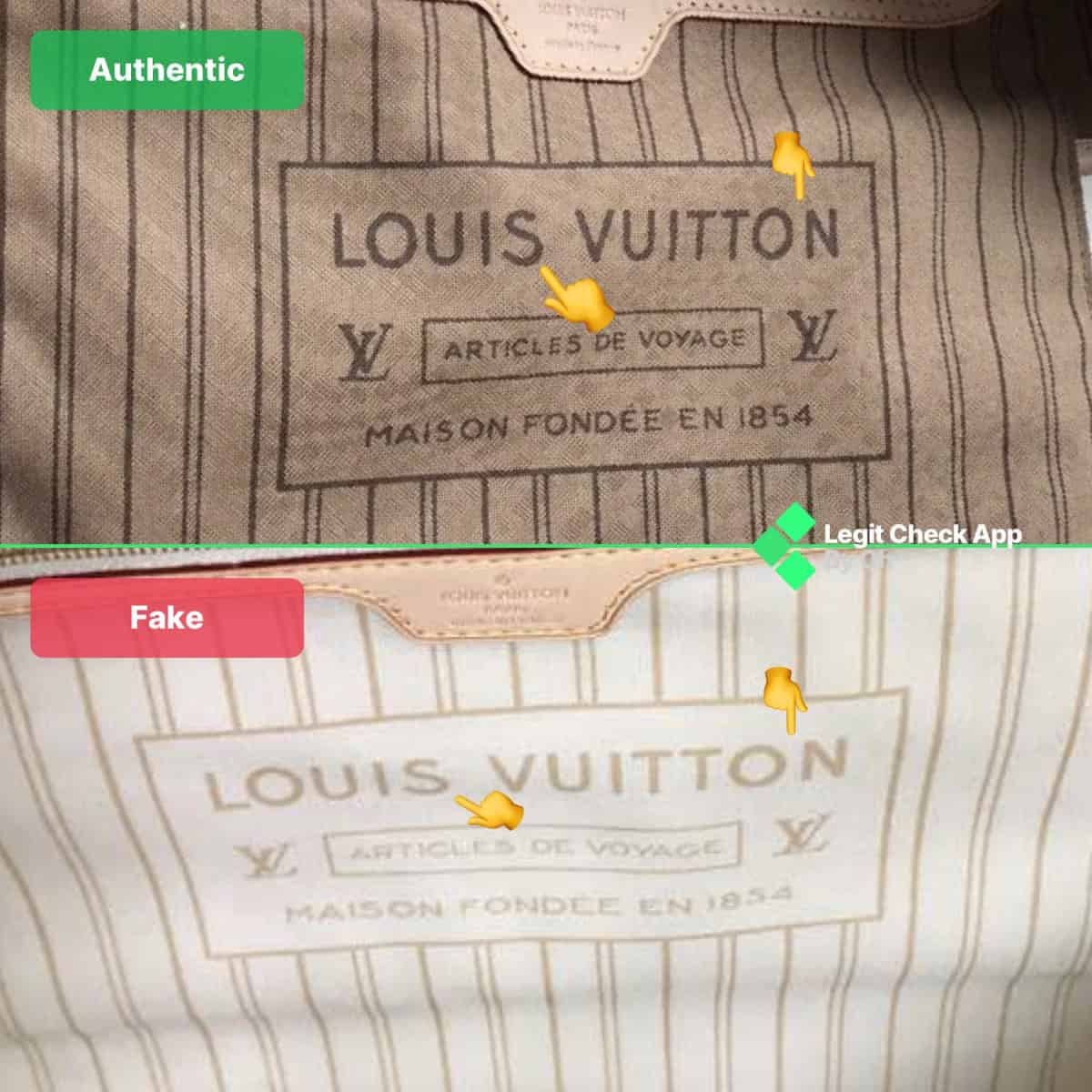
The interior lining print is another strong checkpoint.
On the genuine Neverfull, the text within the large rectangle is crisp, evenly sized, and perfectly aligned. All characters share the same thickness, making the print look uniform and professional.
On the fake, the issues jump out once you know where to look. Letters like “S” in LOUIS appear bloated and oversized, while spacing errors (like the gap between “O” and “N” in VUITTON) are common.
These mistakes happen because replicas often use cheaper printing techniques that don’t match the precision of Louis Vuitton’s standards. When authenticating, always zoom into the lining and look for these font inconsistencies. They’re usually impossible to miss once you know what to expect.
For another clean example of interior print spacing and letter thickness, compare these cues with the structured lining on the LV Alma.
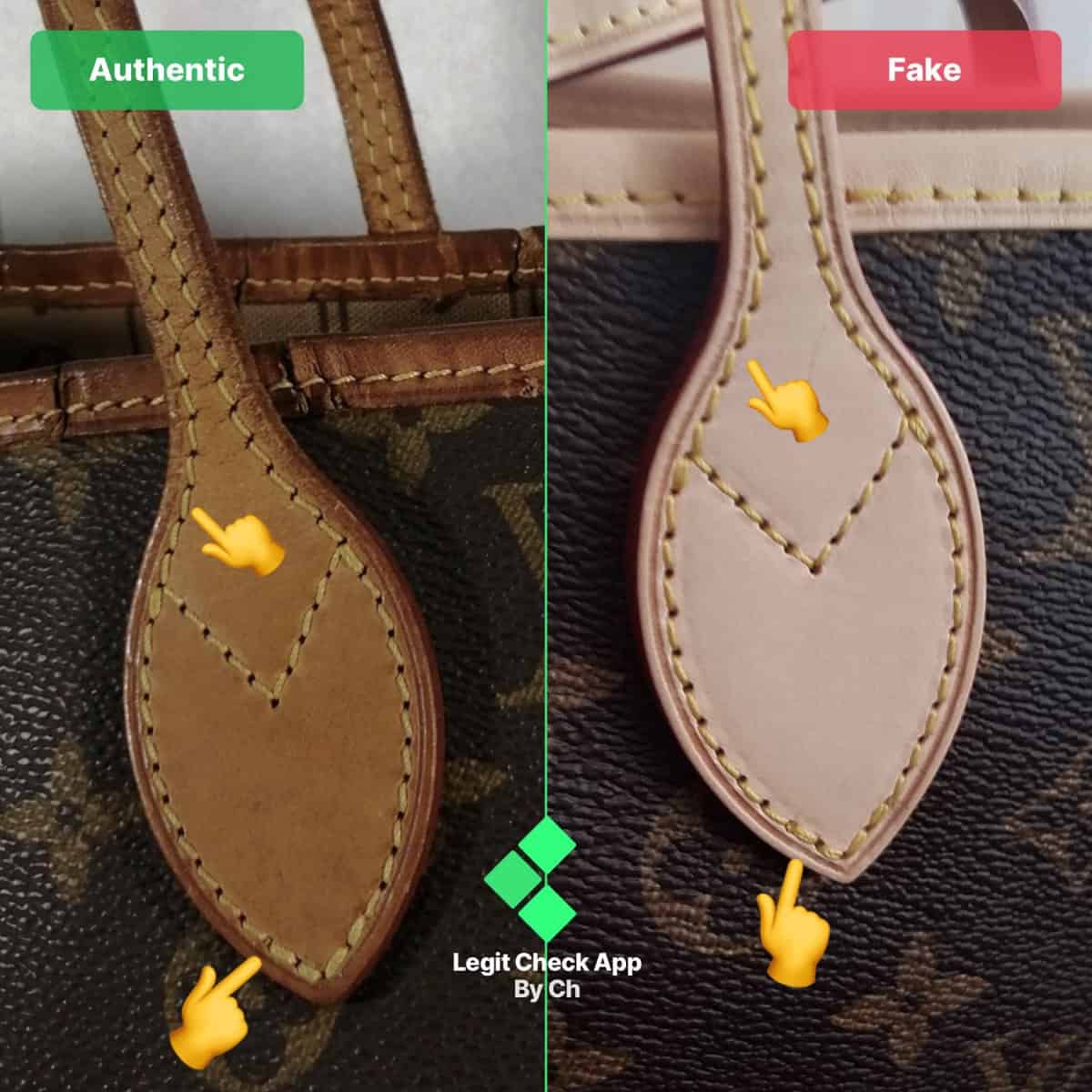
The handle base is an area that counterfeiters rarely get right.
On the real Neverfull, the stitches are slim, straight, and evenly spaced, showing the kind of detail Louis Vuitton is famous for. Even under magnification, you’ll see a clean finish with no overlap or loose ends.
Replicas, on the other hand, often show overlapping stitches or messy corners. The threads may also look bulkier or inconsistent in thickness, which makes the entire base appear less refined.
Since the handles are a high-stress point on the bag, Louis Vuitton ensures perfection here, fakes don’t. If you see sloppy or overlapping stitching, it’s a strong red flag.
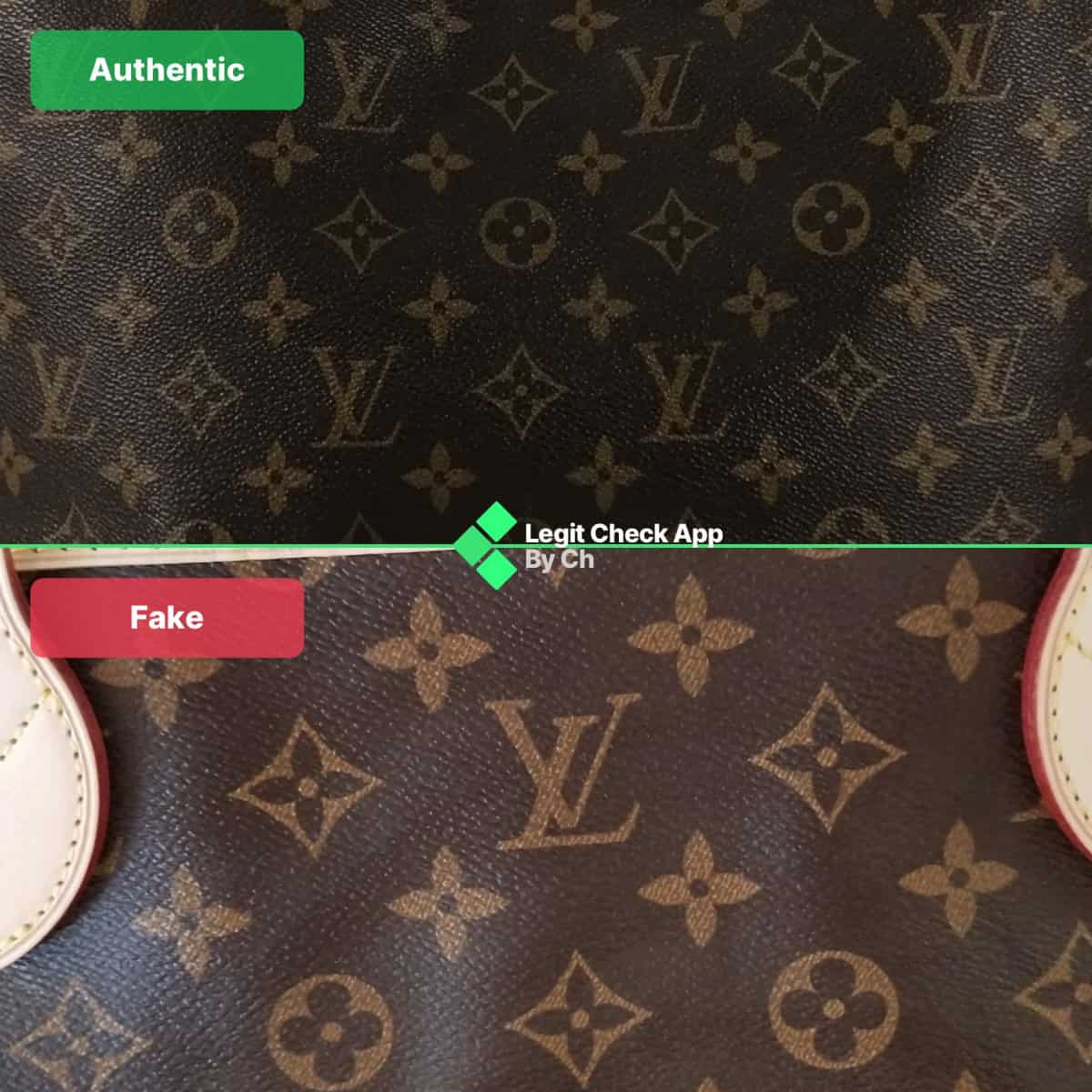
When it comes to the Monogram print, scale is everything.
Authentic Neverfull Monogram bags keep the “LV” logo and flower designs at a balanced, uniform size that looks elegant and consistent across the entire bag.
On fakes, these elements are almost always larger than they should be. The oversized look gives away the counterfeit instantly once you compare it to a real example. This is one of the most reliable tells since nearly all replica Monogram bags make this mistake.
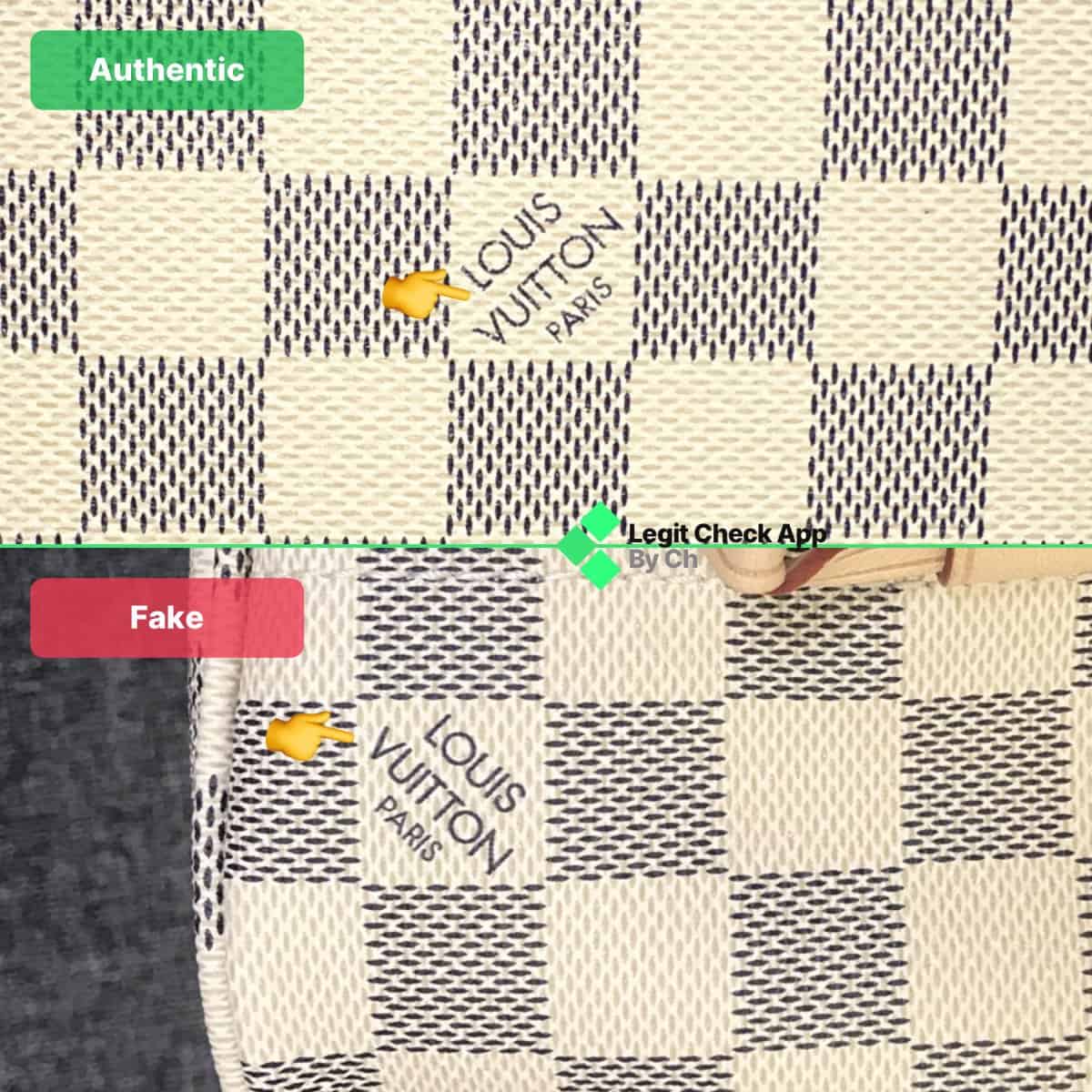
For the Damier canvas, the difference is in the lettering inside the squares.
Genuine bags have compact, bold text that fits neatly into the square design, while fakes often print the text too thin and stretched out, making it look sloppy.
Because the Damier pattern is so geometric, even a slight misprint becomes obvious. A quick scan of the text weight and alignment inside the squares can save you a lot of time when authenticating.

A quick mention:
If in doubt, we recommend double-checking the steps we’ve explained above this line.
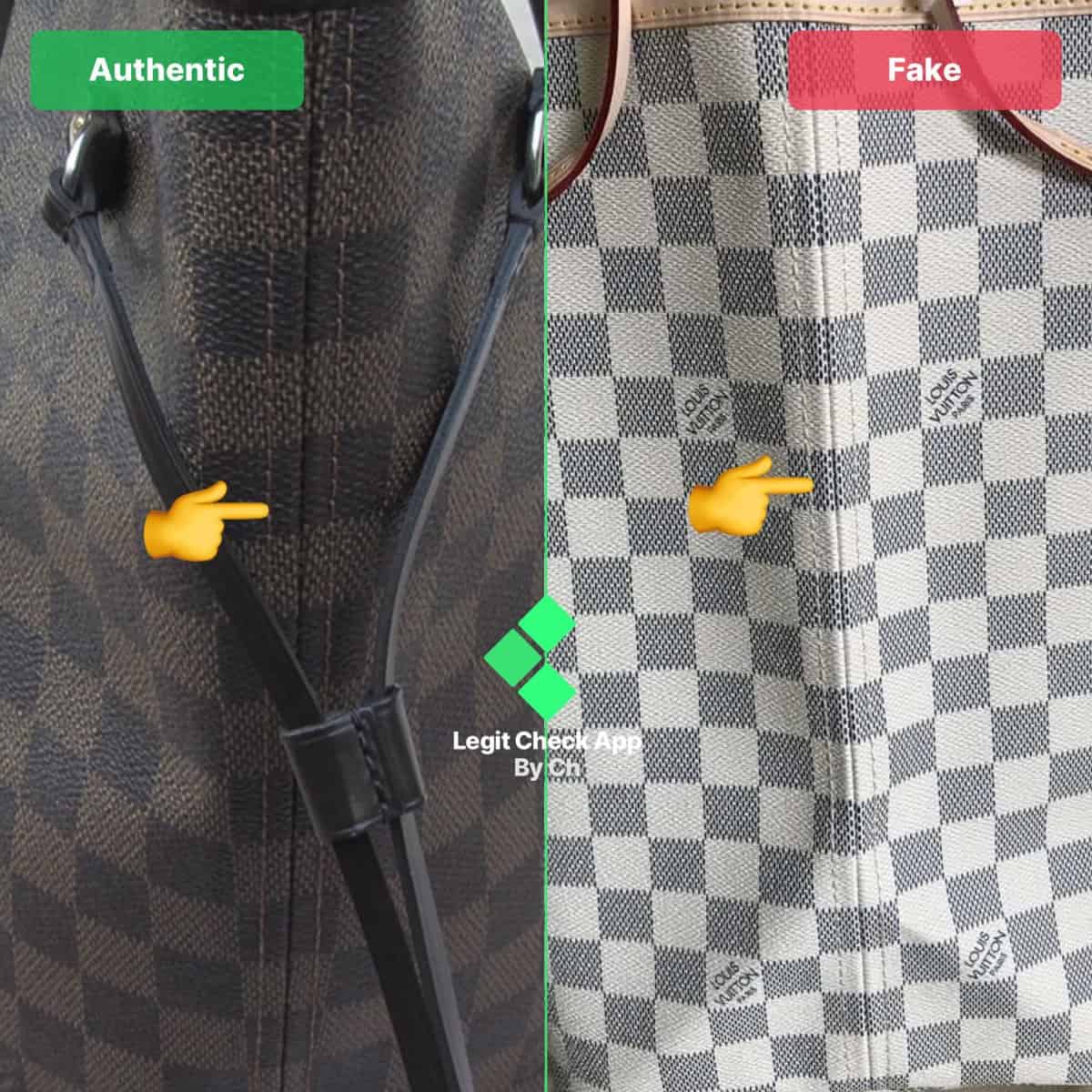
The side dent is one of those subtle details that really shows the craftsmanship of Louis Vuitton.
On authentic Neverfulls, the leather naturally curves and creates a deeper, clean indentation where the sides fold inward. It’s consistent and balanced on both sides of the bag.
On fake versions, this dent is often too shallow or barely there. That lack of depth makes the bag look bulkier and less refined. While it may seem like a small detail, the side dent is a good authenticity check since LV pays close attention to these structural elements.
Always compare against a real reference, even a small difference here can expose a counterfeit.
This subtle “dent” that keeps the profile sleek is the kind of construction detail LV also nails on travel pieces like the LV Keepall, where proportion and structure are easy to benchmark against fakes.
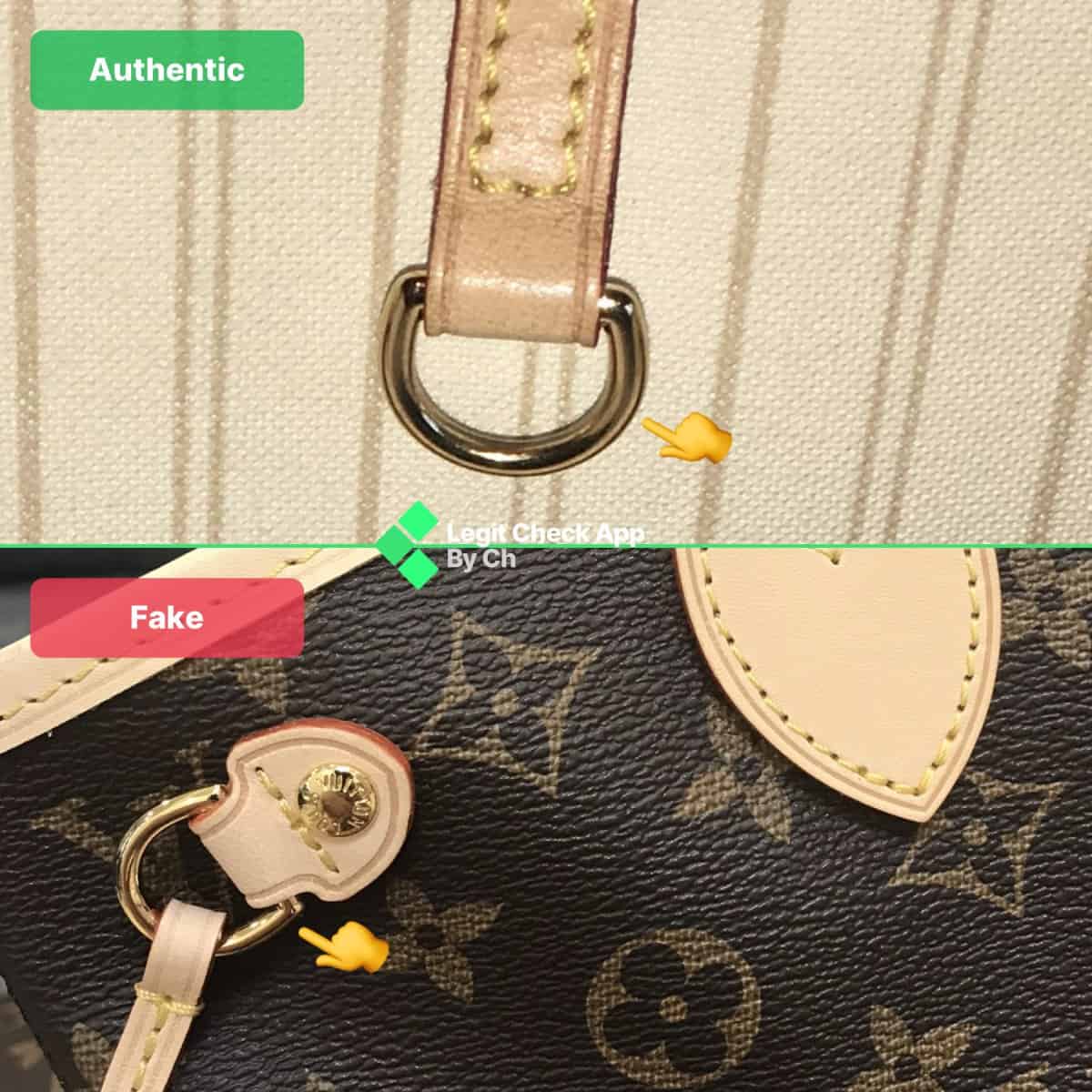
Hardware shine is another area where replicas usually fail. On a genuine Neverfull, the carbines (metal clasps) are highly polished and catch the light beautifully. This shine makes the bag’s hardware stand out as luxurious and well-crafted.
Counterfeit carbines, however, often look muted. They may be finished with low-quality plating, which not only looks dull but can also fade or chip over time. If the hardware doesn’t shine properly in direct light, that’s a red flag. A quick light test (tilting the bag under natural or artificial light) is an easy way to check authenticity here.
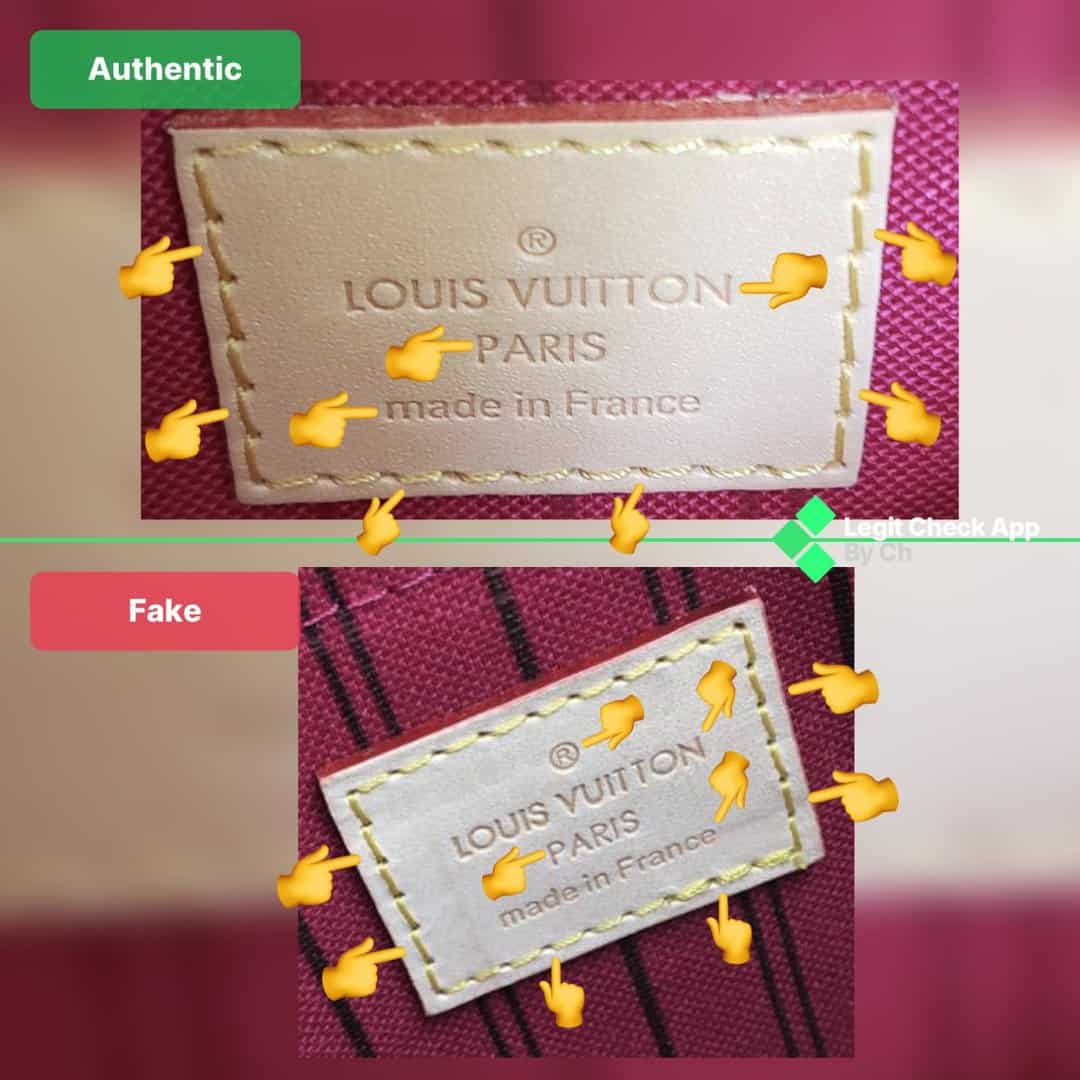
The pochette label is one of the easiest giveaways. On real Neverfull pochettes, the font is sharp, balanced, and easy to read, with every line of text engraved consistently into the leather. The “®” sits neatly without looking oversized or too faint.
On fakes, you’ll often see text that’s over-engraved, creating thicker lines that lose clarity. The stitching around the label is another giveaway: genuine pochettes have uniform stitching, while replicas show a mix of overly thick and overly thin threads. This inconsistency screams “counterfeit” when compared side by side.
You might also be interested in this guide on the LV Multi Accessories Pochette, which shows the same font weight, spacing, and stitching standards on its small leather goods.
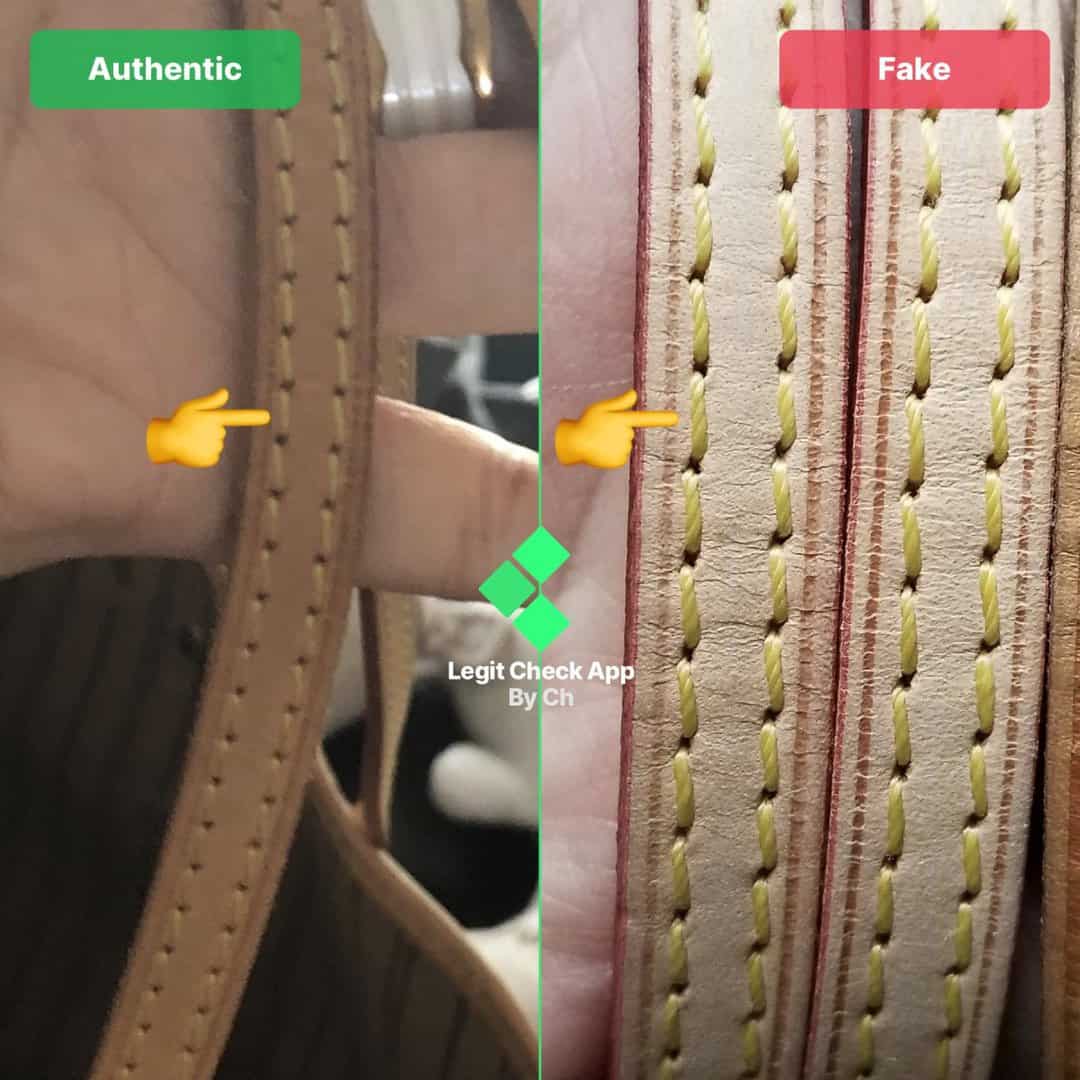
Louis Vuitton straps are known for their refined stitching – slim, evenly spaced, and with a subtle curve that follows the strap’s contour. This gives the bag a polished, balanced look that lasts even with heavy use.
Fakes, on the other hand, tend to exaggerate the stitches. They appear chunky, thicker than they should be, and often look too straight or mechanical. This is a classic shortcut from counterfeit factories – they don’t invest in the high-end stitching machinery that LV uses.
When in doubt, always zoom into the stitching on straps. It rarely lies.
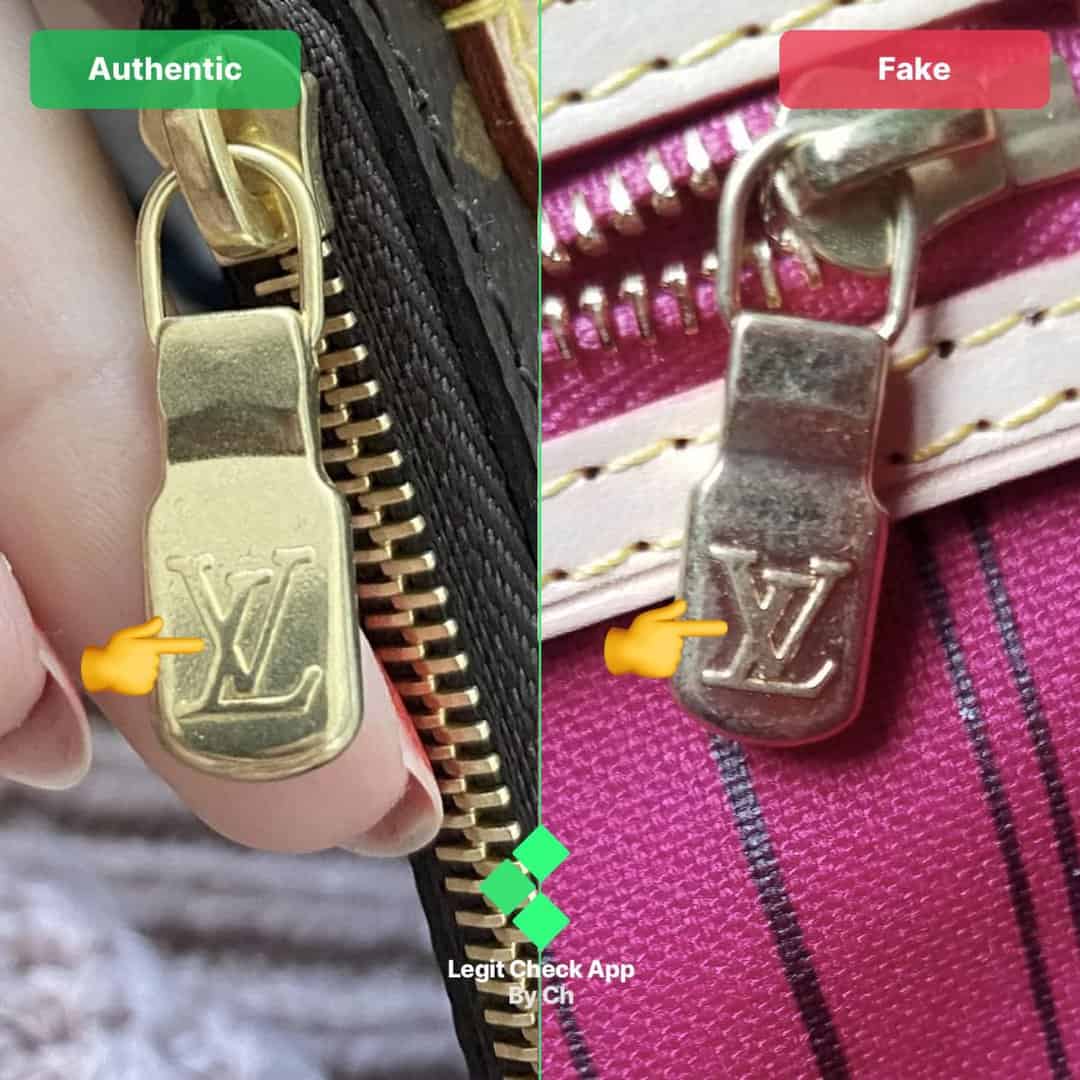
The zipper logo is one of those details counterfeiters almost always get wrong. On authentic Neverfulls, the “LV” engraving blends seamlessly into the zipper pull – it’s deep, refined, and not exaggerated. The lines are slim and elegant, which matches the overall luxury aesthetic of the bag.
On fake zippers, the “LV” tends to look clumsy. It’s thicker, sticks out too much, and lacks that crisp, subtle finish you see on real hardware. This happens because replicas use cheaper, lower-quality molds for the engraving.
A quick check of the zipper can often expose even “high-quality” fakes instantly.
Authentic zipper engraving should look deep and refined, exactly the finish you’ll see echoed on the pulls of the LV Multi Accessories Pochette.
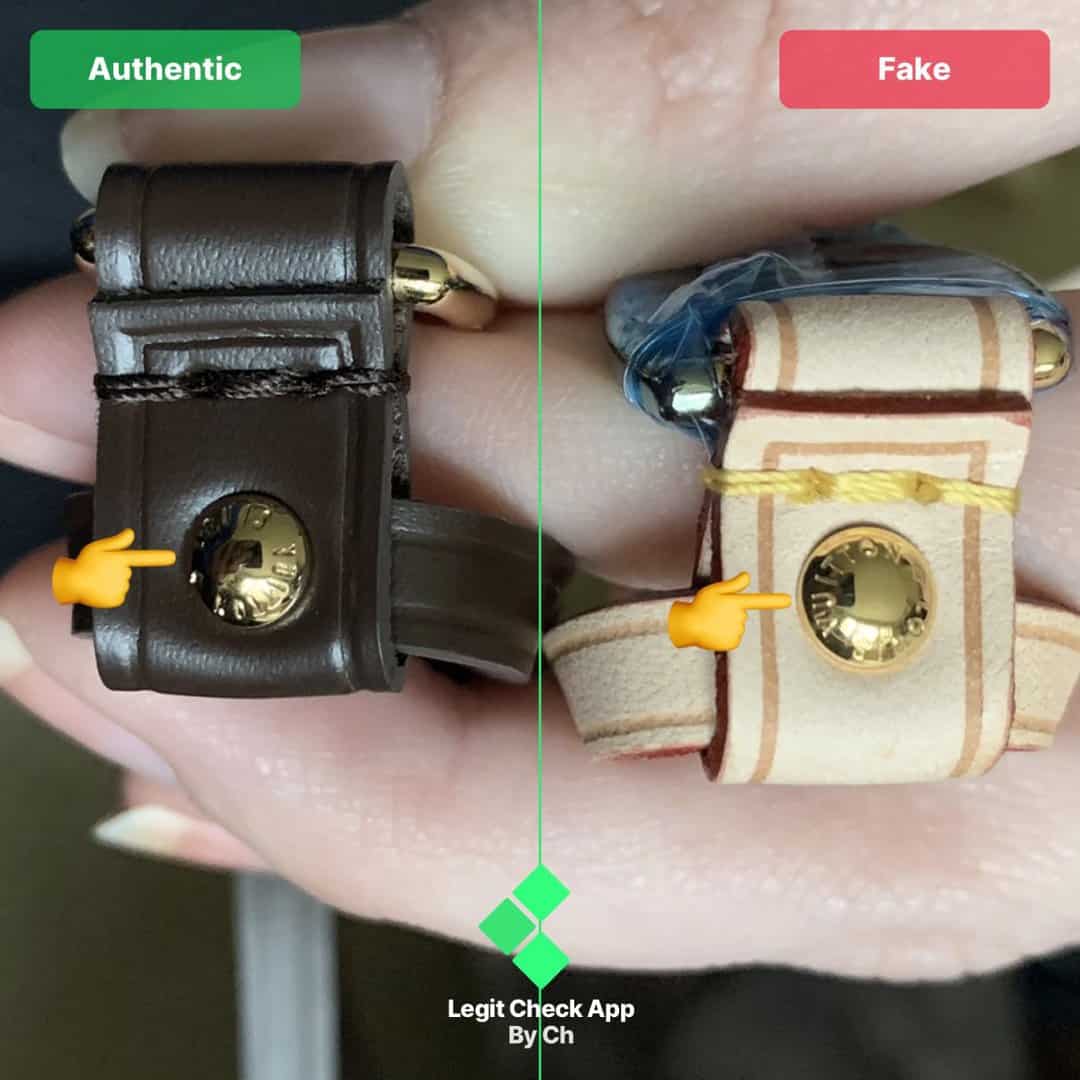
The buttons on an authentic Louis Vuitton Neverfull carry a clean, elegant engraving.
Each letter has the same thickness, and the spacing between them (kerning) is wide enough to keep the text legible and balanced. Even after years of use, the engraving doesn’t lose its clarity.
Fake buttons, by contrast, give themselves away with heavy, thick lettering that looks crowded. The letters are packed too tightly, which makes the text look messy instead of refined.
Counterfeit factories often overlook small details like kerning, but they’re exactly what LV obsessively perfects. A simple look at the buttons under good lighting can make spotting a fake much easier.
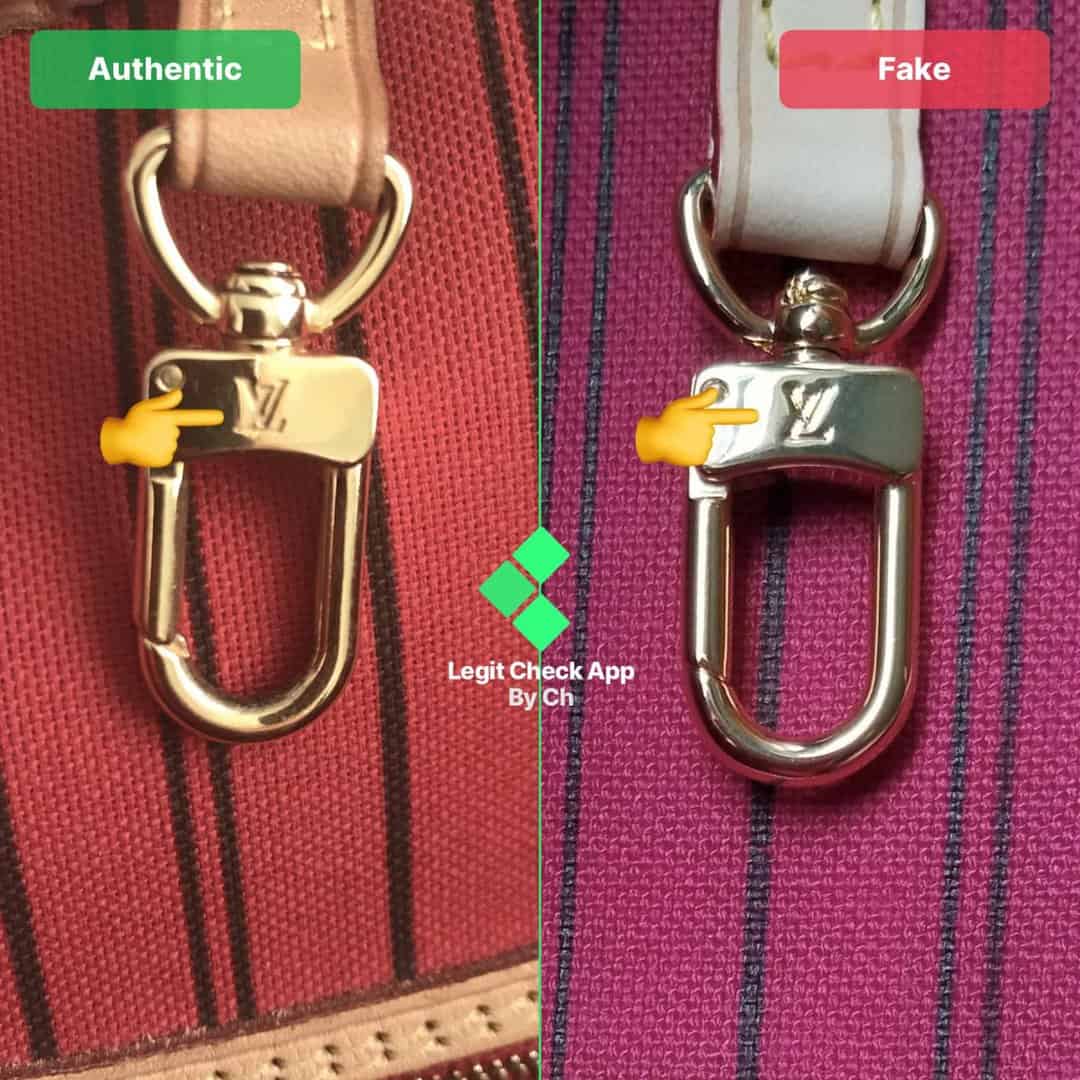
The keychain is another hardware detail that’s often overlooked but easy to check.
On authentic Neverfulls, the “LV” logo on the keychain feels carved into the metal – bold, sharp, and with consistent thickness. It reflects light nicely, which makes it look more premium.
On counterfeit versions, the engraving looks faint and fragile. The letters don’t carry the same weight, and sometimes the depth of the engraving is so shallow that it feels like the text is just printed rather than engraved.
This tiny detail is an easy red flag when you know what to look for.
If you need help verifying a different brand’s tote with similar hardware tells, our Marc Jacobs authentication service can review clear photos of the engravings and plating for you.
In a rush? Use this quick skim to check the key tells without reading the whole guide. It covers all sizes and colorways.
These checks will catch most fakes fast. For high-value buys, back this up with the full guide or a pro LV authentication like the one offered by Legit Check.
If you’re short on time or checking a Neverfull in person, this video gives you the fastest way to tell real from fake. It walks you through the key spots (label, lining, handles, and print) so you can quickly catch the red flags.
Let’s talk about how you can authenticate Louis Vuitton Neverfull bags yourself. Here’s a quick graphic that shows you some info, but there are four major places you should check.
1. Interior Label
Look for text sizing discrepancies. Often, the text looks thinner on replicas.
2. Interior Lining
Check the printed text on the lining. On fakes, it may look too wide, unevenly spaced, or just “off.”
3. Handles
Inspect the stitching. Replica stitching often looks thinner and may overlap in places instead of being neat and even.
4. Print
On monogram Neverfulls, the LV symbols often look bigger on replicas. On Damier versions, the text within the checkerboard squares often appears oversized or oddly formatted.
If you’re still unsure, we have a free guide on our site with more photos and detailed comparisons.
The Neverfull is one of Louis Vuitton’s most loved bags – which also makes it one of the most faked. From Monogram to Damier to limited editions, replicas are everywhere, and many look convincing until you know where to check.
That’s where we step in.
At Legit Check, we’ve authenticated thousands of Neverfulls across every size and colorway. No AI scans. No auto-generated “opinions.” Every single bag is checked by human experts who know how to catch the details fakes always get wrong.
Here’s what we look at when reviewing a Neverfull:
Here’s what you get with our service:
We’ve already helped people avoid millions in fake LV purchases – and your Neverfull could be next.
👉 Still doubting your Neverfull? Send it in and we’ll tell you the truth.
The Neverfull is one of Louis Vuitton’s most iconic totes – which makes it one of the most copied. Throughout this guide, we broke down 11 reliable checkpoints that expose counterfeits, from the interior label and lining print to the side dents, hardware shine, and even the keychain engraving.
Authentic Neverfulls always show consistency: slim stitches, sharp engravings, balanced fonts, and a structure that feels refined rather than bulky. Fakes, on the other hand, give themselves away with chunky stitching, bloated text, dull hardware, and proportions that just don’t match LV’s standards. Once you know where to look, these details stop being small quirks and start being clear red flags.
Quick recap: what to look for
Still unsure about your Neverfull? You’re not alone. Some replicas are very close, and spotting them takes a trained eye. Our LV experts can review your bag through photos and give you a clear, human-backed verdict.
And if you ever need proof for resale or a refund, we’ll also issue a Certificate of Authenticity trusted by buyers worldwide.
👉 Send us your Louis Vuitton Neverfull today. We’ll tell you if it’s the real deal.
The Neverfull comes in multiple sizes (PM, MM, GM) and finishes like Monogram, Damier Ebene, Damier Azur, and seasonal limited editions. Among these, the Monogram and Damier Ebene Neverfulls are the most counterfeited, simply because they’re the most popular. Fakes usually focus on these best-sellers to maximize resale.
That said, counterfeiters are also producing convincing replicas of limited-edition Neverfulls, especially collaborations. Always double-check fonts, stitching, and hardware – even if the pattern looks correct.
Genuine Louis Vuitton Neverfull bags are handcrafted in France, Spain, Italy, and the United States. The country of origin is stamped under the interior label.
If your bag claims “Made in France” but the date code starts with CA (Spain), that’s a red flag. LV keeps its manufacturing limited to these countries only – so if you see “Made in China” or any unfamiliar country, the bag is fake.
No, Louis Vuitton never uses traditional serial numbers. Instead, they use date codes: small combinations of letters and numbers hidden inside the bag that indicate the factory location and production date.
Since 2021, LV has started phasing out physical date codes and embedding microchips instead. If you have a newer Neverfull and can’t find a date code, that doesn’t mean it’s fake – but it does mean you’ll need to rely on other details like stitching, hardware, and labels to verify authenticity.
Professional authentication for a Louis Vuitton Neverfull usually costs between $30 and $100, depending on the service and whether you request a Certificate of Authenticity.
While DIY legit checks are helpful, an expert opinion is worth the price if you’re making a high-value purchase or trying to resell. Certificates are especially useful for securing refunds, handling disputes, or proving authenticity on resale platforms.
Yes, the Neverfull is designed as a durable everyday tote, and authentic versions can last decades with proper care. The coated canvas is water-resistant, the leather trims develop a natural patina over time, and the reinforced stitching keeps the bag structured even with heavy use.
Fakes, on the other hand, often use weaker canvas and low-grade leather that cracks, peels, or frays within a few months. This longevity is one of the biggest differences between a genuine Neverfull and a counterfeit.
Thanks for sticking with this Neverfull guide till the end. If you made it here, good job – you now know the small details that separate a real bag from a fake.
You might want to check these out
If you’re comparing other totes or just want to sharpen your eye, these guides keep the same simple format with quick tells and clear photos you can use right away.