Last Updated on January 12, 2026 by Ch David
How to authenticate a Céline bag in 2025? This guide will show you exactly how to spot a fake, with real vs fake comparisons and expert explanations that apply to almost every Céline model.
Céline bags are highly sought after on the resale market, which makes them a prime target for counterfeiters. Some replicas are obvious, but others look almost identical until you know what details to check.
In this guide, you’ll learn the key steps to legit check your bag, plus when it makes sense to get a professional Céline authentication for full peace of mind.

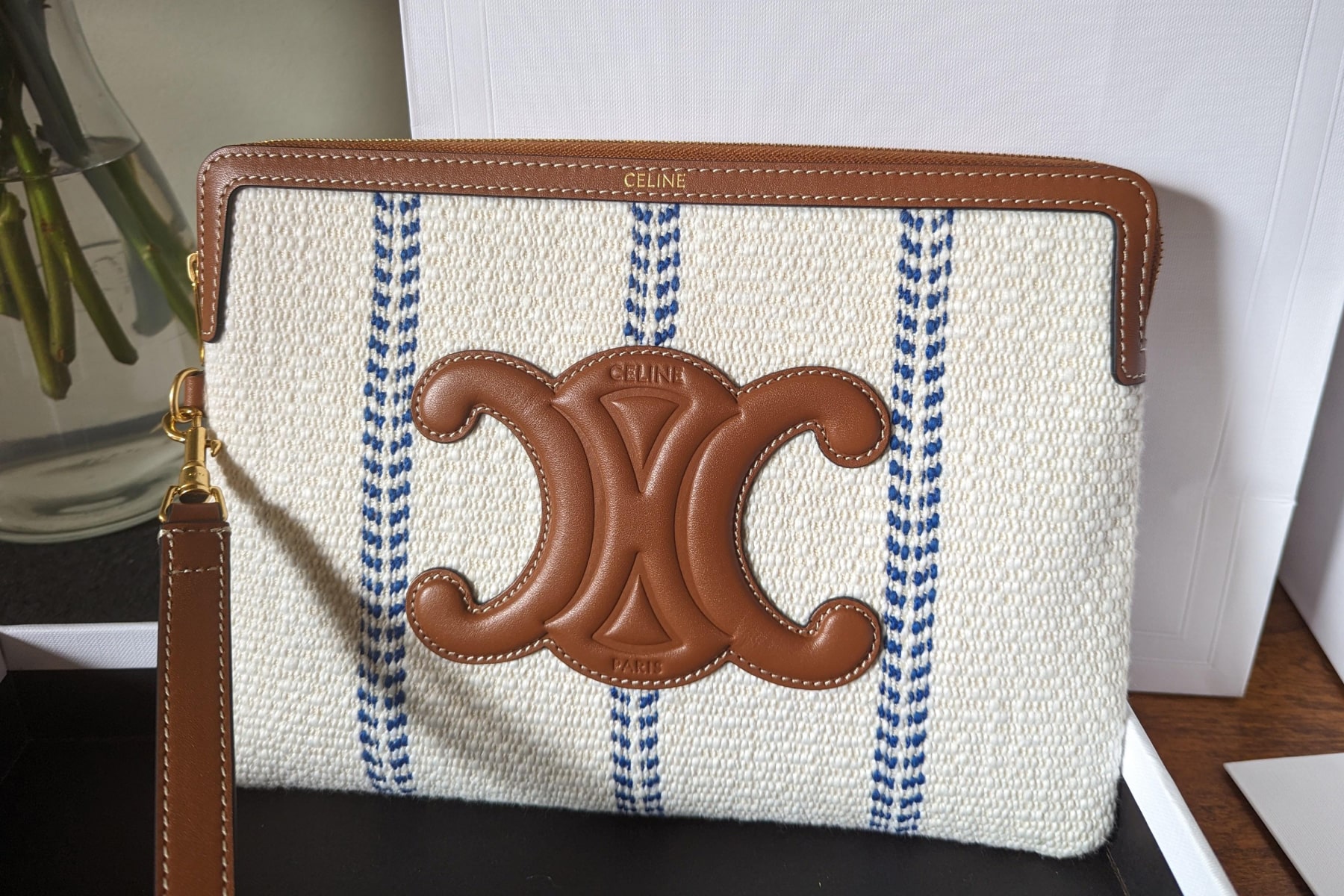
The best way to spot a fake Céline bag is to check the “CÉLINE PARIS” engraving. On authentic bags, the font is sharp, evenly spaced, and lightly pressed into the hardware with perfect alignment.
Fakes often slip up with sloppy fonts, uneven engraving depth, or missing accents on the “É” in Céline. These subtle errors are one of the fastest giveaways.
That’s the quick answer. For the full step-by-step guide, keep reading below.
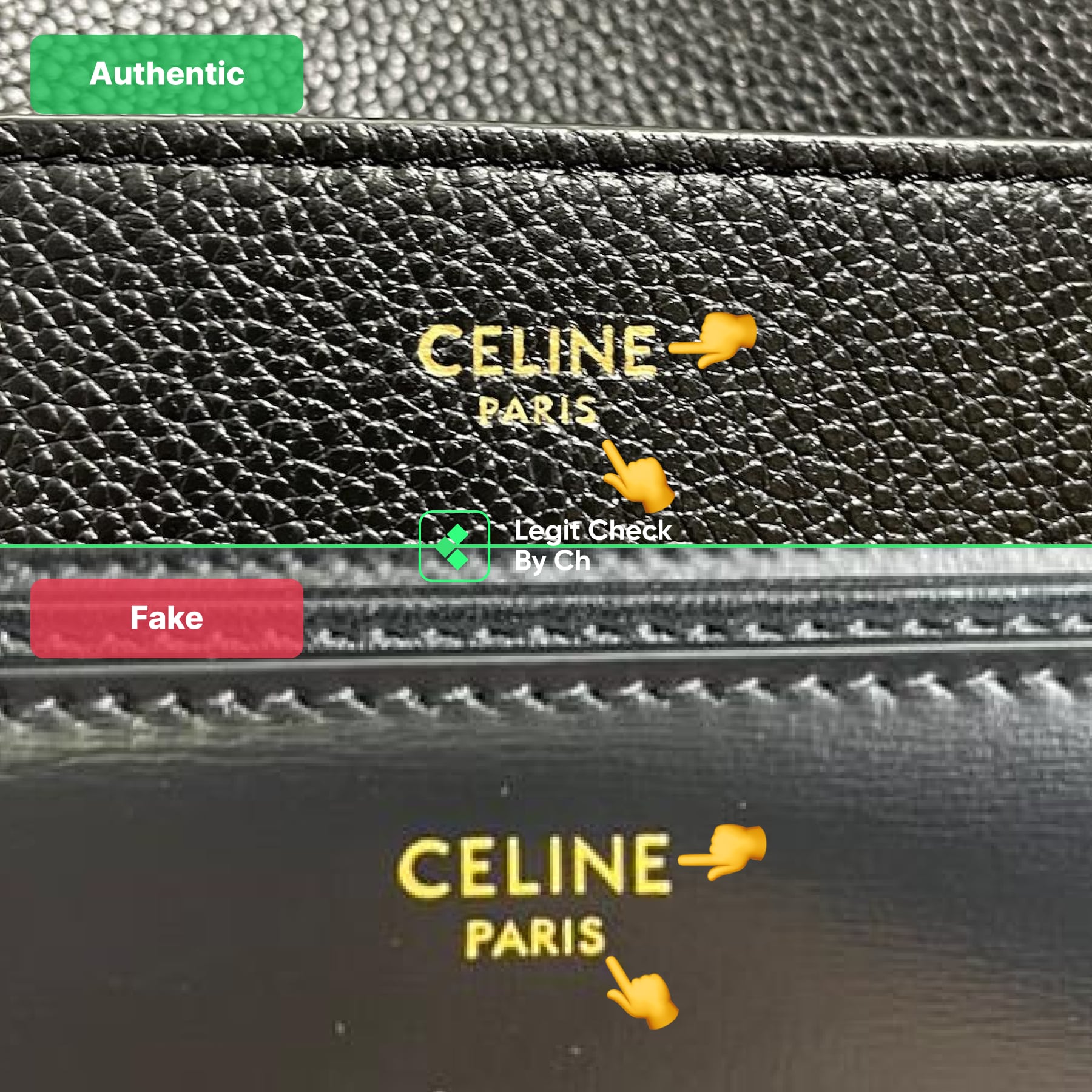
On genuine Celine bags, the engraving is one of the first giveaways. The logo is always balanced, with “CELINE” appearing bold and well-defined, while “PARIS” underneath is slightly thinner. Fakes tend to mess this up by flipping the proportions – making “PARIS” overly bold while “CELINE” looks weak, especially the “E,” which loses its structure.
It’s also worth noting that engraving thickness can vary slightly depending on the model. For example, a Celine Belt bag’s logo might look a little different compared to a Celine Luggage bag, but the proportions (CELINE thicker / PARIS thinner) always remain consistent on authentic pieces. This is why having a side-by-side reference image is critical when authenticating.
Too difficult? Let our team of expert Céline authenticators take a look at your bag:
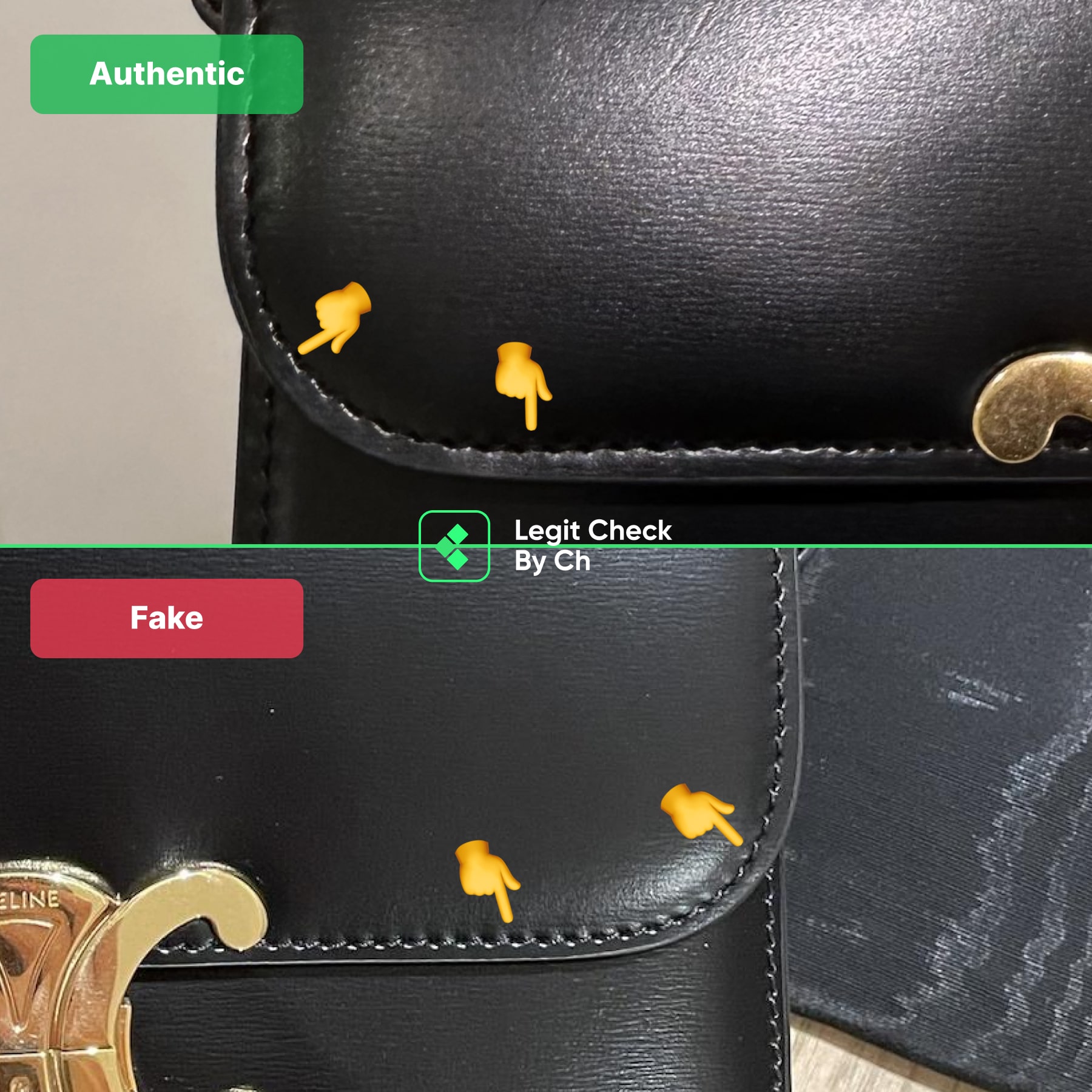
The flap’s stitching is another quick detail to check. Real Celine bags use precise, long stitches that sit neatly against the leather. Each stitch looks identical to the next, which shows the consistency of luxury craftsmanship. Counterfeit bags often cut corners here – the stitches are thicker, shorter, and don’t align as cleanly, which gives the flap a slightly messy look.
When you run your finger across the flap of an authentic bag, the stitches should feel smooth and evenly spaced. On a fake, you’ll often notice uneven tension in the thread, with some stitches pulled tighter than others. It’s a small detail, but it’s one of those things that instantly separates a $3,000+ Celine from a cheap replica.
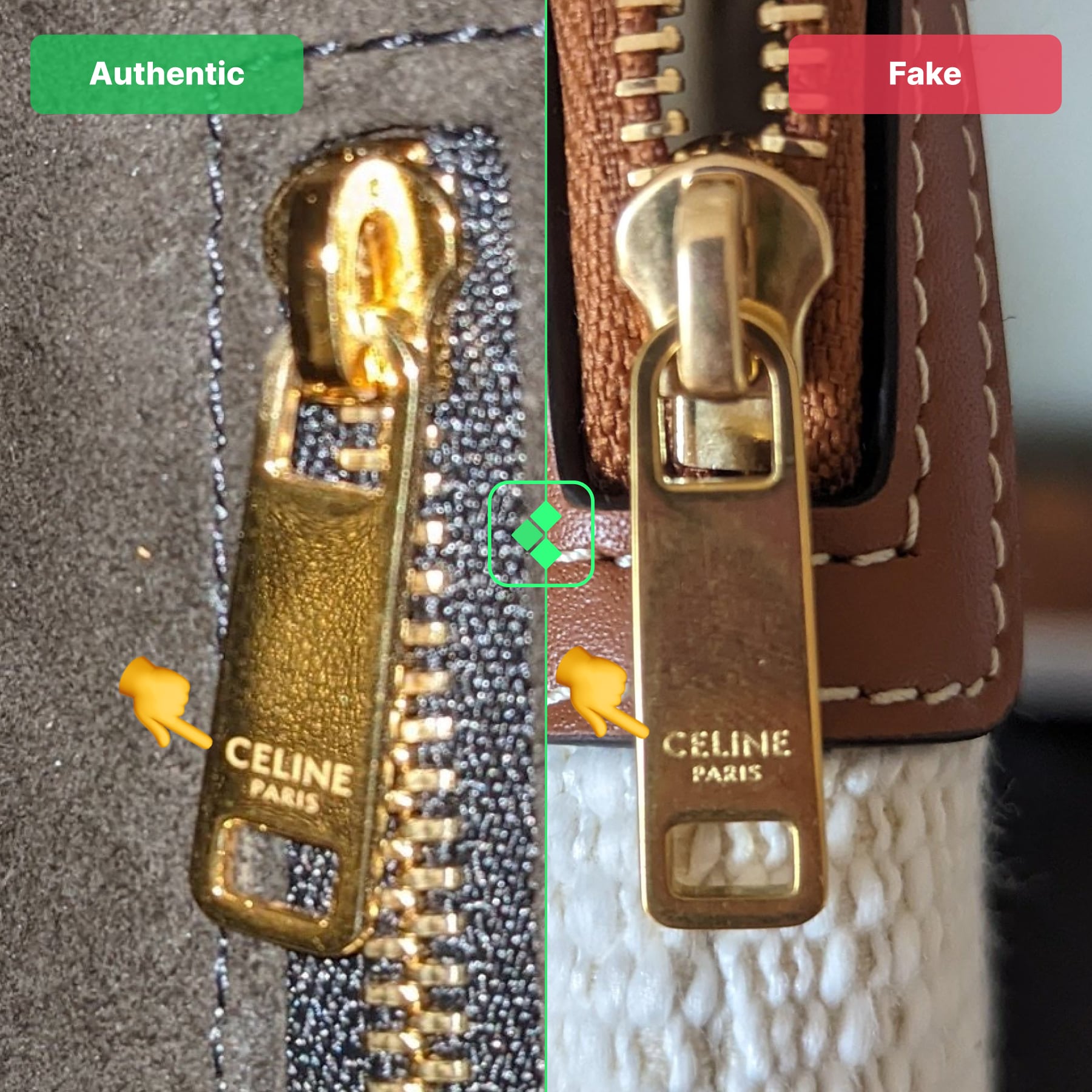
On authentic Celine bags, the zipper engraving is clean and bold. You’ll notice that “CELINE PARIS” is pressed deeply into the metal with even font-weight across all letters. The engraving feels permanent, as if it’s part of the zipper itself.
Counterfeit bags often cheap out on the hardware, which shows in the zipper. The logo looks thinner, faint, or sometimes even slightly off-center. It might feel like it was simply printed on instead of engraved. If you lightly run your fingernail across the letters of a real Celine zipper, you’ll feel the depth of the engraving – something fakes rarely manage to replicate.
We’ll use the buckle of a Celine Triomphe bag for this comparison.
However, this step applies to all hardware details on every bag model.
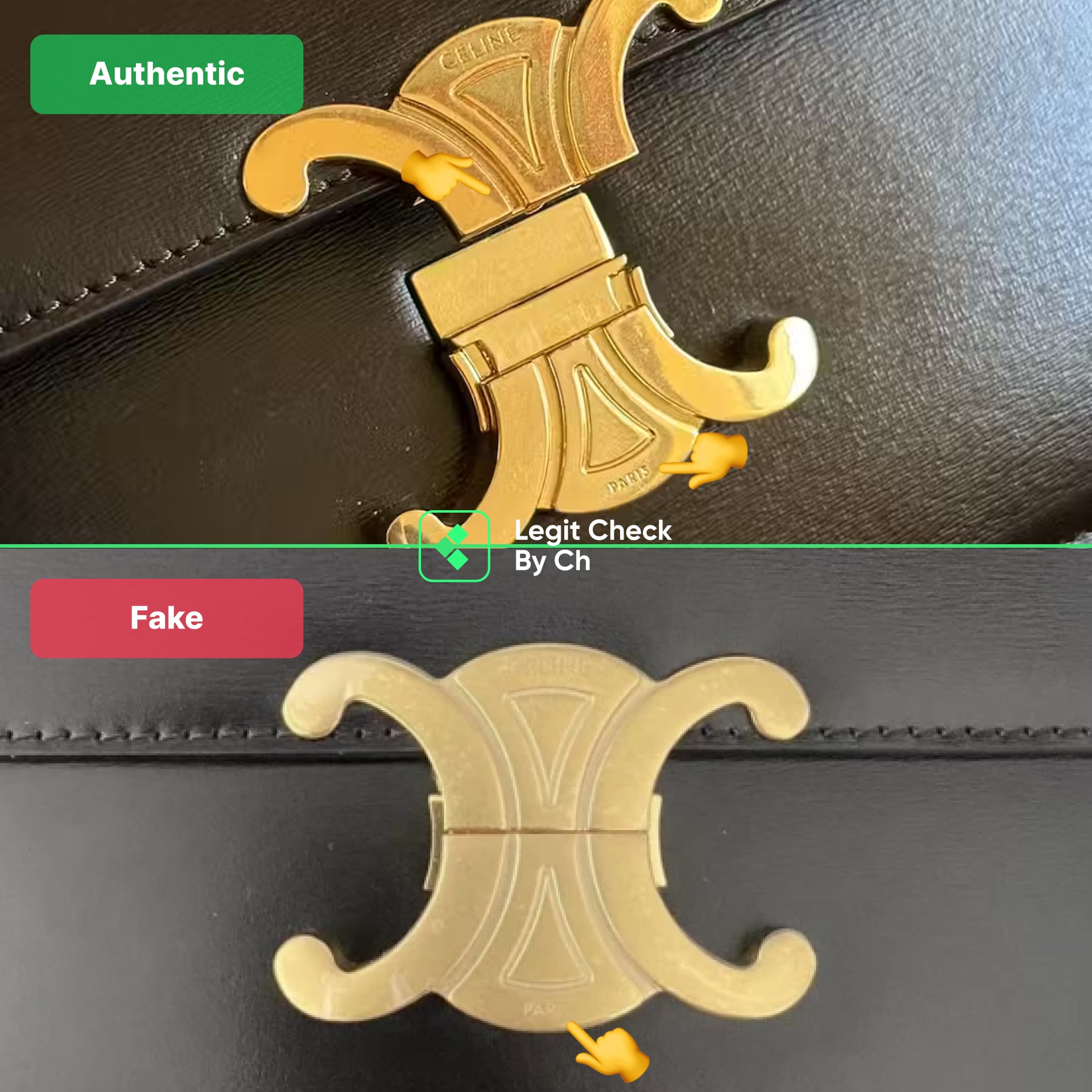
Luxury is in the small details, and the hardware is one of them. This kind of meticulous shine is also what you’ll notice on other luxury houses – for example, when we compared the glow on a Chanel Classic Flap bag, the principle was the same: authentic hardware reflects cleanly, while replicas either dull out or look overly polished.
Fakes tend to either look too dull (cheap plating) or overly shiny (fake gold coating). The “PARIS” text is usually the biggest giveaway, as it fades midway or looks ghosted instead of bold. This isn’t just a cosmetic difference – it’s because genuine Celine uses premium plating techniques, while replicas use cheaper alloys that lose shine and clarity fast.

A quick mention:
If in doubt, we recommend double-checking the steps we’ve explained above this line.
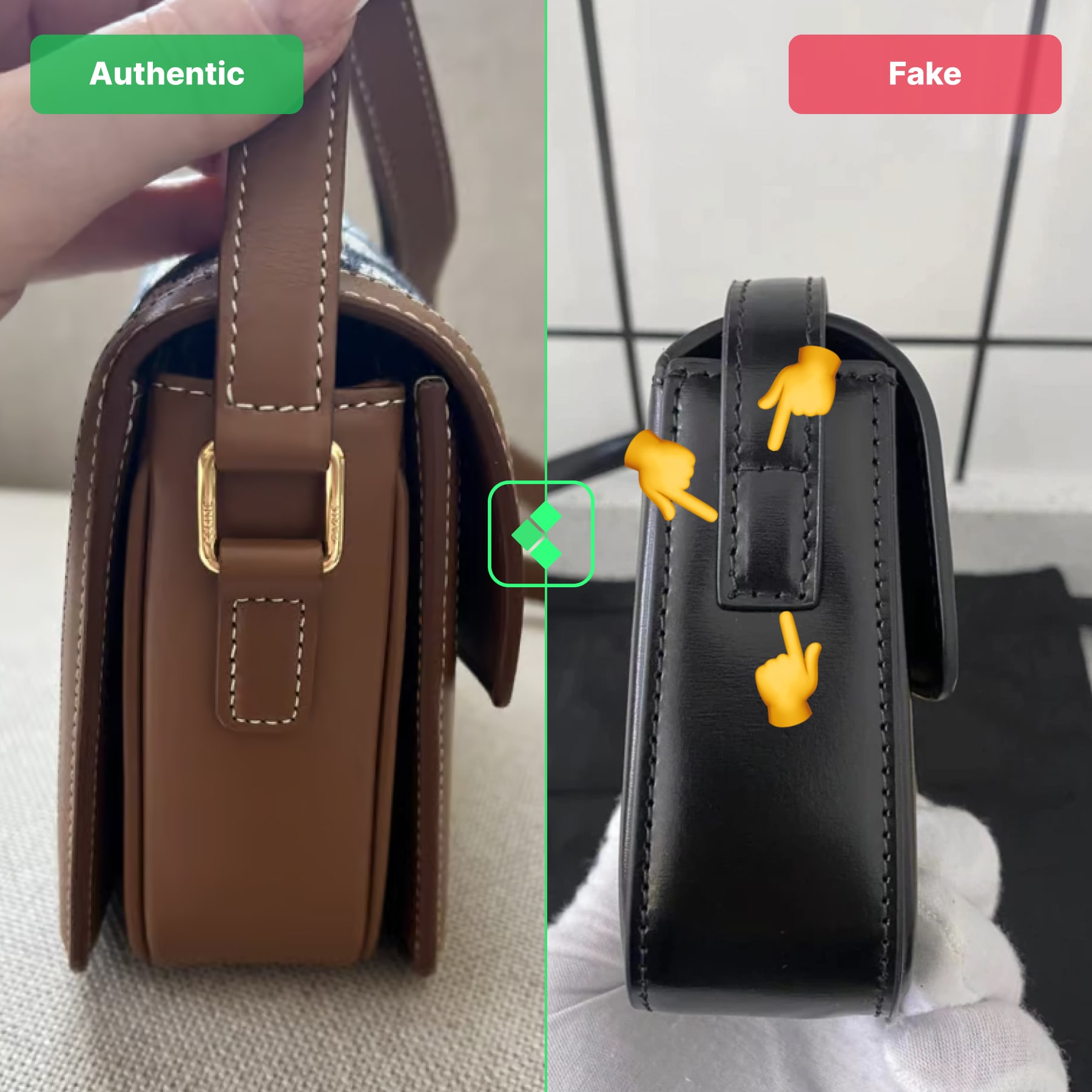
One of the easiest tells on a Celine bag is the stitching. On an authentic bag, every stitch looks like it was measured with a ruler – even spacing, consistent thickness, no surprises. It’s part of why the bags feel so “finished” and worth the luxury price.
Fake bags rarely nail this detail. Look closely and you’ll often find inconsistency: one stitch thick, the next thin, or spacing that looks uneven. Even without training, your eyes pick up on this irregularity. If a bag feels “messy” at a glance, chances are the stitching is giving it away.
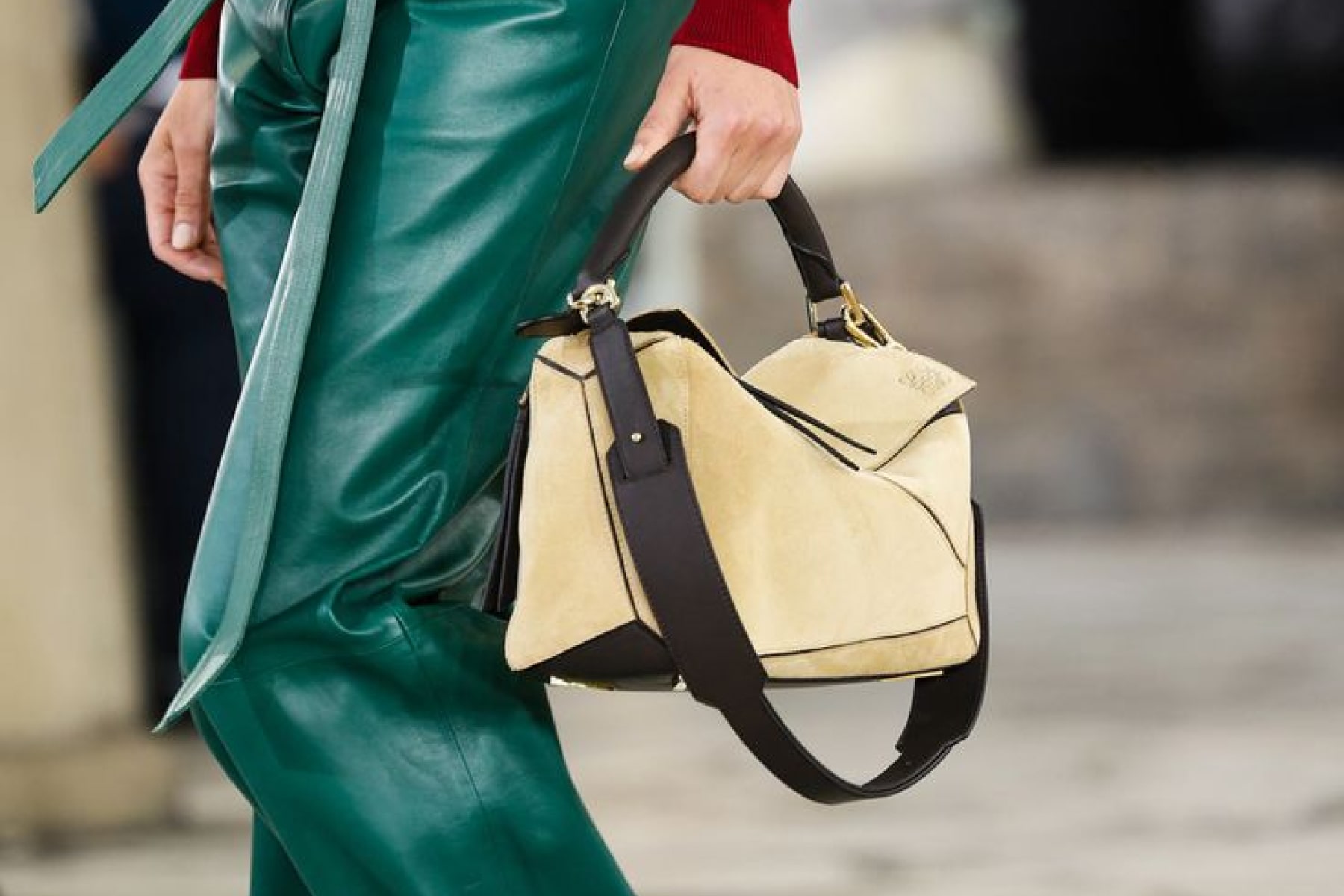
Counterfeit stitching often feels rushed, and this is not unique to Céline. The same issues show up on brands like Loewe. You might be interested in this guide on the Loewe Puzzle bag, where uneven spacing and inconsistent threads are also some of the quickest giveaways.
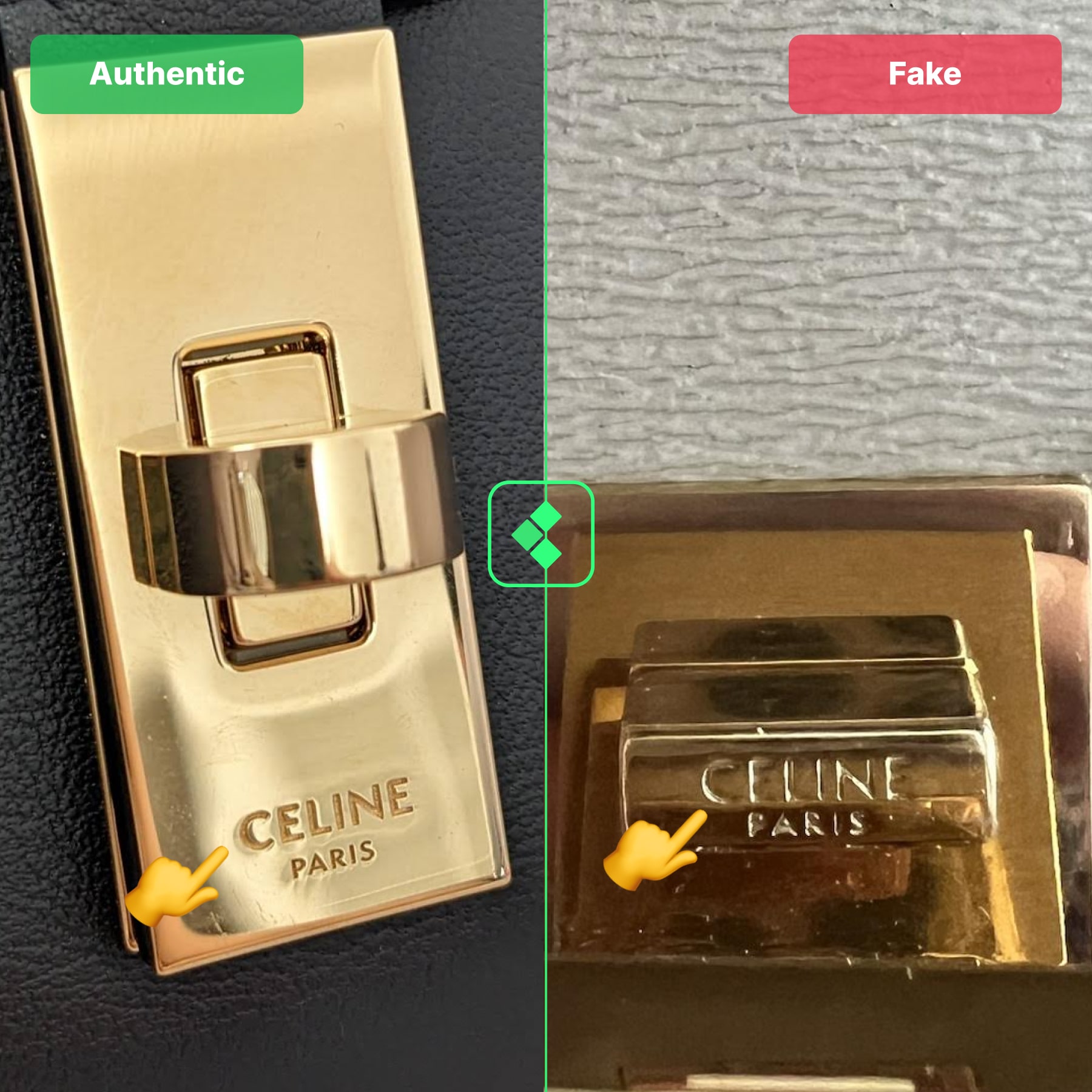
The buckle is another key checkpoint. On authentic bags, the “CELINE PARIS” text sits boldly on the hardware. The letters are sharp and easy to read, with depth that makes the engraving feel permanent.
On a fake buckle, the text usually looks weak – thinner letters, shallow etching, or even fading in certain spots. Counterfeits don’t invest in the same engraving quality, so the result is a buckle that looks cheap and doesn’t carry the weight of an authentic Celine piece.
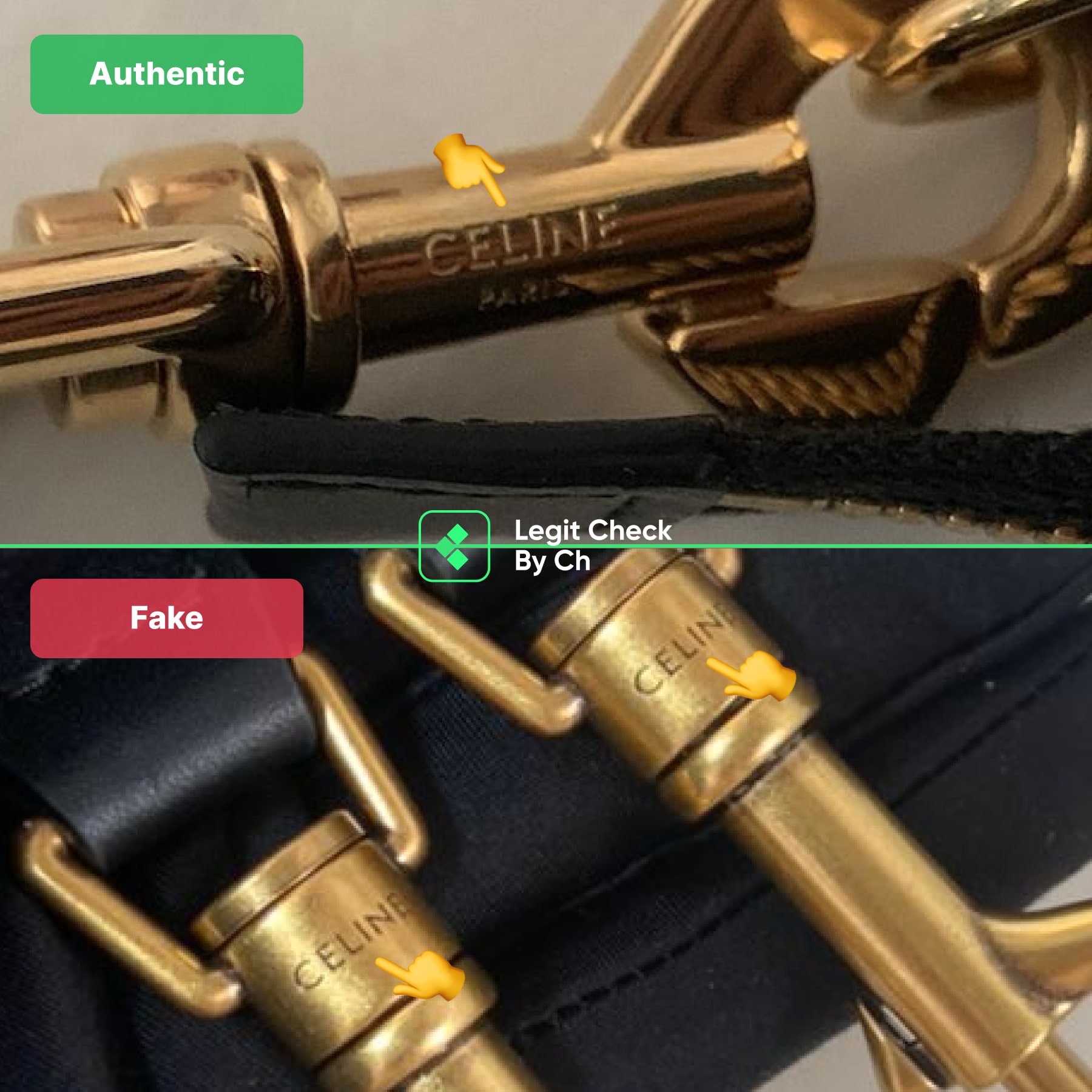
On an authentic Celine bag, the carbine (clasp or clip) feels heavy and premium. The logo engraving is sharp, evenly pressed, and all letters have the same depth and thickness. It’s not just decoration – you can feel the text with your finger.
Counterfeit carbines give themselves away easily. The text looks faint, like it’s printed on the surface instead of carved into the metal. The letters may also vary in thickness, which makes the whole thing look less polished. If the logo looks like it could rub off with time, that’s a red flag.
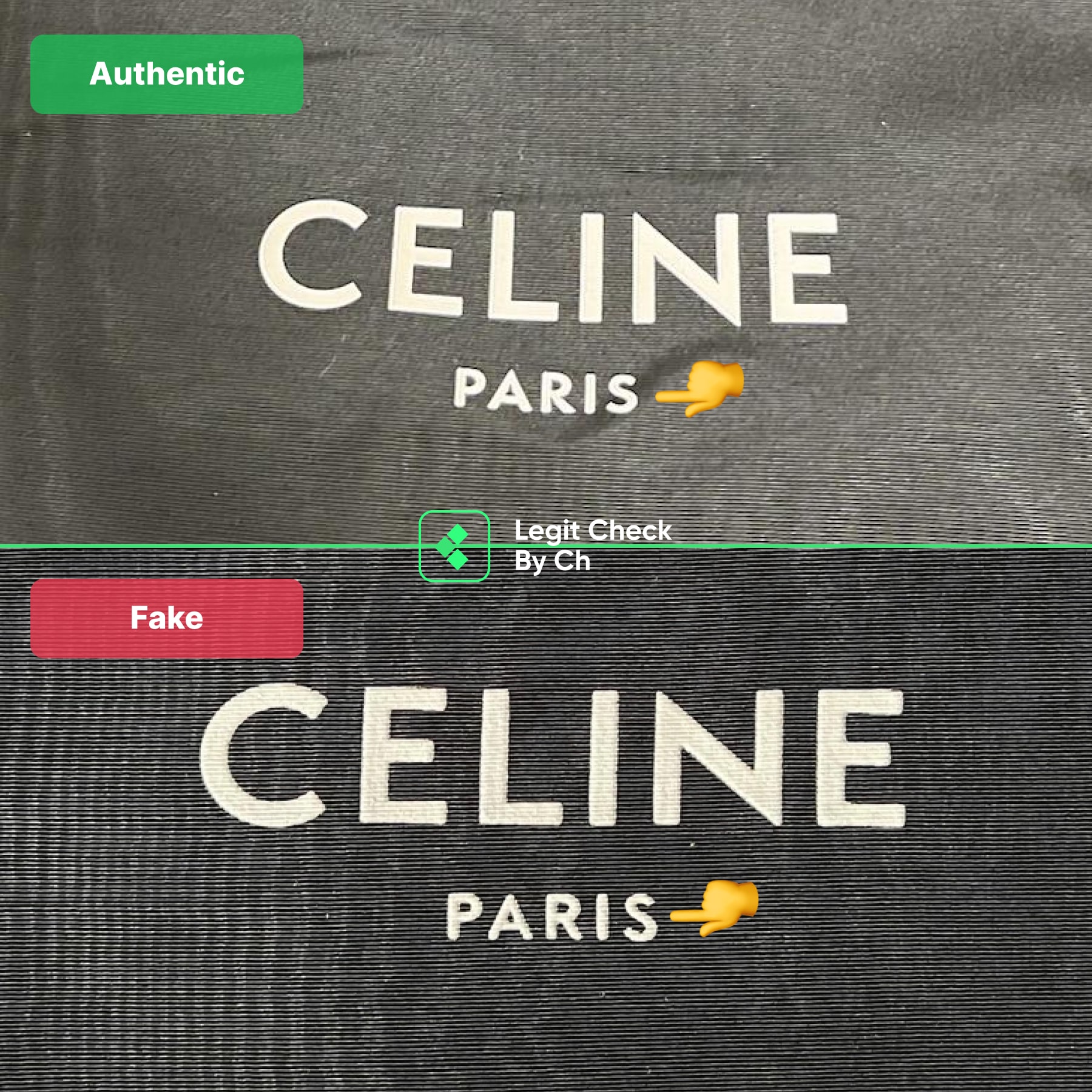
Even the dust bag tells a story. Real Celine dust bags use a balanced, bold print where every letter matches in weight. The “S” in “PARIS” is a great checkpoint – it looks slightly heavier, blending perfectly with the rest of the word.
Fakes often mess this up. The “S” looks too thin, and the rest of the letters in “PARIS” look uneven – especially at the bottom, where the ink tends to pool and make them appear too thick. It might feel like a minor detail, but Celine doesn’t compromise even on packaging, so the dust bag is a quick authenticity test.
This same level of precision is also found in YSL bags, where the logo print and stitching on the dust bag are often the easiest details to call out on fakes.
No time to read the full guide? Here’s the fast legit check. These are the small but key details that separate a real Céline bag from a fake – quick, simple, no deep dive needed.
These quick checks will catch most fakes – but if you’re still unsure, compare side-by-side with a verified authentic or get a pro Céline authentication for peace of mind.
If you’re in a rush or meeting a seller, this short video is the fastest way to check if a Celine bag is real. It shows you where replicas usually fail – from engravings to stitching and hardware. Quick, clear, and easy to follow.
Let’s talk about how you can authenticate a Celine bag yourself.
The first place you absolutely want to go is the Celine Paris gold engraving on the outside of the bag.
We often see letter thickness discrepancies – for example, the Paris inscription looks thicker on replicas, which is a clear red flag.
Next, look at the flap, specifically the stitching. Authentic Celine bags have thinner, longer stitching that shows quality craftsmanship. Replicas usually have short, dense stitching.
Then check the zipper. On fakes, the Celine logo often appears thinner than on authentic bags. The “Celine Paris” text should always be clear and easy to read.
Finally, inspect the hardware shine. Replicas tend to look duller, while authentic hardware has a bright shine with readable “Celine Paris” text on it.
Céline bags are some of the most counterfeited on the market right now. From the Luggage Tote to the Triomphe, replicas are everywhere – and some of them look dangerously close to the real thing. If you’re not 100% sure about yours, it’s worth getting it checked.
That’s where we step in.
At Legit Check, we’ve authenticated every Céline style and colorway you can think of. Whether it’s vintage Phoebe-era pieces or the latest Hedi Slimane releases, our experts know exactly how to separate real from fake. And we don’t rely on AI, every authentication is done by humans, with eyes trained to spot the tiniest details.
Here’s what we look at when checking a Céline bag:
Here’s what you’ll get with us:
We’ve already helped clients avoid millions in fake luxury losses.
👉 Not sure about your Céline? Send it in today – we’ll give you the truth.
We’ve gone through every detail that sets an authentic Céline apart from a replica. From the way “CELINE PARIS” is engraved to the quality of the stitching, hardware, and dust bag, these small checkpoints make all the difference. Fakes keep improving, but they still miss the fine touches that luxury craftsmanship always gets right.
If you follow this guide step by step, you’ll have a clear picture of what a real Céline looks like. And remember, no single sign alone makes or breaks authenticity – it’s the full pattern across engraving, stitches, hardware, and packaging that tells the real story.
Here’s the quick recap:
If your Céline passes all these checks, you can feel confident. But if even one or two details feel off, that’s your signal to dig deeper.
And if you don’t want to play the guessing game, that’s where we step in. Our Céline authentication service gives you a clear verdict, explained by human experts who’ve seen hundreds of real and fake bags. Plus, you’ll have the option to get a Certificate of Authenticity, which is super helpful if you plan to resell or request a refund.
Yes, Céline is one of the leading French luxury fashion houses, founded in 1945. The brand is known for its minimalist designs, premium leathers, and timeless aesthetic. Bags like the Luggage, Belt, and Triomphe have become modern classics, often holding strong resale value.
Because Céline bags retail in the $2,500–$4,000 range (and higher for rarer leathers), they sit firmly in the luxury market alongside Hermès, Chanel, and Dior. This high demand is exactly why counterfeits are so widespread. If you’re buying secondhand, always do a proper legit check.
The price reflects both craftsmanship and scarcity. Every Céline bag is handmade in Italy by skilled artisans who use high-quality calfskin, lambskin, or exotic leathers. The process involves careful saddle stitching, hand-painted edges, and strict quality checks before a bag leaves the workshop.
On top of this, Céline doesn’t mass-produce like fast-fashion brands. The controlled supply keeps exclusivity high, and that exclusivity is what makes the bags hold their value in the luxury market. In short, you’re paying for design, materials, and the brand’s reputation for durability.
Authentic Céline bags are made in Italy, with some older models also produced in France. Every genuine bag will have a clear “MADE IN ITALY” or “MADE IN FRANCE” stamp inside, usually placed beneath the brand engraving.
Fakes often mess this detail up: either by printing it faintly, using the wrong font, or placing it in the wrong spot. If your bag says “Made in China” or has sloppy lettering, that’s an instant red flag. Always cross-check this with the engraving style described in the legit check steps.
Yes, when cared for properly, Céline bags can last for decades. Their leather is durable yet supple, and the stitching is reinforced to handle daily use without unraveling. Many vintage Céline bags from the 1990s and early 2000s are still in excellent condition today.
Of course, care plays a big role. Storing the bag in its dust bag, avoiding overstuffing, and keeping it away from water or prolonged sun will help maintain its shape and finish. Fakes, on the other hand, rarely hold up. Their cheaper leather tends to peel, crack, or lose color within a couple of years.
Céline provides after-sales services through their boutiques, which include repairs, hardware replacements, and leather touch-ups. However, this support only applies to authentic Céline bags purchased through official channels or verified resellers.
If you bring in a fake, the brand will refuse service. That’s another reason authentication is crucial, not only to protect your purchase but also to ensure you can access Céline’s repair services in the future. If you buy pre-owned, it’s worth getting a Certificate of Authenticity so you can show proof if needed.
Thanks for sticking with this Céline authentication guide all the way to the end – if you made it this far, congrats. You’re now way more prepared than most people when it comes to spotting a fake Céline bag.
Need our opinion on your item’s authenticity? It’s a service we provide.
Get a fully-detailed report for why you have a real or fake item. Takes less than 48 hours!
Alternatively, use our free resources: written guides and video tutorials.
Thank you for reading this,
Ch Daniel and Ch David
You might want to check these out
If this guide helped you sharpen your eye, you’ll definitely find our other step-by-step breakdowns just as useful. From subtle stitching details to logos and hardware, these guides cover everything you need to stay confident when shopping luxury.